
From Hangar to Sky: Inside Cal Poly’s Flight Test Classroom
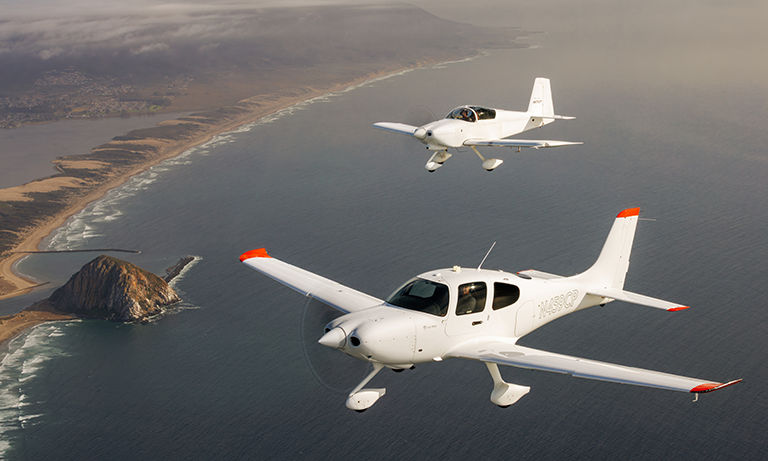
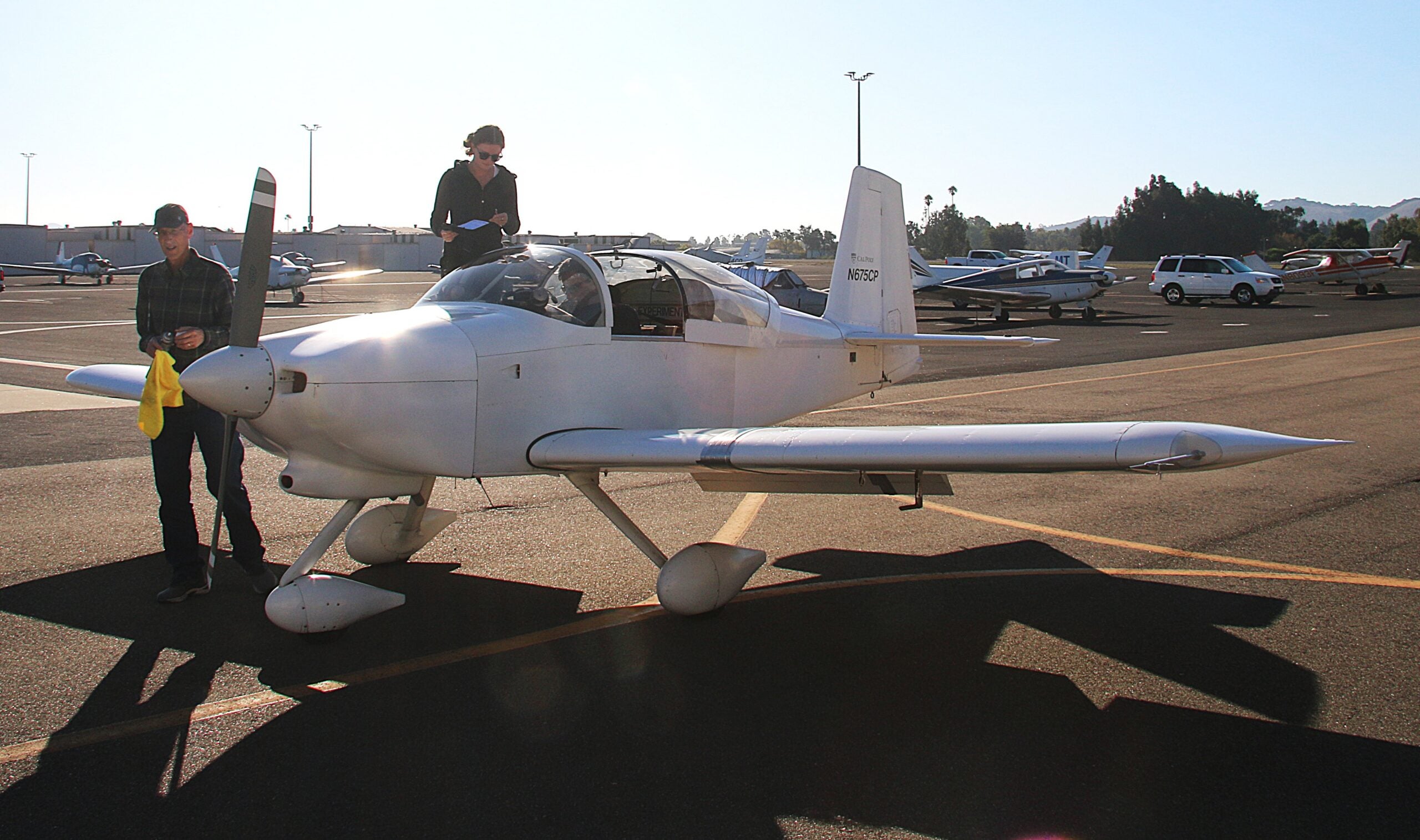
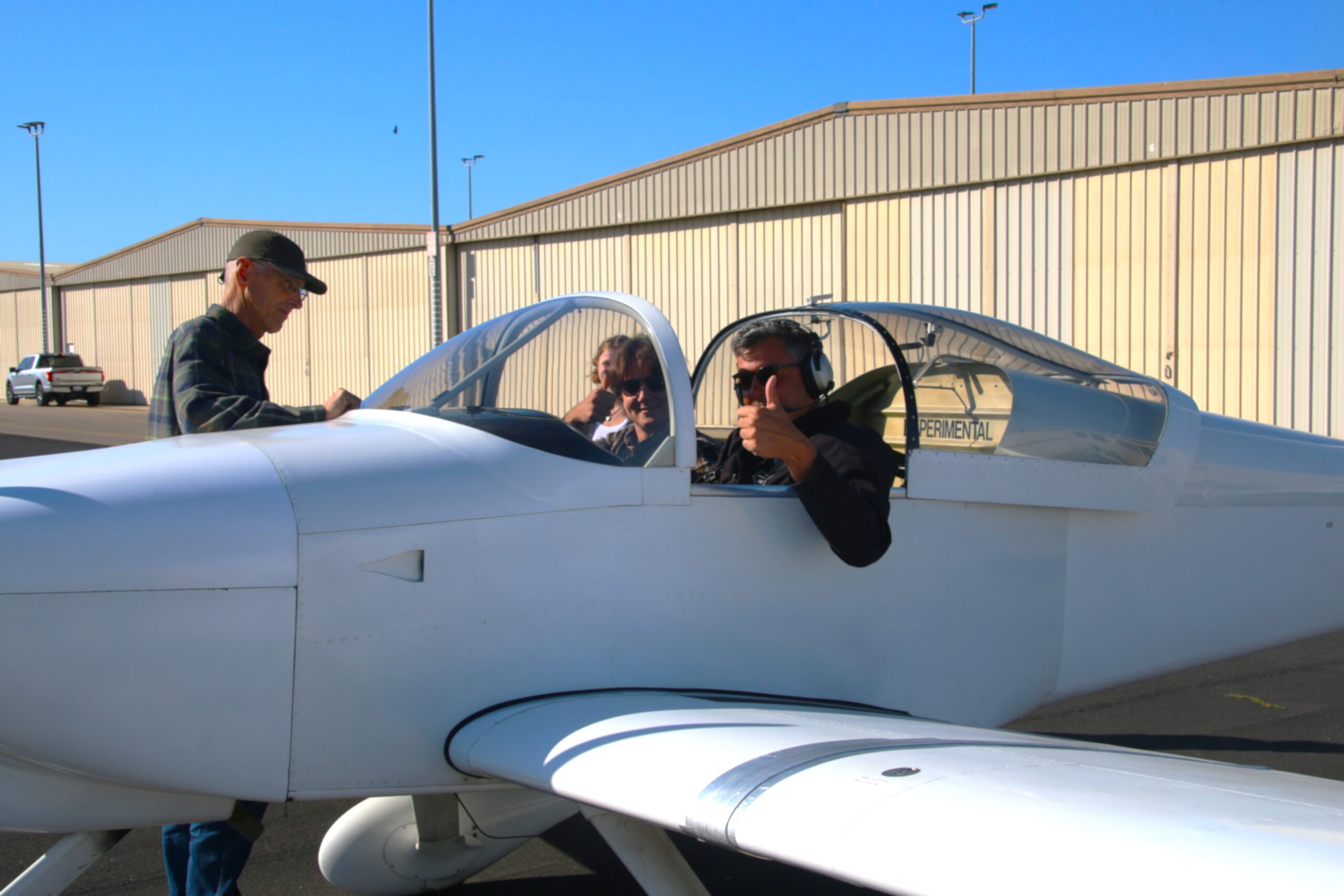
Paulina Williams stood on the tarmac with her headset on, waiting for the signal to climb into the RV-7. The small experimental aircraft sat low against the runway, its white fuselage catching the late-morning light. Inside the hangar behind her, classmates watched rows of monitors. Ahead of her, aerospace engineering Professor Paulo Iscold ran through final checks before takeoff.
Williams, a fourth-year aerospace engineering student, had flown before in a Cirrus. The RV-7 was smaller, lighter and more responsive — the kind of airplane you feel right away.
Most of the class was upstairs in the hangar control room, monitoring the flight, while a few students rotated out for their turns in the plane. Kurt Colvin, who co-teaches the course with Iscold, had returned from the air after one of three flights scheduled that day. He liked to explain the difference between the planes this way: The Cirrus is like a Cadillac Escalade. The RV-7 is more like an MG sports car.
Williams settled into the seat beside Iscold as the engine came to life. This wasn’t a scenic loop over the coast. Iscold would bring the RV-7 into a series of controlled stalls while Williams tracked airspeed and conditions on a flight test card strapped to her knee.
As the RV-7 lifted off and angled toward the coast, the focus shifted back to the hangar. Students leaned closer to their screens, following the response as it came in from the aircraft. Aloft, it slowed, broke and recovered — then repeated the sequence.
Later, the class would return to what they saw in the air and on the screens. The day offered one view into how flight test unfolds in AERO 409: part classroom, part control room, part cockpit, with students rotating through every role required to test an airplane and understand its limits.
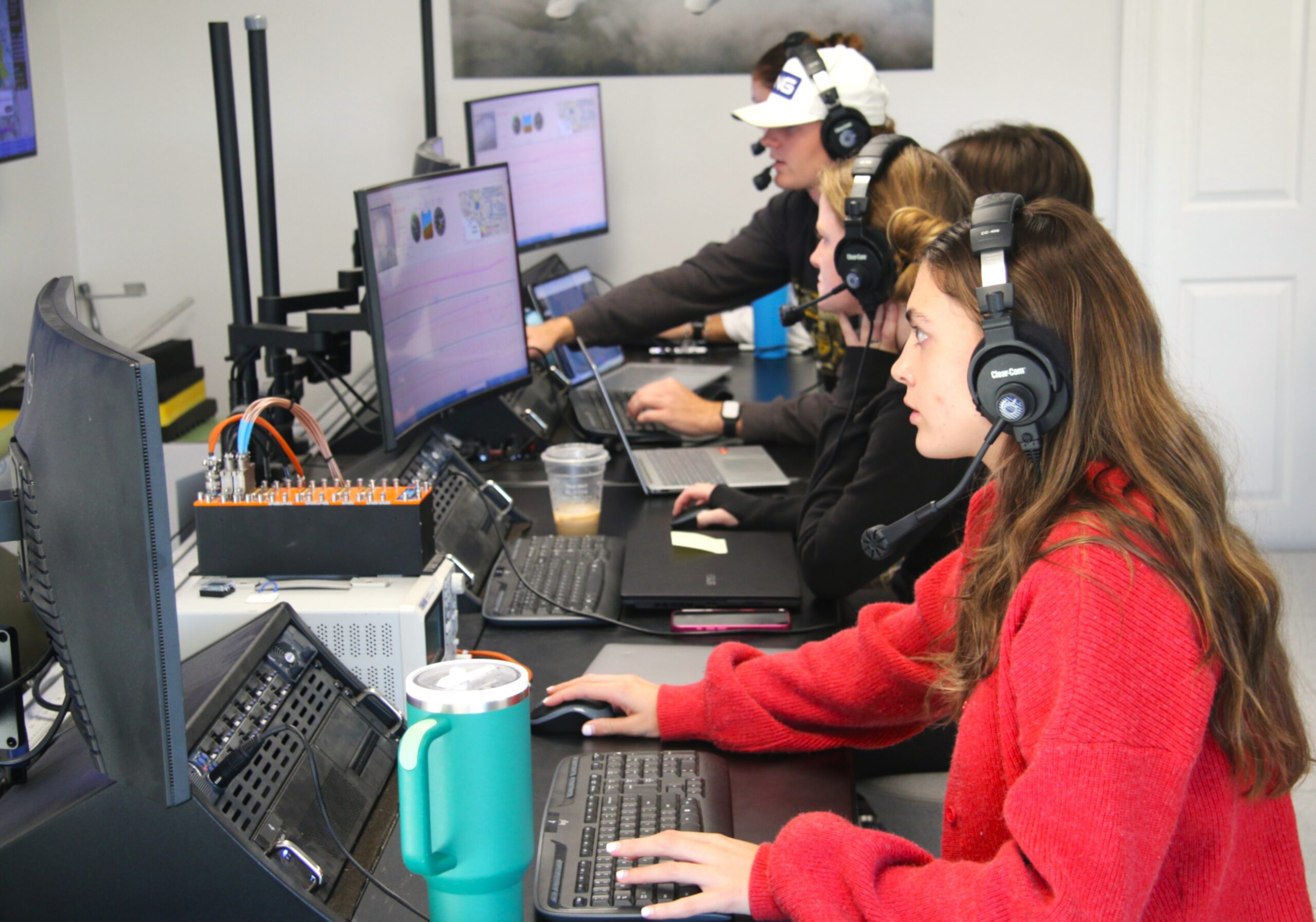
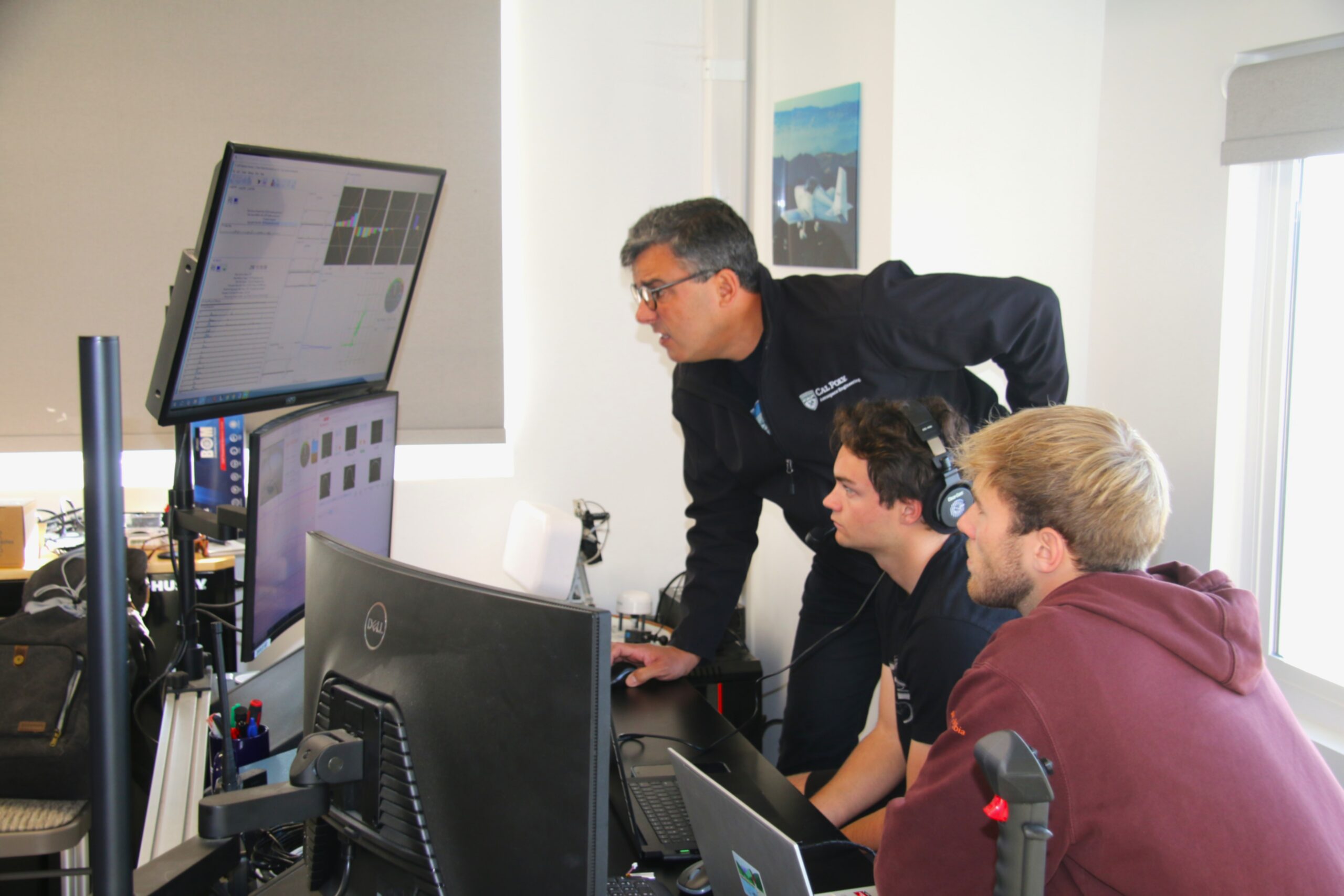
Inside the control room, students sat shoulder to shoulder in headsets, eyes moving between live plots, cockpit video and a map tracking the RV-7 as it turned offshore. A digital clock ticked above the screens. Coffee cups sat within reach. Talk came in quick bursts — numbers confirmed, questions tossed across the room, brief calls exchanged between stations.
Students watched the airspeed, altitude and aircraft response as the RV-7 moved through its planned points, keeping communication with the pilot concise. “There’s a lot of value in learning how to talk to the pilot while you’re testing,” said Hailey Van Auken, a fourth-year aerospace engineering student. “That back-and-forth matters.”
Connor Johnston stepped back inside the hangar after his own flight as the RV-7 began its next run. A graduate student studying engineering management after completing an aerospace engineering degree, Johnston took the class for one more chance to work with Iscold. “I needed a few more elective units,” he said. “But I also wanted another class with Paulo.”
Before each flight, pilot and student calculated fuel levels and weight, numbers that shaped how the data would later be interpreted. During the stall sequence, lines on the screens shifted as the aircraft slowed and recovered. Redundancy was built into the process. While data streamed live to the control room, the student flying recorded the same information by hand as backup. “If we lose data in the control room, we still have the flight card,” Johnston said. “You don’t want a single point of failure.”
The flight test class hasn’t always looked like this.
Colvin remembers when data collection meant paper notes and radio calls, with students reading numbers aloud from the cockpit and recording them by hand on the ground. The fundamentals were the same, but the full picture came together later.
“That was just the reality,” Colvin said. “You flew, you talked on the radio and you hoped you captured everything you needed.”
Colvin, a retired industrial engineering professor, oversaw the construction of the RV-7 in 2008, when the aircraft was built in the hangar as a hands-on project for students. Iscold joined the program in 2018, sharpening the course’s focus on flight test as a discipline and a process.
The shift accelerated after the lab received funding from the Air Force Research Laboratory in 2021. The grant helped launch a major upgrade: a data acquisition system installed in the aircraft, with sensors feeding information through radio links to a server on the ground. Inside the hangar, the control room took shape around that capability.
“There’s no other university using a system like this,” Colvin said. “It changed what we were able to teach.”
The setup lets students see a flight as it unfolds, not as a reconstruction afterward. Airspeed, altitude and aircraft response appear live, giving the class a shared reference point during each maneuver.
“This is how flight test works in the real world,” Colvin said. “You plan it, you execute it, and you analyze it as a team.”
When the RV-7 rolled to a stop and the canopy opened, Williams climbed out, grinning. The flight moved in quick steps: callouts in her headset, the nose dropping, then the recovery.
“It was so fun,” she said, still smiling as she stepped down onto the tarmac. She had flown in the Cirrus before, but the RV-7 felt more immediate. “Being in a smaller plane is more intimate,” she said. “You can feel the airplane more.”
She talked through the route they’d just flown — out toward the coast, then back inland — replaying the view from the air as she unhooked her headset.
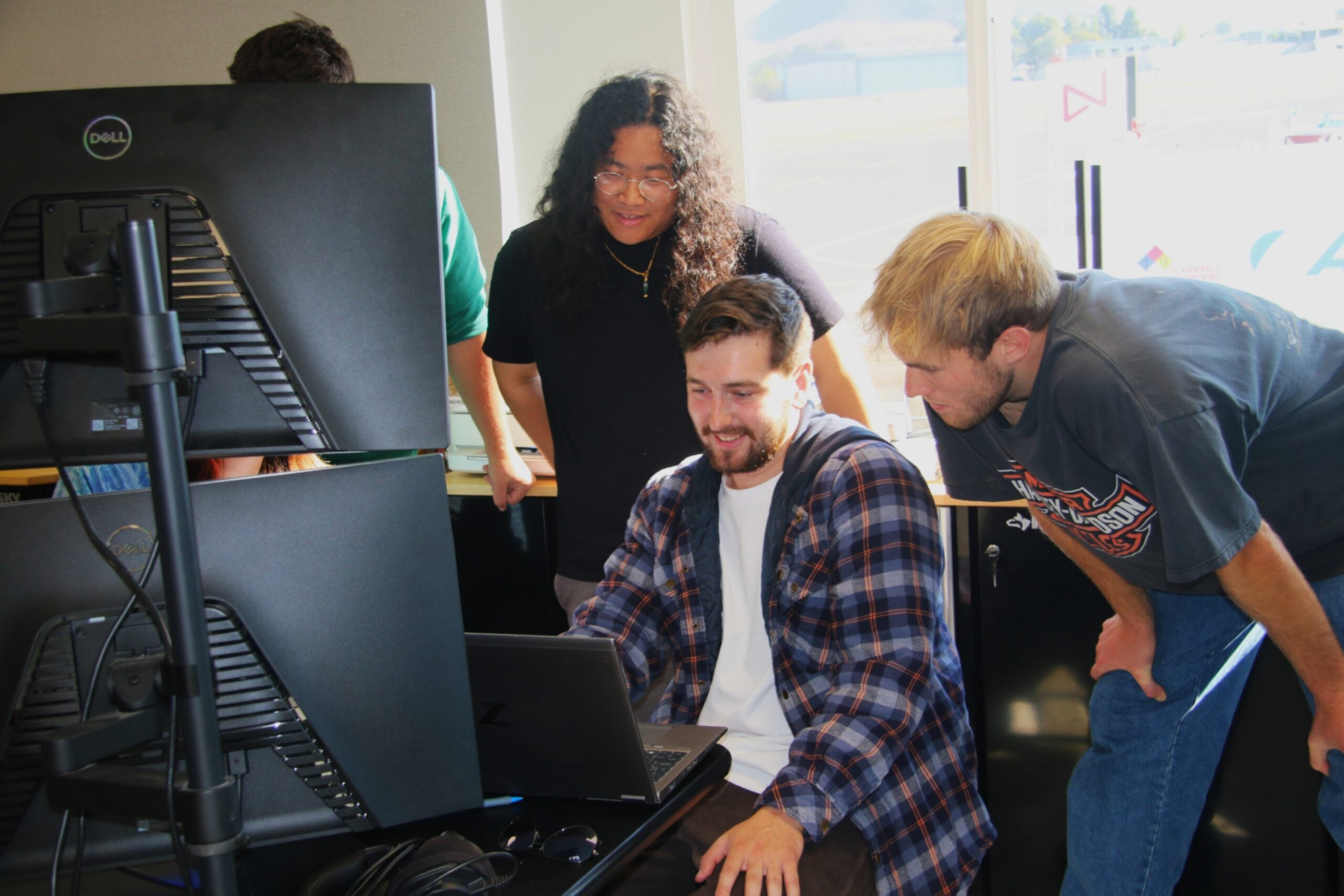
Back in the hangar, the control room settled into review mode, with students comparing notes from the flight to the readouts and flagging moments to revisit later.
John O’Donnell, a fourth-year aerospace engineering student and team lead for Cal Poly Racing’s Formula SAE team, recognized the cadence. The systems in the flight test class were more sophisticated than what his team used on the race car, he said, but the mindset felt familiar.
It’s similar to what we do for testing, O’Donnell said. “There’s a lot of overlap.” The details changed, but the structure remained: plan the run, communicate clearly, capture clean data, then talk honestly about what it showed.
O’Donnell said the biggest lesson wasn’t a single maneuver. It was the discipline behind the work. “We set up a lot of processes to test the plane in an organized way,” he said. He expected to carry that approach back to racing.
As the flight day wound down, the class regrouped in the hangar for a debrief. Johnston led the discussion, pulling up moments from the flights and asking the team to talk through what they saw on the screens and what they felt in the air. Iscold and Colvin listened, then pressed for specifics.
Van Auken stayed engaged through the back-and-forth. She came to AERO 409 partly because meeting at the airport sounded fun. The scope of the operation changed her expectations. “I didn’t expect anything like this,” she said. “The tech behind it is in a different world.”
She still hadn’t flown in the RV-7. The smaller airplane made her nervous, she admitted, but the day had shifted that fear into something else: anticipation, mixed with the kind of confidence that comes from seeing the work up close.
“I’m scared of the smaller plane,” Van Auken said. “But one day I’ll face my fears.” She laughed. “I’ll probably be too thrilled to think about it.”
Listen to students Paulina Williams, Hailey Van Auken and Juliette Gregath talk about their flight test experience on the Dean Digs Deeper podcast here.


