How student engineers helped bring Cal Poly’s award-winning Rose Parade float to life
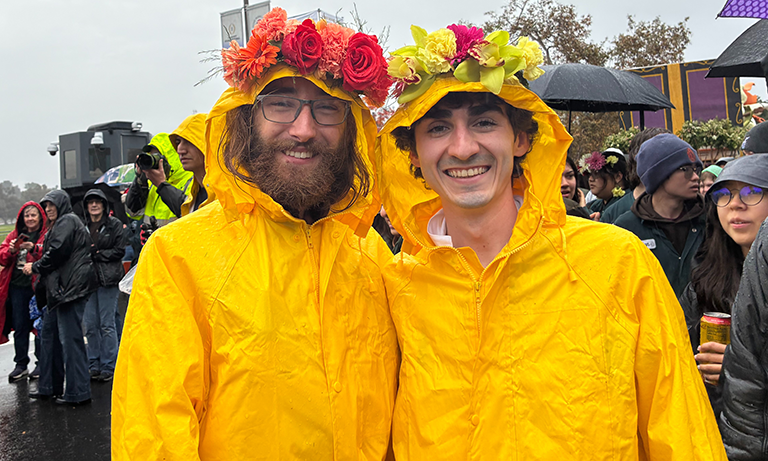
Just before dawn on New Year’s Day in Pasadena, Enzo Ruberto sat inside Cal Poly universities’ Rose Parade float, wearing a yellow rain suit and short on sleep. Water drummed against the structure above him, an unfamiliar sound on a route better known for sunshine and spectacle.
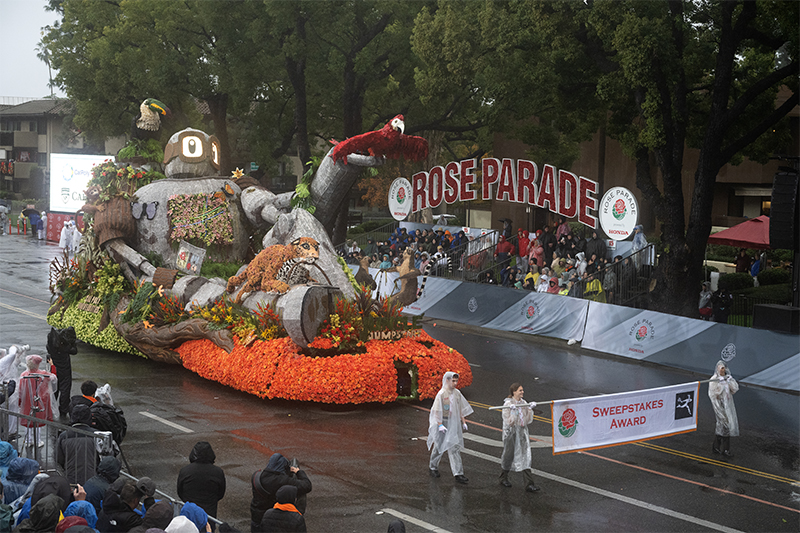
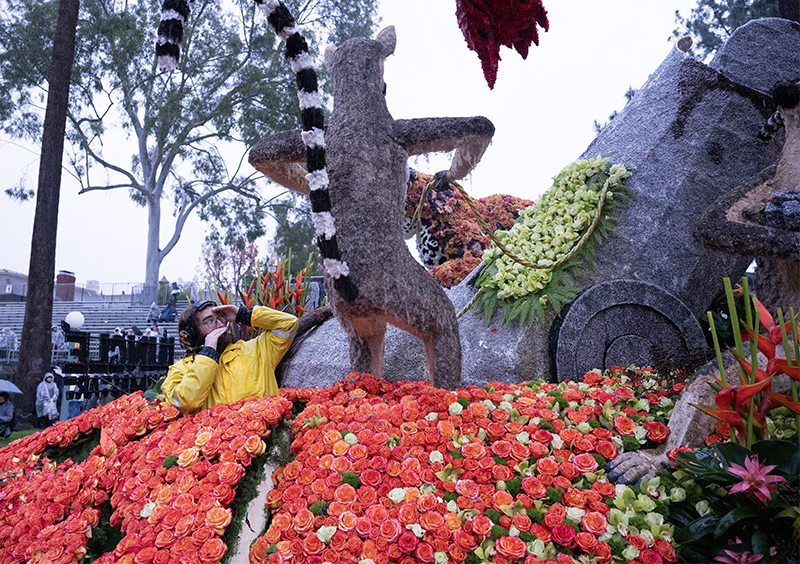
Outside, the student-built float told a rainforest story built around a weathered robot, its eye screens blinking and shifting with each turn of its head. Around it, animals worked to restore their mechanical companion. Lemurs tugged at loose wires. A frog pressed a panel into place, and in the robot’s hand, a brightly colored macaw perched with wings poised to move.
The scene was designed to unfold through motion, revealing new details as the float rolled through the 137th Rose Parade®.
Inside, the electronics were sealed under tarps, but water found its way in anyway. Coffee grounds used in the float’s design began to brew in the downpour, dripping onto the driver’s head below. Ruberto, a third-year computer engineering major and the float’s animation operator, was tucked beneath the robot’s shoulder beside the animation engine that powered the movement above him.
In a few hours, millions of viewers would watch the float roll past on television. For now, Ruberto watched a screen of synchronized motion cues, each triggering a movement that had to land just right. A single 30-second animation would loop repeatedly over the parade.
“We were cold. We were exhausted,” he said. “And honestly, we didn’t think we could win Sweepstakes.”
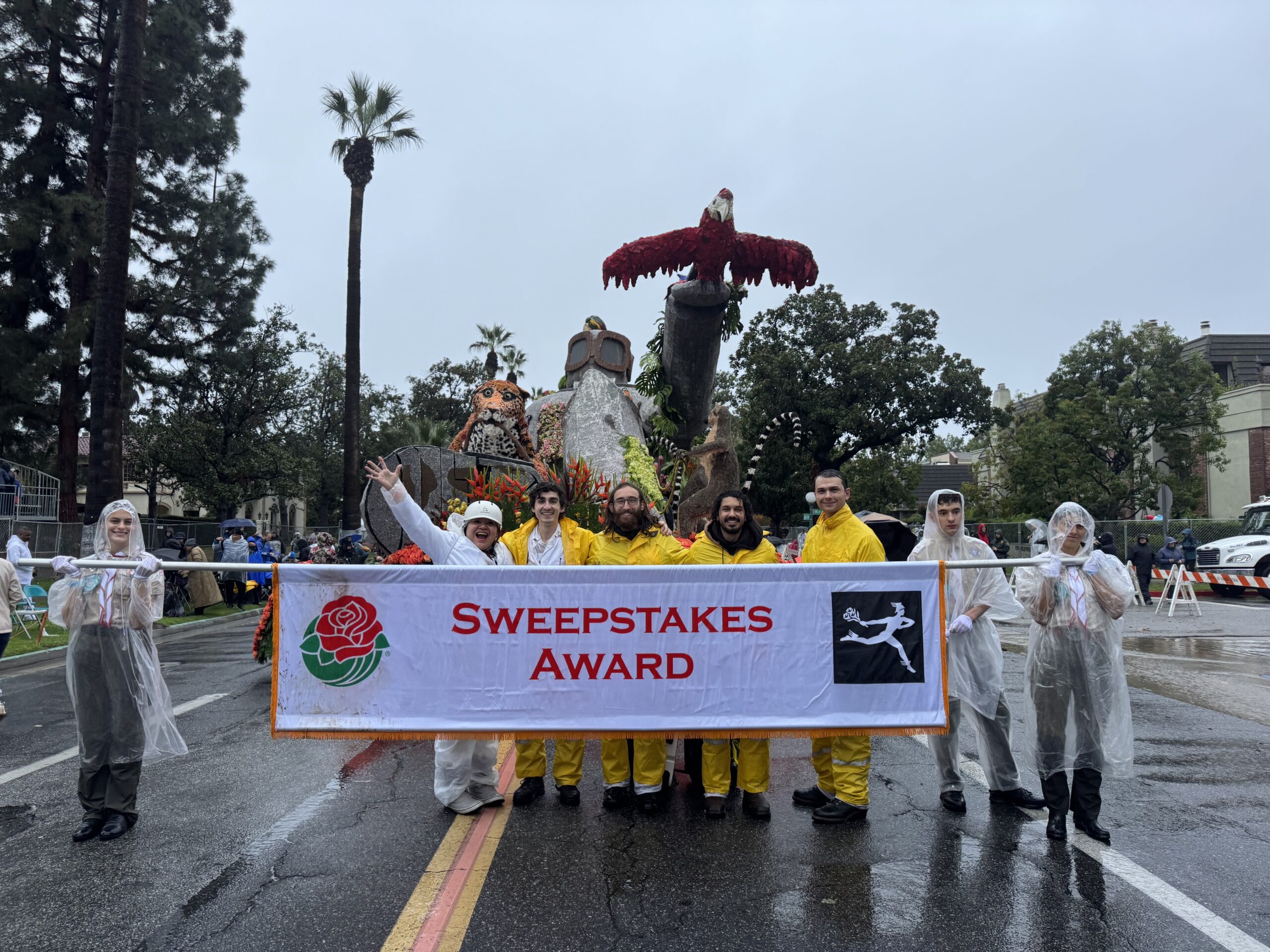
Before sunrise, float operators and media gathered to hear the Rose Parade awards. Parade judges recognize floats across multiple categories, but the Sweepstakes Award, honoring the most beautiful float overall, is the highest distinction of the morning.
Tournament officials began moving down the list. The Cal Poly team had spent the night on the float along Orange Grove Boulevard, soaked from the rain and running on adrenaline. Ruberto remembered standing there, shivering and bleary-eyed, waiting to hear what came next.
Then came the last award.
After the band’s fanfare, the winner was announced: Cal Poly. The team broke into shouts, shock tipping into joy. It was the first time the student-built program had won the parade’s top honor. Ruberto was still absorbing it when he texted a friend in Rose Float a single word: “sweepstakes.” The reply came back fast: “Haha. I wish.”
Ryan Newton, a fifth-year double major in physics and industrial engineering, assumed the team might land another award, if anything. In their mind, the ceiling was the Extraordinaire Award. “I was definitely not expecting that,” they said.
But even with the win, the work was still in front of them. Within two hours, the float would roll onto Colorado Boulevard, and the story above them would have to play out as planned, rain or not.
Ruberto hadn’t set out to work on a Rose Parade float. He first encountered the team as a first-year student at Cal Poly, when members wheeled out the chassis at a club fair and invited students to look closer.
“I like working with my hands,” he said. “That’s what caught me.”
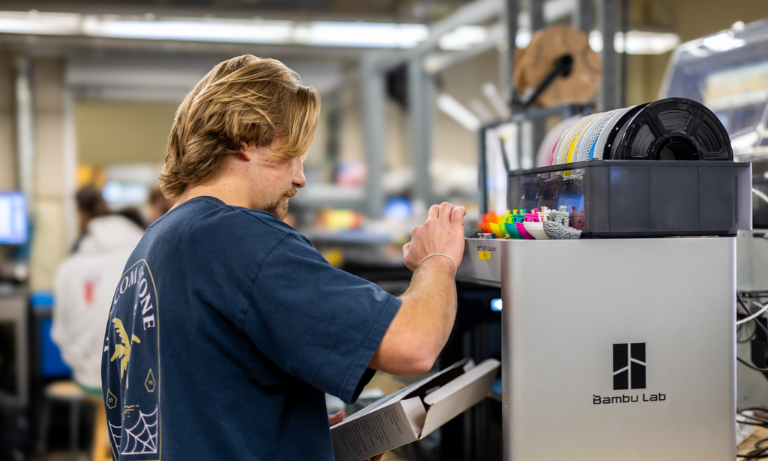
He joined the team and gravitated toward electronics. Last year, he served as assistant electronics lead. This year, as the lead, he worked with a small group split between San Luis Obispo and Pomona to keep the float’s animation running smoothly.
For Ruberto, the engineering mattered, but it was always in service of the art. “Engineering is there to support the art of it,” he said. “You want it to be reliable and simple, so the story can come through.”
Newton’s path began the same way. They joined as a first-year student, curious about electronics and willing to solder when the team needed help. Over time, they moved into leadership that required a wider view of the build. This year, as construction chair, Newton coordinated closely with the chairs of design, decoration and operations to keep the build moving as one.
“It’s a coordination role,” Newton said. “You’re behind the scenes, but you need to know what’s happening everywhere.”
The team worked on the float at Cal Poly Pomona until driving it to Pasadena on the night of Dec. 19. By then, most of the structure was in place, but much of the work that mattered most to Ruberto and Newton was still ahead.
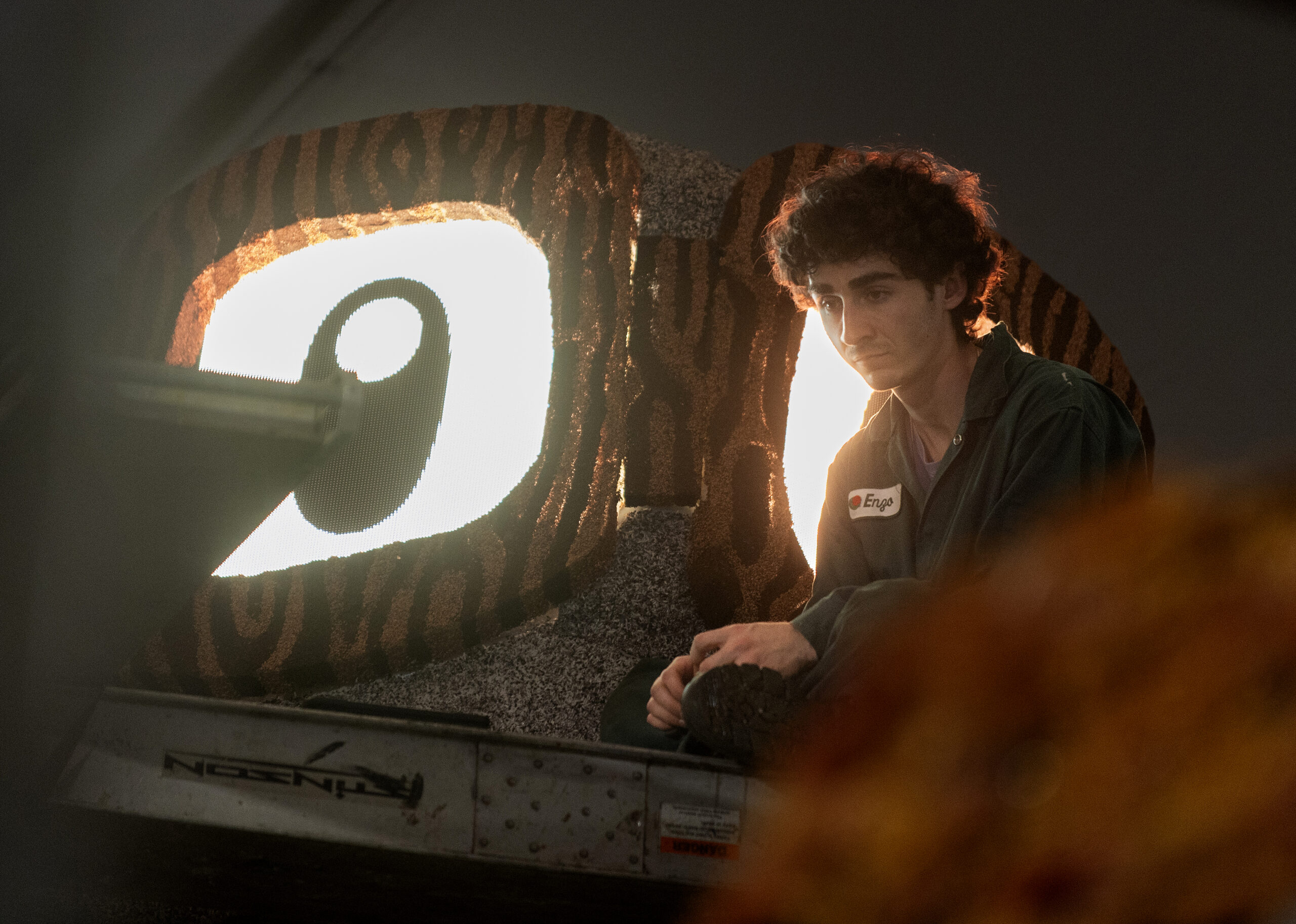
From Dec. 26 through New Year’s Day, the team lived in a nearby hotel, working long days that blurred together. The focus was on decorating, with technical adjustments layered in as the build took shape.
“You can’t plug in early,” Ruberto said. “You’re waiting until that part is on the float.”
Inside the chassis, space was tight. The team reused the same base every year, building a bubble around it with just enough room to move, plus a seat and a panel of switches and levers that could raise or pause the animation when needed. In the final days, Ruberto focused on getting the animation sequence ready.
Outside, Deco Week ran on coordination. Volunteers from the community handled much of the non-engineering decorating from Dec. 26 through the parade, while students directed the work, answered questions from passersby and stepped in when something needed fixing.
“It comes together really fast,” Ruberto said. “And there are people everywhere.”
On New Year’s morning, Ruberto took his place inside the float as it eased onto the route. From there, the parade unfolded mostly through sound and vibration — the low hum of movement beneath him, the steady rhythm of the animation running as designed.
Newton served as the observer, watching the road ahead and the crowd along the curb, ready to flag anything the driver couldn’t see.
Then the float reached the Cal Poly section.
Ruberto cracked open a door and the noise rushed in.
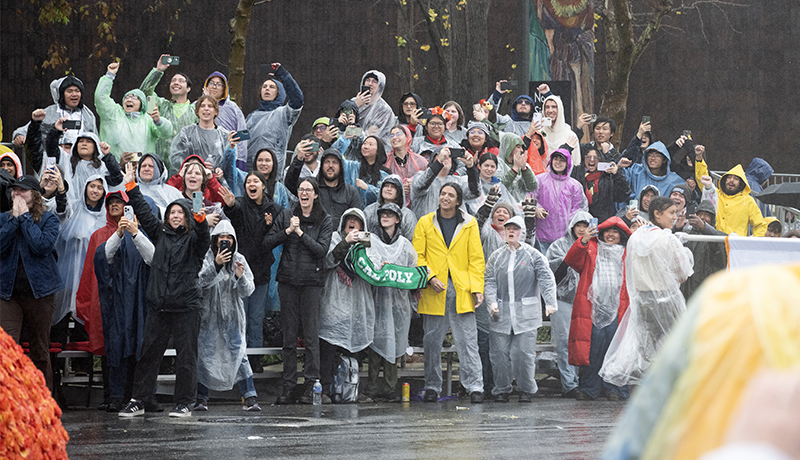
Friends lined the route in ponchos and rain gear, shouting and waving, their voices drowning out the speakers and music that had followed the float all morning.
“When we passed the Cal Poly section, they were losing their minds,” he said.
For both of them, it was a jolt. After months of work behind the scenes, the reaction made everything suddenly visible. The long days and small decisions stacked on top of each other had turned into something people could feel.
By the time the noise faded, there was already work ahead. The team still had to disassemble the float and clear the warehouse. A longtime joke had also become a promise. A past Rose Float president had pledged he’d shave his beard if the team ever won Sweepstakes, and this year others joined in — including Newton, who will be shaving theirs.
In February, the new theme arrives, and the cycle begins again.
By Emily Slater