Hack4Impact Turns Science Lessons Into Play

Before Penguin Run became a working game, it lived on sticky notes and in storyboards.
One team of Cal Poly students tossed out ideas, narrowed them down and mapped out how different levels might unfold on screen. They were trying to build something that could hold a child’s attention while still teaching meaningful science.
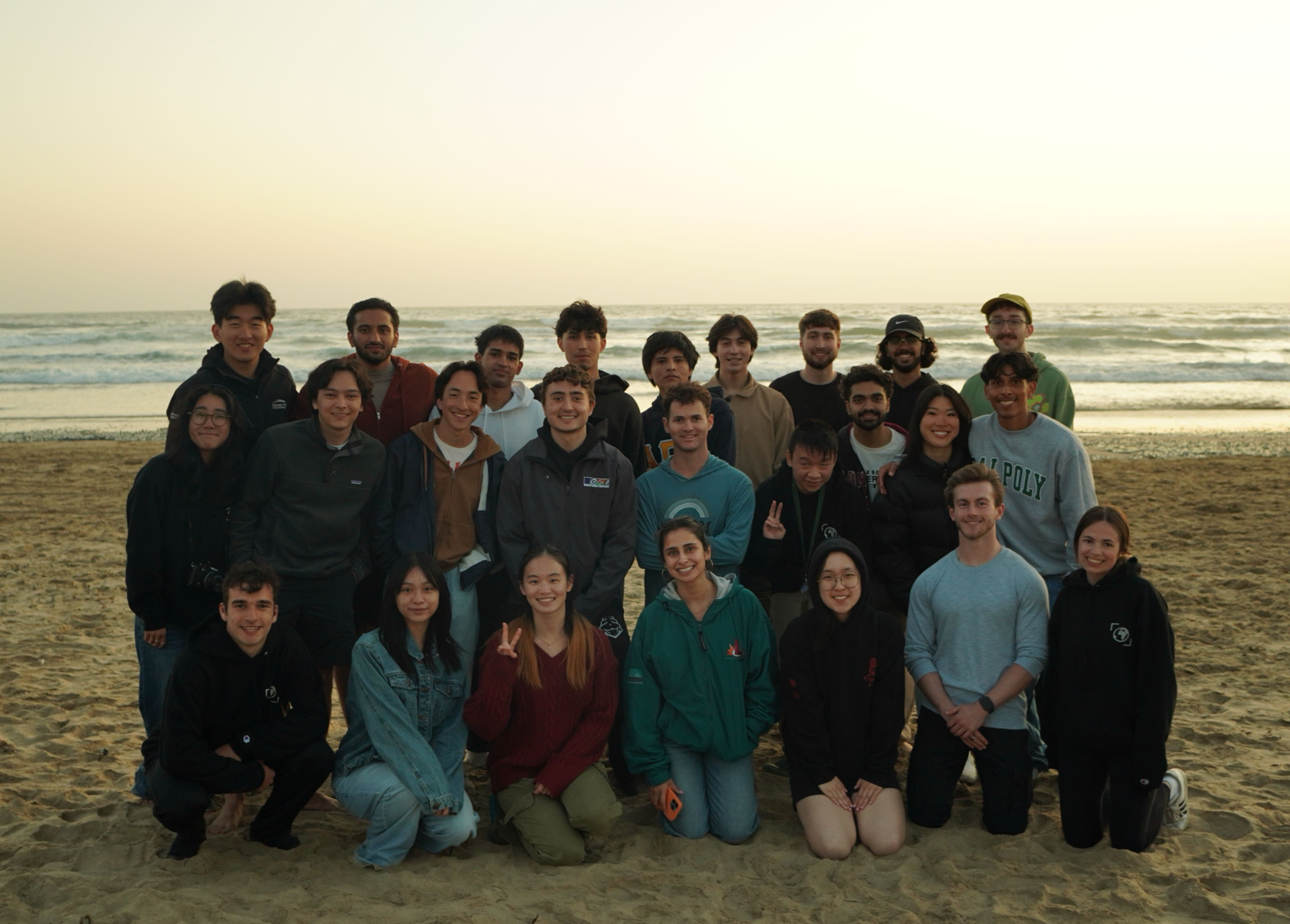
At Cal Poly, projects like this often start in Hack4Impact, a student-run club that develops software for nonprofit organizations. Members go through a fall boot camp in product management, design and coding before splitting into teams that spend the rest of the academic year building tools for partner charities, with support from faculty adviser Ayaan Kazerouni, a computer science and software engineering assistant professor.
What emerged was one of Hack4Impact’s most ambitious undertakings. In partnership with Kids First Initiative, the team was asked to build two online games, a website to host them and separate sign-in flows for students, parents, teachers and nonprofit staff. As the students worked through the nonprofit’s learning goals, those ideas became Penguin Run, a build-your-own-track game that sends a penguin sliding toward the finish, and States of Matter, a collection of short science games.
The assignment pulled the group into unfamiliar territory. They had to balance coding with visual design, keeping the science clear while making the games feel natural for young players. In the process, they learned to work through uncertainty, testing ideas and revising quickly.
The broader aim was to help Kids First extend its hands-on science and engineering lessons beyond the schools and communities its staff can reach in person.
Kids First Initiative is an education-focused nonprofit that brings science and engineering activities to children from underserved communities in the U.S. and Dominican Republic. The organization’s programs rely on demonstrations and interactive lessons for children ages 7 to 10.
Hack4Impact had eyed Kids First for a while. The fit made sense, but the work demanded more than the websites and software tools the club usually creates. Co-executive director Sanjana Checker said the club waited until it could devote a full winter-spring cycle to the project.
The challenge was also technical. “The tech stack was new, and we had to be sure we could deliver in two quarters while still supporting other projects,” said fellow director Jesus Avalos-Regalado, also a computer science senior. He added that the experience could broaden the club’s horizons and prepare it to take on projects with similar complexity in the future.
Kids First came in with clear learning goals but few technical requirements, leaving the Hack4Impact team to decide how those lessons would work on screen. Checker said the challenge was to turn the nonprofit’s classroom activities into digital games without losing the sense of experimentation and discovery that makes them work in person.
An early question for the team was how to make science feel playful. “One of the objectives was to teach kids about physics,” said Emi Dinh, a computer science senior and co-tech lead. “We talked with the designers about how to make that fun and unique.”
That thinking led the team in two directions. Penguin Run became a digital take on a marble run. A Kids First dry-ice lesson led to States of Matter, which evolved into a set of mini-games about how temperature affects solids, liquids and gases.
Building them required constant back-and-forth between design and development. The team included 10 developers, four designers, two tech leads and one project manager. Developers met twice a week, while designers met once, with the group working through two-week sprints built around specific tasks, from track elements and game mechanics to website features.
By the end of winter quarter, the pieces were finally starting to hold together. Penguin Run had one completed level. States of Matter had one level in each mini-game, and the website’s login flow was working. At the team’s midpoint Demo Day, once the artwork was integrated, tech lead Kasey Liu said the project began to feel less like a set of separate tasks and more like a finished game. With spring quarter about to begin, the focus shifts to refinement and testing with children.
The games were designed around trial and error, asking children to build something, see what happens and try again. The students behind them had spent months learning Unity, a platform used to build video games, and reworking ideas until the games became something a child could actually play.
Dinh described it as getting comfortable with discomfort. Liu described it as learning how to find answers while the team worked through unfamiliar problems. Both said that unfamiliarity became one of the most valuable parts of the project.
The project also reflected something larger about Hack4Impact. Service drives the club’s work, and teamwork sustains it. The teams are interdisciplinary, with students from fields including computer science, business, industrial engineering and graphic design working side by side. Over months of development meetings, design reviews and social traditions, project teams grow into communities.
Checker said some of her closest friendships at Cal Poly have grown out of Hack4Impact teams. The club encourages that kind of bonding through group activities and friendly competition, giving students a reason to spend time together outside project meetings too.
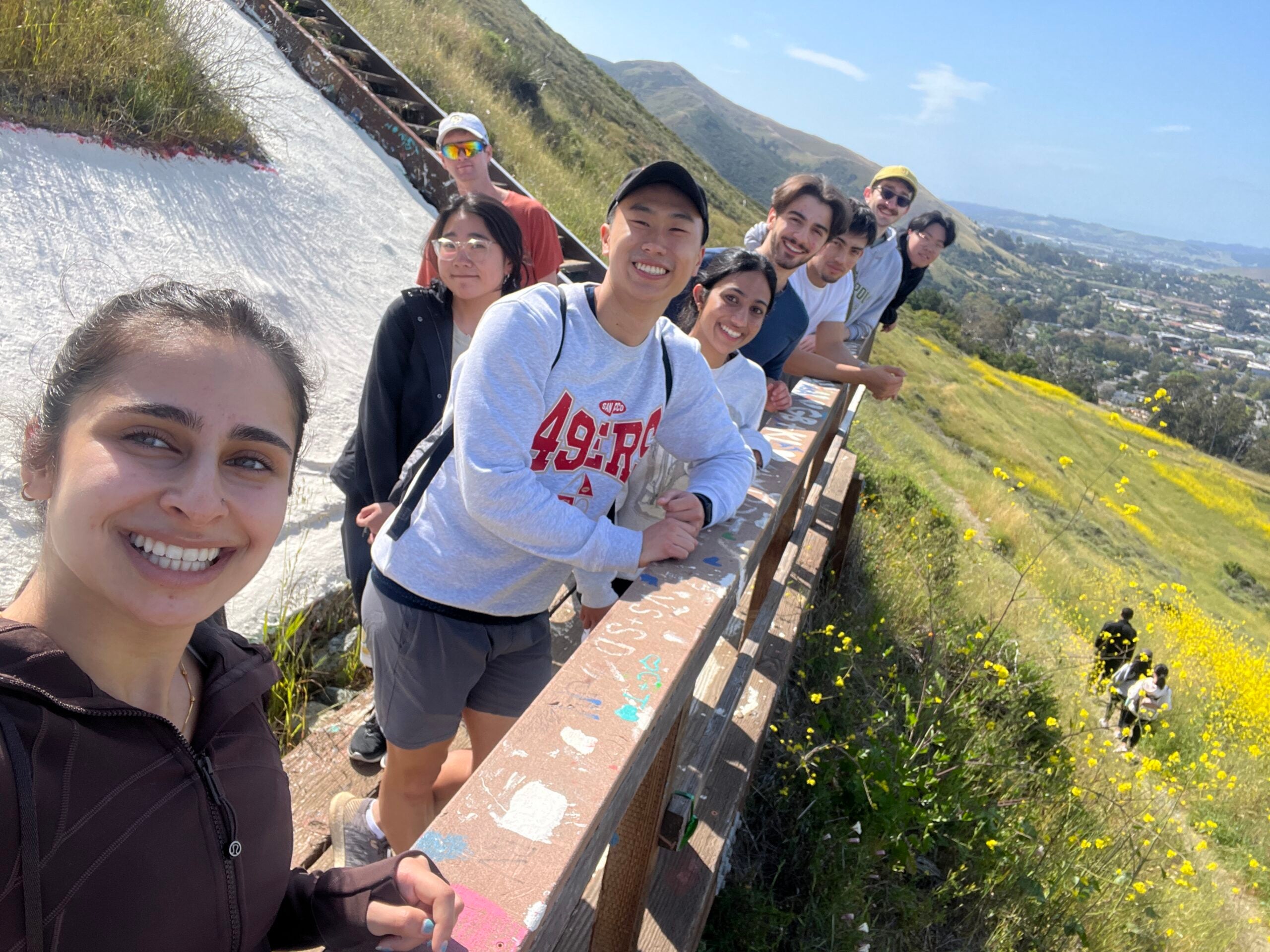
“You make lifelong friends,” she said. “And you learn how to work as part of a big team.”
That shared investment shaped this project, too. Liu said the enthusiasm spread quickly, and developers kept stepping forward as the work evolved. Even as deadlines approached, the project carried energy from both the mission and the people behind it.
With all four student leaders interviewed for this story graduating this year, the team will hand off its current version of the project to Kids First at the end of spring quarter. Checker said she hopes it leaves room for future Hack4Impact teams to build on the work, both for its potential with Kids First and for the kind of challenge it introduced to the club.
To learn more about Hack4Impact and its nonprofit partnerships, visit the club’s website here.