
With tools out in the open and help close at hand, the makerspace is changing who builds — and how
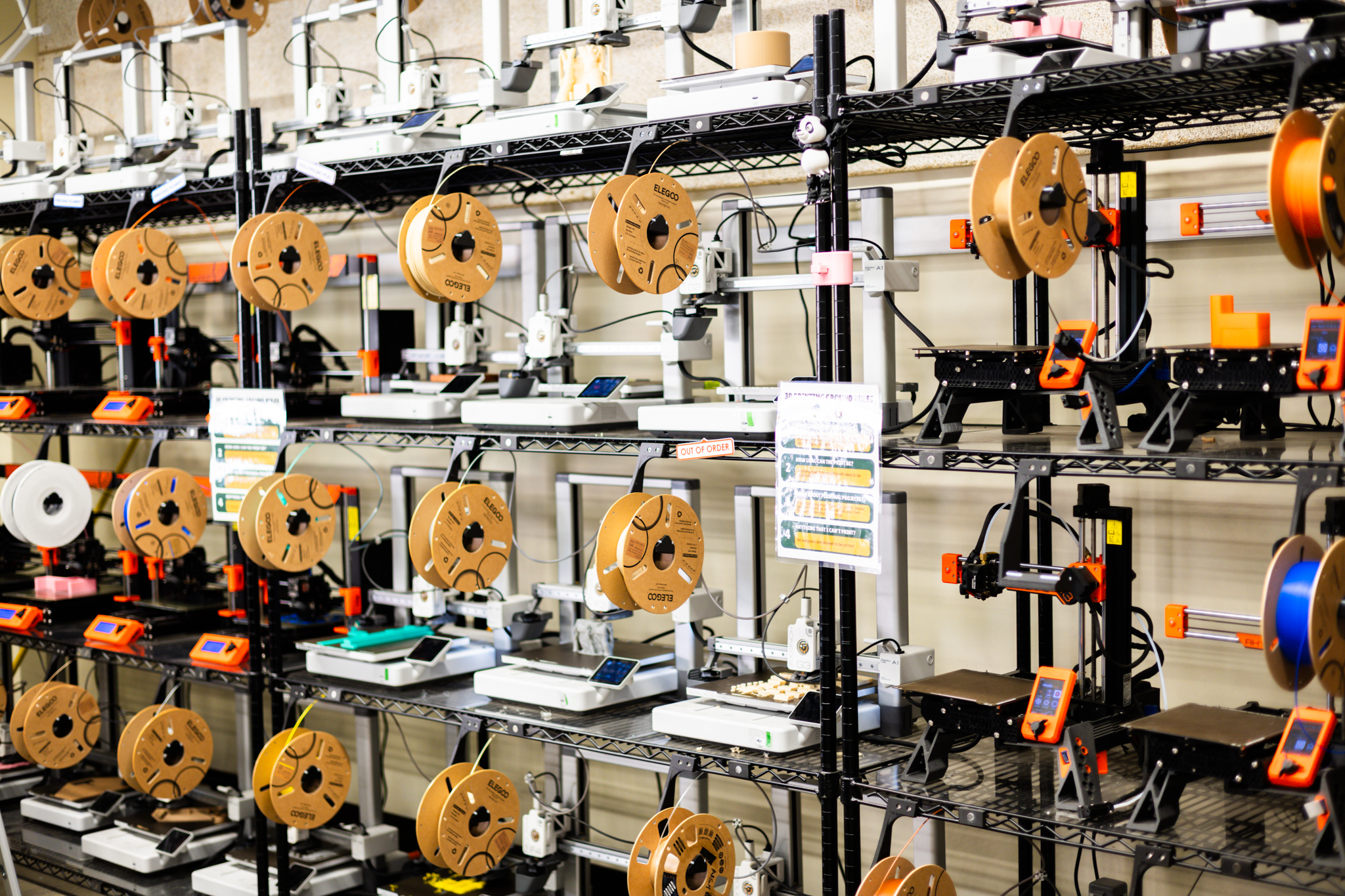
The first thing most students notice in the Mustang Makerspace is the wall of 3D printers.
They line wire racks along the room, spool after spool clipped in place, with printers stacked four levels high and running side by side. The size stops students in their tracks. The ease of using it keeps them there.
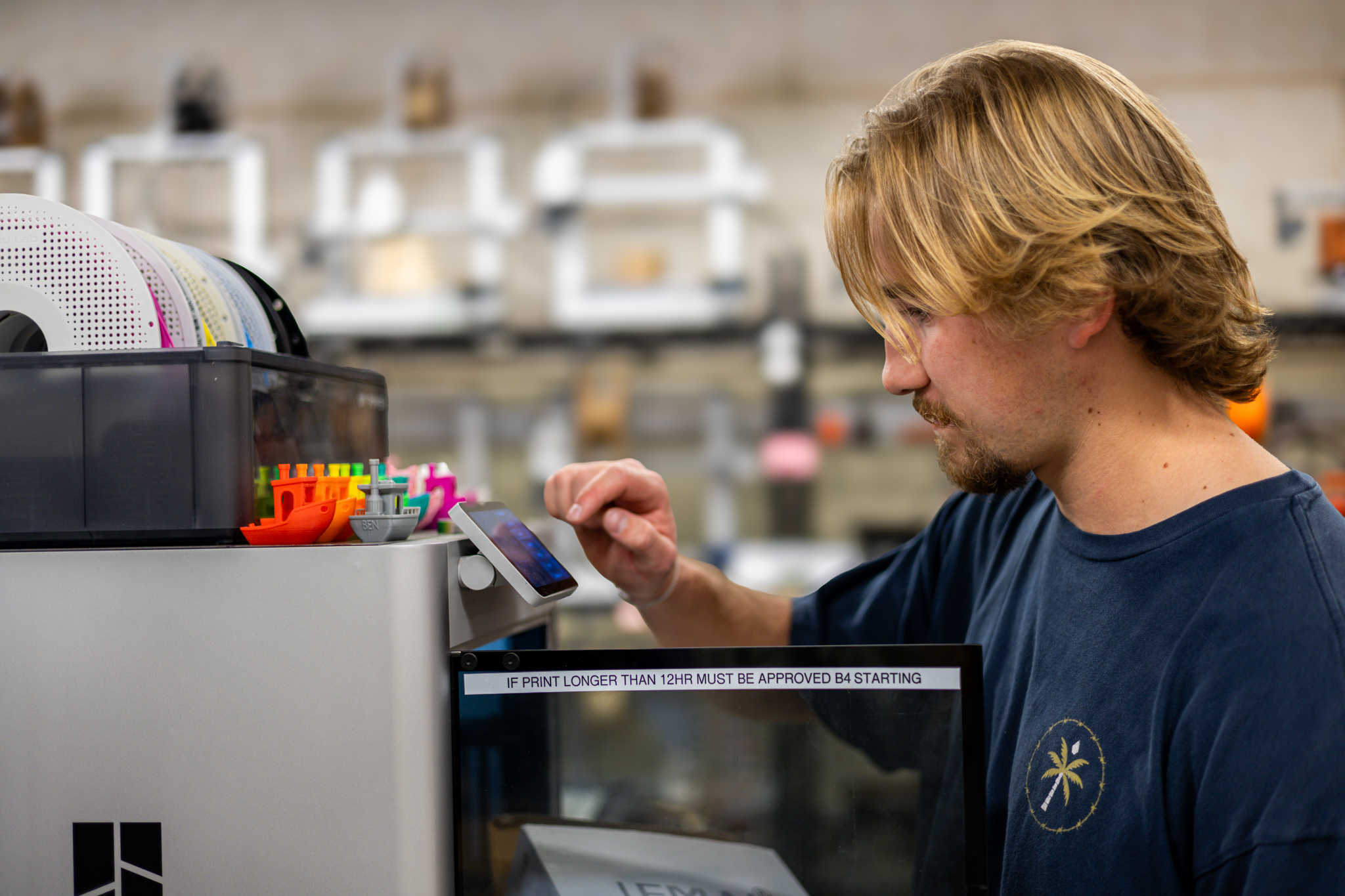
Located on the first floor of the Bonderson Engineering Projects Center, the makerspace is designed to be easy to find and approachable. It’s open to students from every major, and no prior experience is required. Students don’t need red tag certification to start 3D printing, and staff are on hand to help them learn the basics and get started. They can walk in and ask, “How can we 3D print this?”
“The barrier to entry is so low,” said Rory Baker, an equipment technician who helped bring the space online. “You can walk in, and we can get you up and running.”
Before the makerspace opened at the start of fall quarter, free student printing was scattered across campus. Some printers were in the Innovation Sandbox, a student-run space in Bonderson with 3D printing and other prototyping tools. Others were tucked inside Mustang ’60, the campus machine shop, where they shared space with machining operations. The tools were there, but they were spread out, easy to miss and increasingly constrained by space.
Now, the makerspace sits just next door, with roll-up doors that open the work inside to the high bay.
“I knew this place would explode,” said Eric Pulse, manager of Mustang ’60.
He was talking about more than foot traffic. Once the printers moved into an open, dedicated space, use surged. Last spring, 16 older printers logged about 8,000 hours of print time and used 109 rolls of filament. This fall, newer and faster machines helped push that number past 22,000 hours of printing and more than 800 rolls of filament in a single quarter.
Meeting that demand has taken more than machines. It has also required support across campus, including funding from all six colleges to staff and sustain the space. Once students find it, they tend to share it.
Most users come from the College of Engineering, but architecture students have become familiar faces, and others arrive from agriculture, business and liberal arts. Many come back once they’ve tried it.
“We have architecture students who I now see every day,” Baker said. “They’re working on building and staircase models, things like that.”
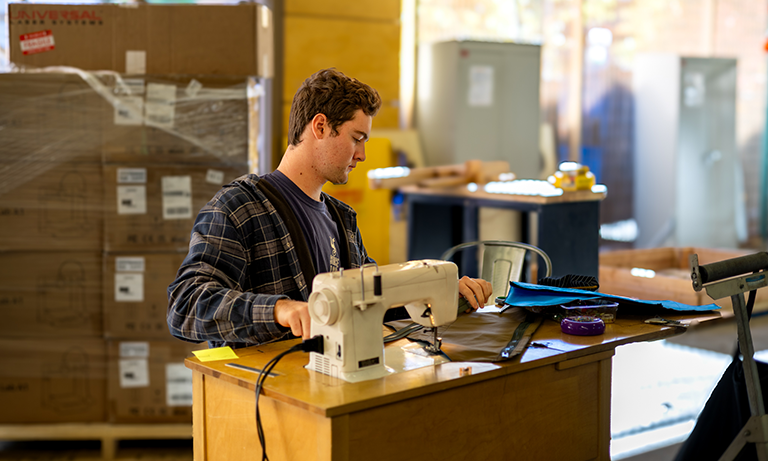
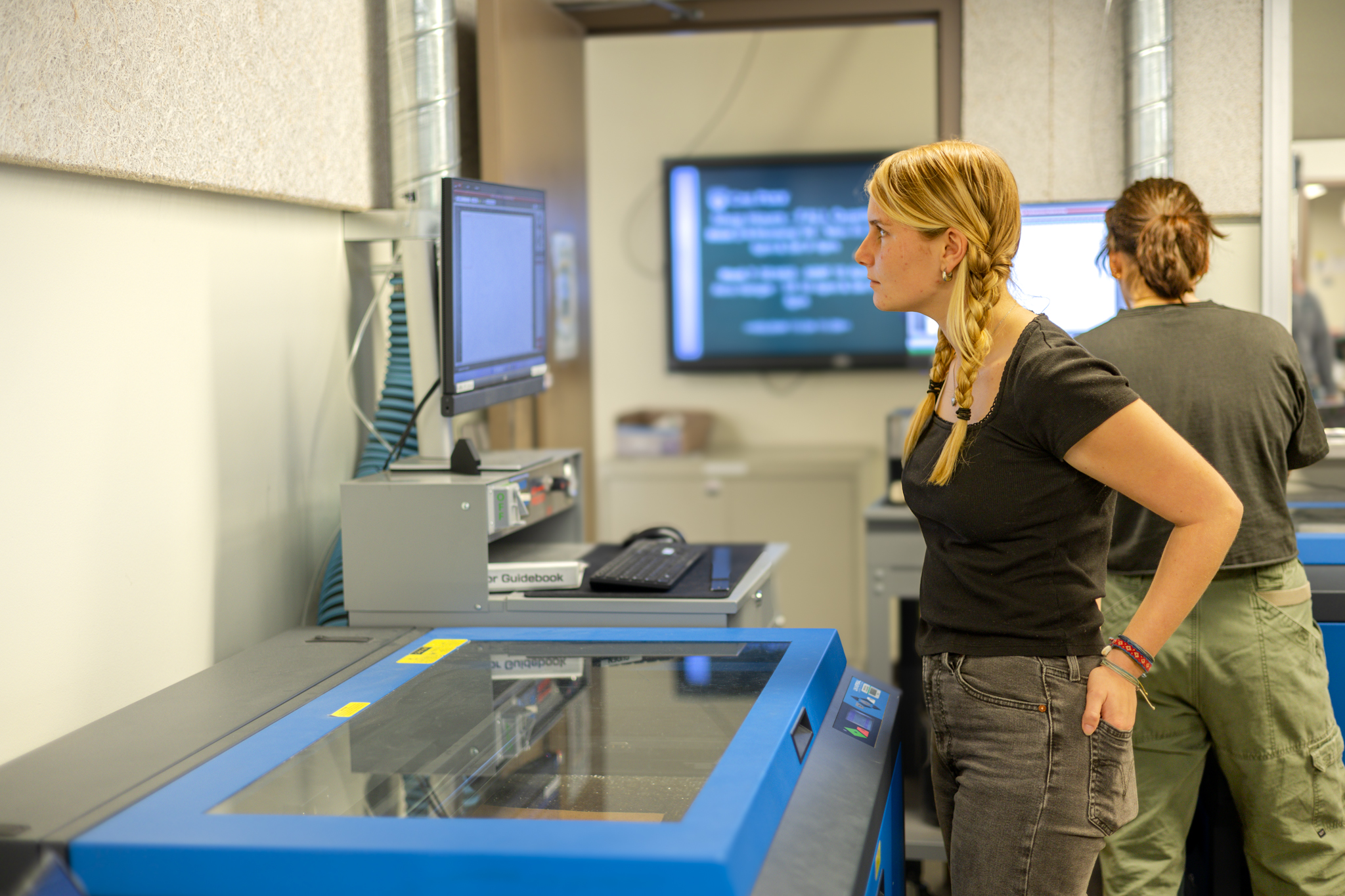
The projects vary widely. Beyond 3D printing, students use laser cutters to shape wood and acrylic and build enclosures. Others gravitate toward the sewing machines, serger and embroidery equipment, stitching bike bags, personal projects and club apparel. Dance teams and student organizations have used the embroidery machine to add logos to sweatshirts, while clubs make items they can sell to support their work.
Keeping the space running at that pace takes people, too. Student technicians help users get started and keep projects moving.
Joel Arceneaux, a mechanical engineering major set to graduate in spring 2026, is one of them. A student technician and 3D printing supervisor, he works at the center of the makerspace’s daily rhythm.
Arceneaux developed an interest in 3D printing in high school and later spent two years on Cal Poly Racing’s Baja team, where he used printing to make molds and refine composite parts. When the makerspace took shape over the summer, he helped move equipment, set up machines and get the printers running for opening week.
As word spread during the fall quarter, usage climbed quickly. By the middle of the day, many of the printers were already in use, with students timing their visits around class schedules and open hours.
What stands out most to Arceneaux is not just the volume, but the way students help one another once they’re inside.
“You see a lot of people teaching each other,” he said. “That’s been really exciting.”
For mechanical engineering lecturer and Cal Poly Racing faculty adviser John Fabijanic, the makerspace has changed how students approach design.
“Students can make real parts,” Fabijanic said. “Enclosures for electronics, prototypes they can hold in their hands. The visualization piece is huge, especially for students who haven’t done this kind of work before.”
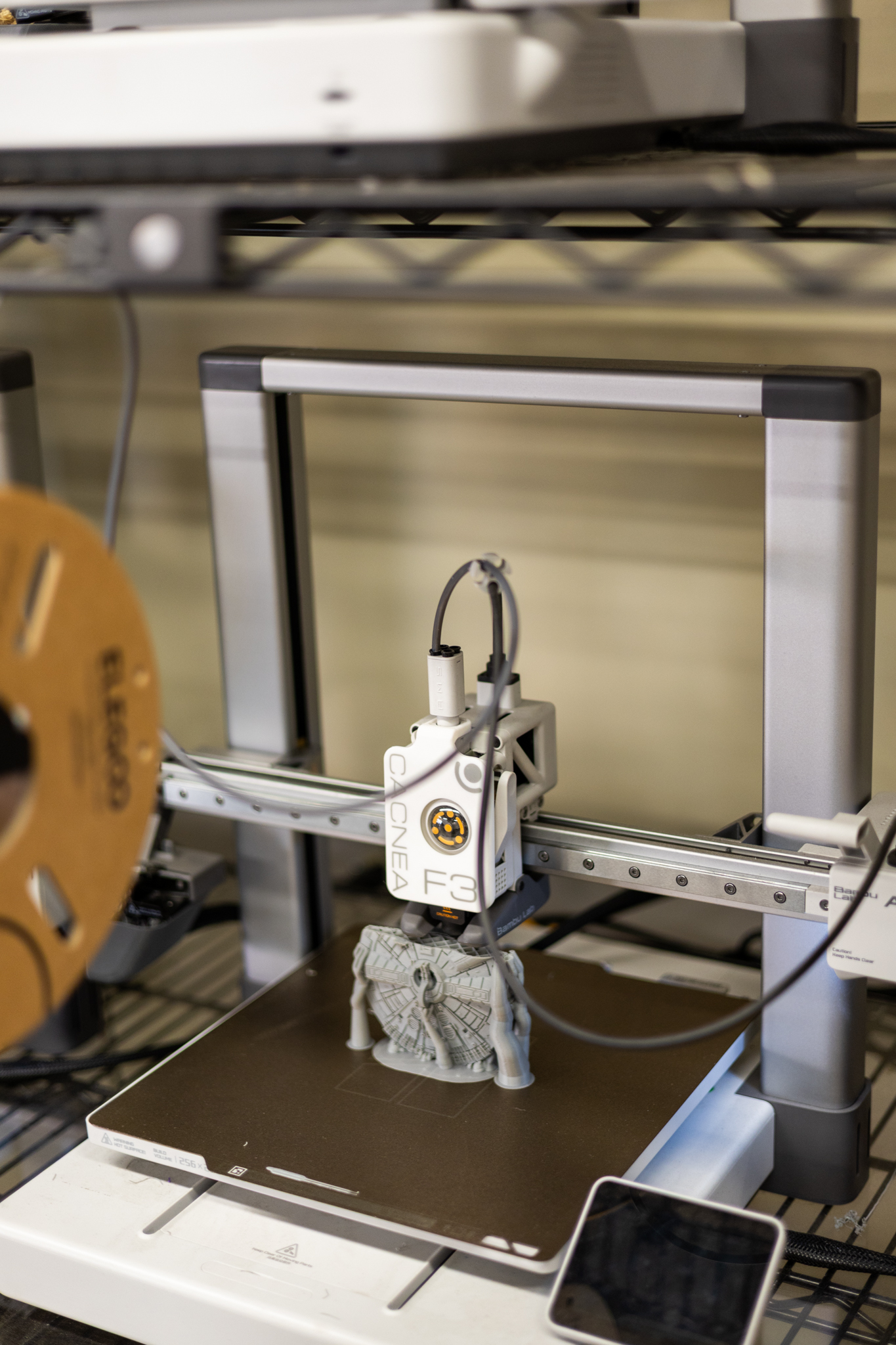
He pointed to Cal Poly Racing’s Baja car, where 3D printing allows students to model components within the tube frame before fabrication, improving fit and speeding up iteration. “You can make really complex parts,” he said. “Fluid reservoirs, aerodynamic components, molds. It’s been a gamechanger.”
During Racing’s Build Week, even as much of campus slowed for winter break, the makerspace stayed active, with students stopping in to keep projects moving.
That growth has been supported by an unusual funding model. The makerspace is one of the few Instructionally Related Activities funded collectively by all six colleges at Cal Poly. For the 2024–25 academic year, the colleges contributed a combined $45,672 to support the space, according to Pulse.
Eight new student technicians will start in January, and Baker said more trainings are on the way. What used to be tucked into different corners of Bonderson is now visible, and students are using it in steady, practical ways.
By Emily Slater
Mustang Makerspace at a glance
- Open to: All Cal Poly students
- Hours: 10 a.m. to 7 p.m. Monday through Friday; 9 a.m. to 6 p.m. Saturday
- Equipment: 3D printers, laser cutters, a vinyl cutter, sewing machines, a serger and an embroidery machine
To support student technicians and hands-on work in the machine shops and Mustang Makerspace, visit here.
