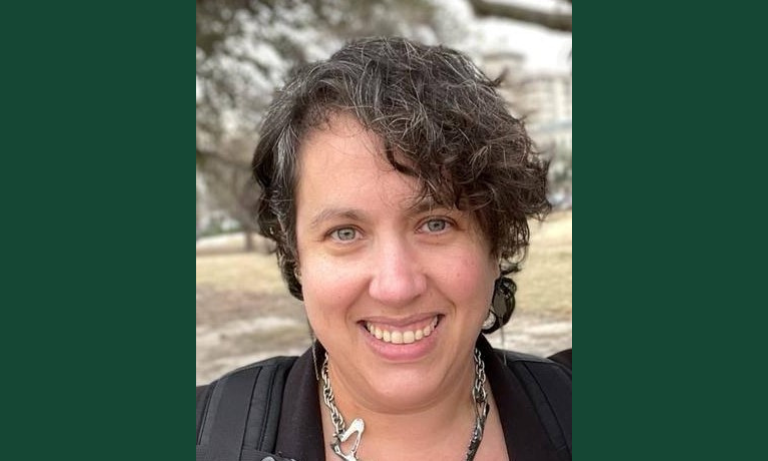
Each week, the College of Engineering features an outstanding member of the engineering community to be part of its spotlight campaign. This week, we are highlighting Tara Goddard, civil engineering Assistant Professor.
What brought you to Cal Poly’s College of Engineering?
Cal Poly engineering is such a fantastic combination of bright, engaged students; dedicated faculty and staff; the top civil engineering undergraduate program in the nation; and one of the prettiest places in the country. What isn’t to love? It was a great fit, and I am very happy to be back in California.
Tell me about your research interests and why you are passionate about this topic.
Broadly, I study transportation safety, particularly for people who walk, bike, roll, use transit and otherwise move around outside of cars. Traffic crashes are one of the leading causes of serious injury and death in the United States, especially for children and young people. But this is not inevitable — the United States is an outlier among other wealthy nations by a large margin. I study various aspects of this to try to reduce these injuries and deaths. Most of my research has to do with the ways that our attitudes and biases affect our road system — and its danger — and seeks to inform ways to change the transportation profession to achieve the goal of zero serious injuries and deaths.
What do you want others to know about your research? Why is your topic important?
It isn’t hard to make the case that everyone should care about road safety, since it affects all of us. There is a reason that it is a trope so common in TV and movies, that someone is affected by the serious injury or death of a loved one in a crash. What I want people to be aware of are all the ways we can contribute to safer transportation systems, whether by our own choices behind the wheel or what we demand of our policymakers for better regulations and funding.
What are some of the upcoming projects or publications you’re working on?
I am really proud of the work I am doing with a large group of colleagues, including Ryan Miller, a professor in city and regional planning, on evacuation during the 2025 Los Angeles wildfires. We surveyed hundreds of people who use transit in the Los Angeles area about their experiences during and after the fires and were able to interview a large subset of that group who generously took time to tell us their stories. We have a report and a policy brief published from that work and are working on multiple journal articles and conference presentations.
What is your favorite part of your job?
I’m lucky to like basically every part of my job, even if it stresses me out sometimes! I even enjoy much of the dreaded committee work, like reviewing and updating curriculum. But advising is one of my favorites, because it lets me really get to know each student and their values and goals, and I get to provide advice and open doors for their individual professional paths.
What is your favorite place in San Luis Obispo County and why?
Since I moved here in August, I’ve been trying to get out to a new trail or beach every week. I’m a big hiker, and getting back into trail running after an injury made me realize there are so many great trails in the county. So far, my two favorite spots are Montaña de Oro State Park for hikes and Morro Rock Beach for impromptu picnic dinners. I’m always happy to get suggestions for the best spots to check out, especially if the birdwatching is good!
How do you like to spend your free time?
Other than hiking and beachcombing, I like birdwatching and have taken up sketching birds. I’m not very good, but it’s fun! I try to live by the mantra of “be brave enough to suck at something new.” I also like watching TV, reading and spending way too much time on Bluesky.
What is the most helpful advice you’ve received?
I have been fortunate to learn from so many people I’ve encountered in my life, and it is hard to pick a favorite piece of advice. But as trite as it may be, “life is short” is definitely one of my guiding principles. I’m a cancer survivor, which certainly helped bring that home. I try to live with as much kindness and gratitude as possible and not leave regrets on the table.
How does engineering apply to your daily life?
Well, it helps to be pretty handy around the house! But, of course, engineering is around us everywhere. We focus on the big things, but usually it is the smaller, mundane stuff that blows my mind. Like, I’m grateful for microwaves every time I need to reheat a burrito.
How do you encourage engineering students to make an impact on the community?
This is one of the best things about Cal Poly — the focus on Learn by Doing and service-based learning. We have so many opportunities through classes and programs like SURP to make an impact. But I also encourage students to get involved where they live, which can be tough with a student schedule, but is very rewarding. Volunteer at the animal shelter or local soup kitchen. Get involved with a city planning committee where important engineering decisions are being made. Find something that you enjoy and make some time to do that a little bit each week or month. You’ll help the community and get a needed break from assignments, tests and school stresses.
How do you support the college’s commitment to justice, equity, diversity and inclusion?
The college’s commitment to these issues is one of the things that sold me on coming here. I remember during my interview trip walking into the Dean’s Office to meet with Associate Dean Zoë Wood, and there were the transgender and progressive pride flags on the front desk. There are gender-inclusive bathrooms. There is the Hispanic-Serving Institution Symposium. Everything made it clear that Cal Poly and the College of Engineering walk the talk of inclusion. I try to echo that through the classroom environment I create, my approach to mentoring and the communities I aim to serve through my research. One of the main ways I think we can all practice better JEDI is avoiding gatekeeping. Engineering can be super technical and is as full of jargon and acronyms as any field, and that can be a big barrier for folks who might be the first engineer in their family, for example. So being mindful of not assuming everyone has the same (often privileged) background is a simple but effective way we can all support a diverse group of students and peers to not only survive but thrive in the program.
By Taylor Villanueva