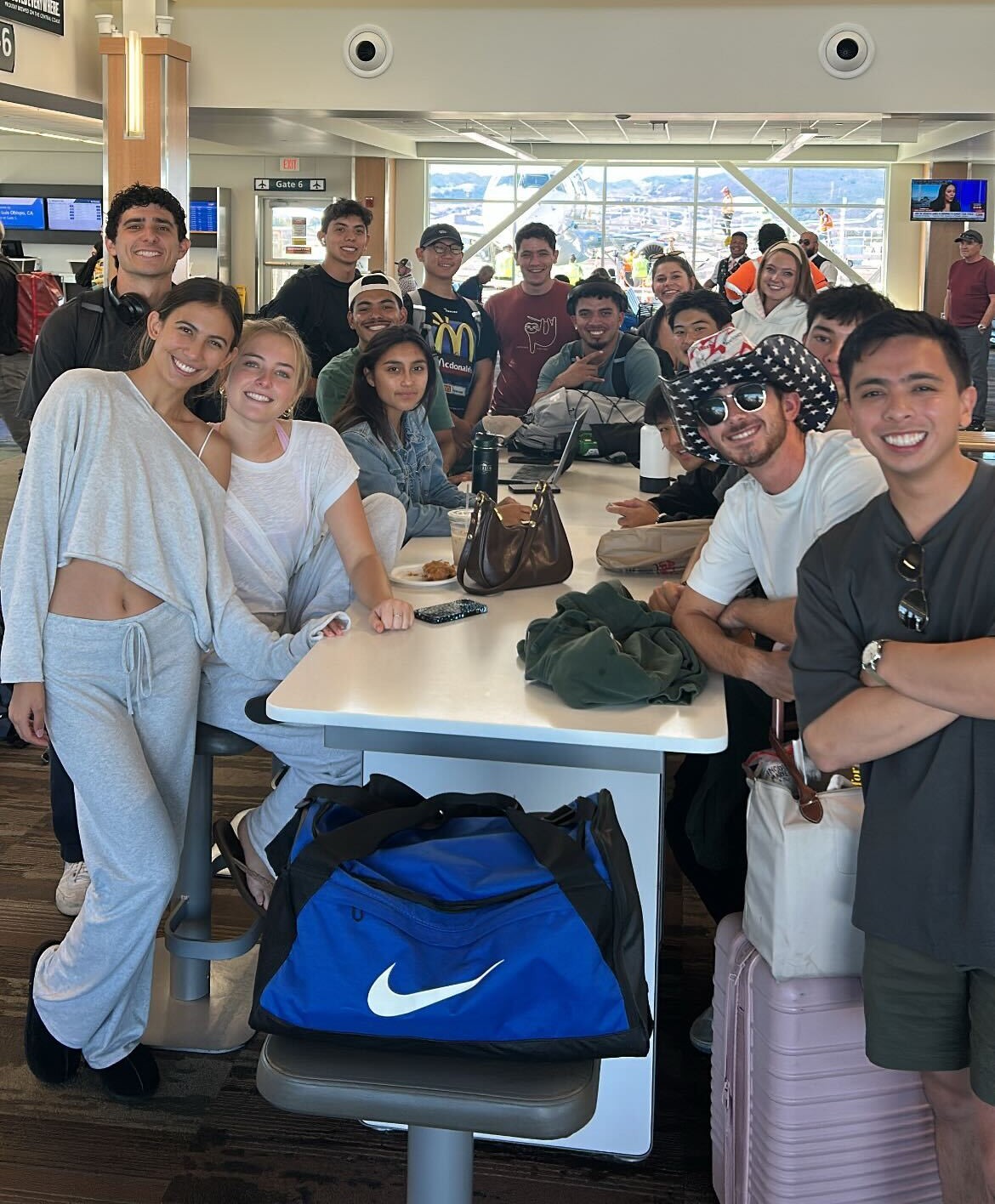
Cal Poly’s Sales Engineering Club arrived in Nashville with luggage in hand and no time to spare.
After a chain of flight delays rerouted them across the country, some students stepped off the plane after a sleepless night. They landed after the National Sales Engineering Competition had already begun and went straight into discovery meetings with judges. In sales engineering, that first meeting is the make-or-break moment. You have to build rapport quickly, listen hard and surface the real problem before you ever pitch a solution.
Even on no sleep, they walked into that first meeting ready.
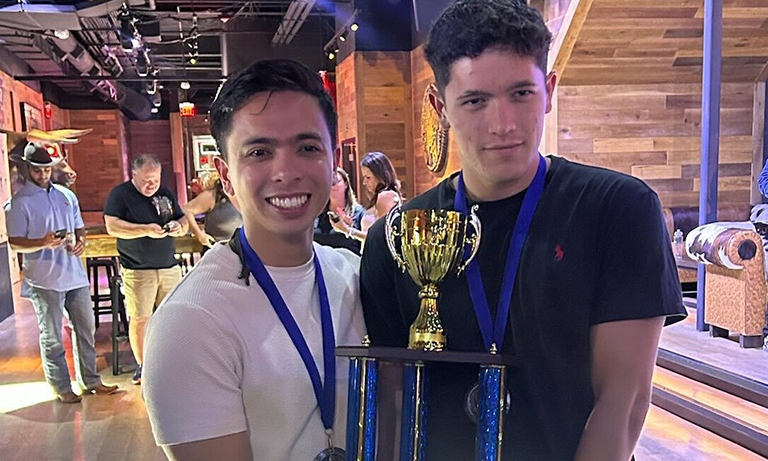
By the end, Cal Poly had one of its strongest finishes yet. Club President Owen Arreguy, a mechanical engineering senior, and teammate Abram Fontanilla, who recently graduated in mechanical engineering, took second place overall in a field of nearly 150 students, missing first place by just half a point.
“When we placed second, everyone was chanting ‘Go Mustangs,’” Fontanilla said. “It was exhilarating.”
The finish was a headline result, but it also reflected what the club does all year. As the first Sales Engineering Club chapter in the country, the group has built a culture that connects students with employers early, sometimes as soon as their first year. Club leaders say they’ve never had an officer graduate without a job lined up.
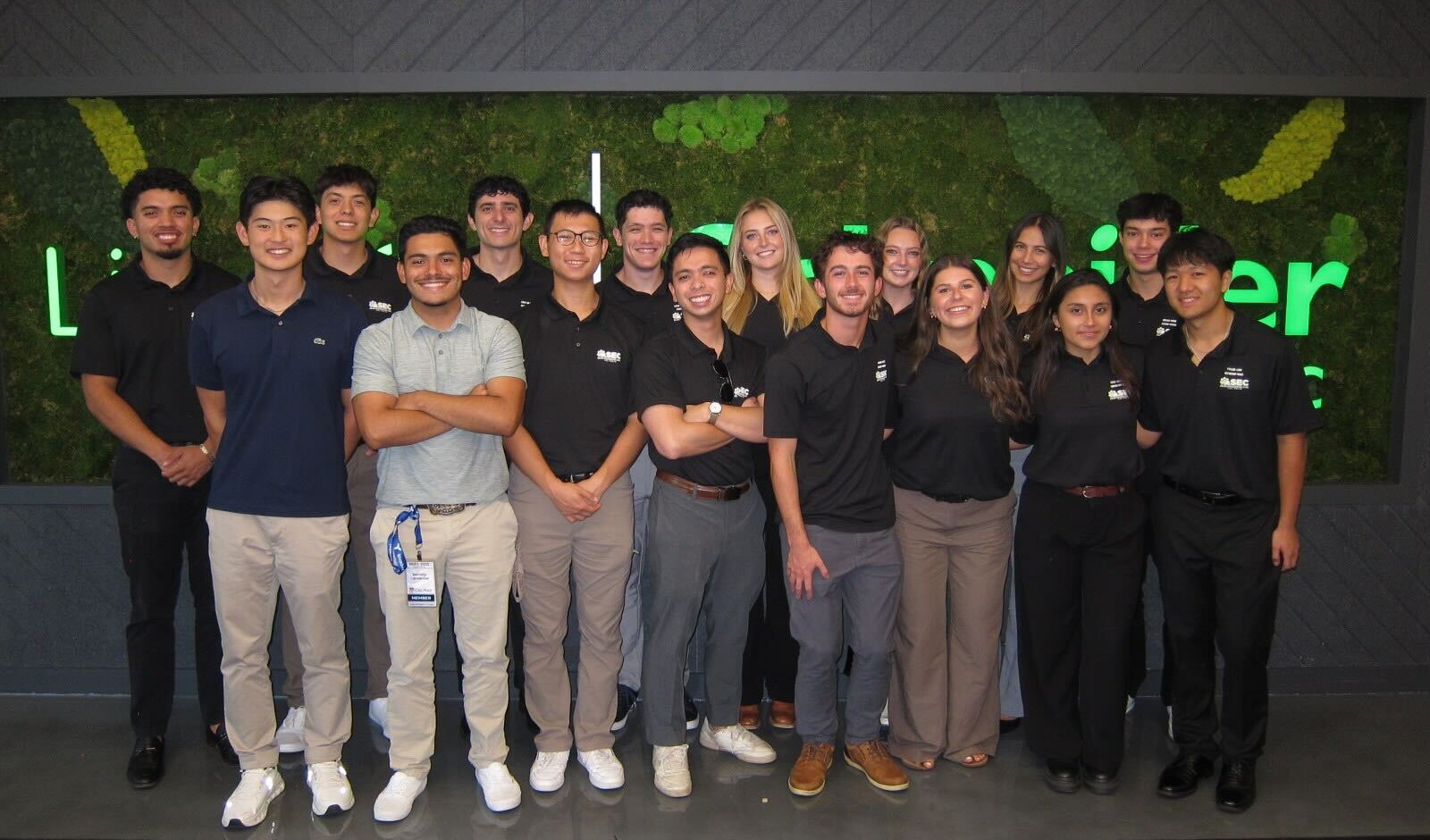
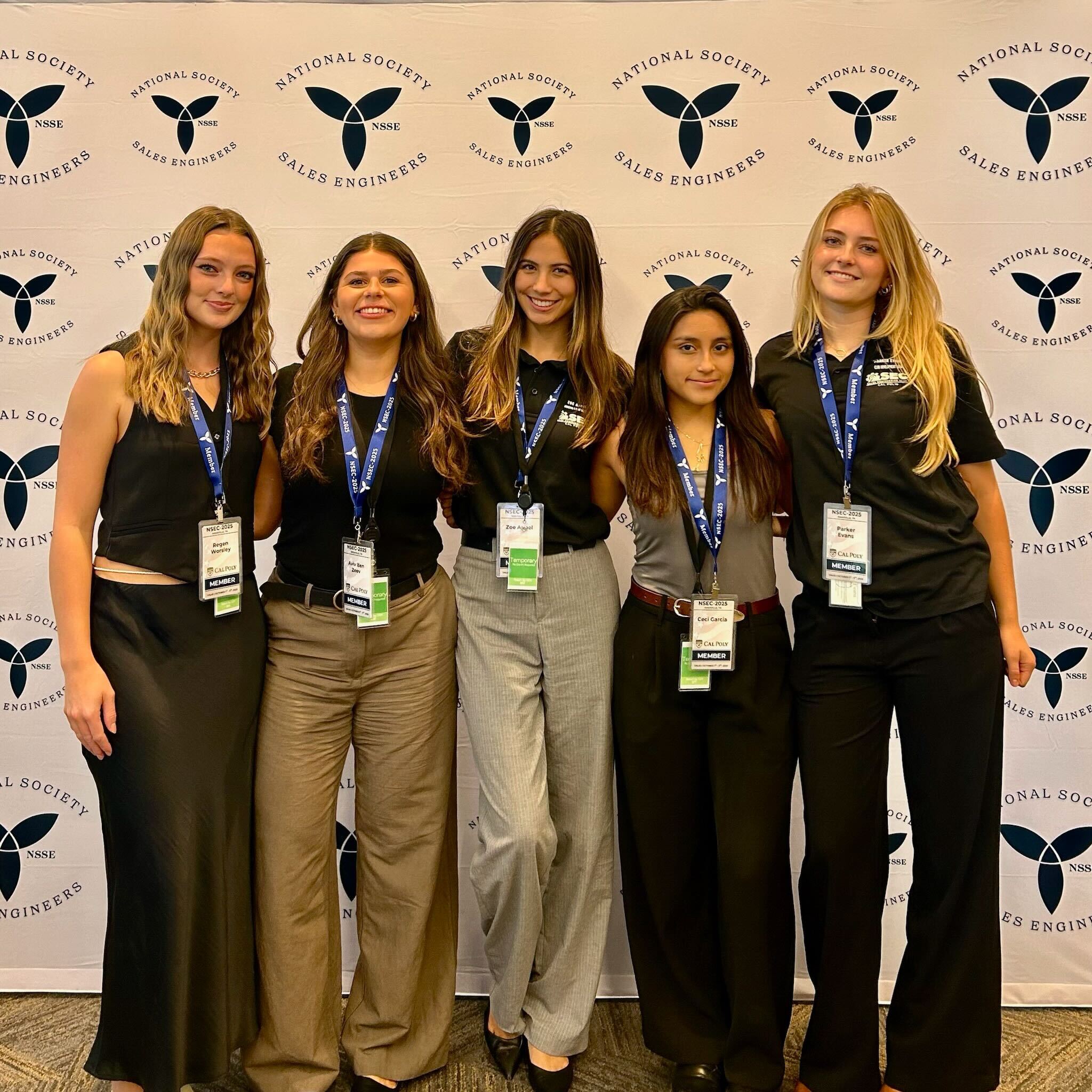
In early October, the National Sales Engineering Competition brought together 144 students from 20 universities. Cal Poly sent 16 students, competing across 74 teams. Several Cal Poly teams finished in the top 20, including a first-time team of sophomores that placed eighth.
Each team received a case study built around a technical problem and met with judges acting as decision-makers from the buying company. The opening round focused on discovery, with teams working to uncover priorities and constraints. The next day, they returned with a recommendation, expected to present it clearly and defend it under questions.
“The key is understanding the problem before spending money to solve it,” Arreguy said.
For Arreguy and Fontanilla, that meant going beyond a basic upgrade recommendation. The case centered on a choice between two Schneider Electric panel lines, and the contractor had to decide whether an upgrade was worth the cost. They looked for what the rubric called an “X factor,” a creative element that could elevate the pitch.
They found it by widening the conversation. During the discovery meeting, they learned the client was interested in going green. They framed the project as a step toward electrification and backed it up with a clear return-on-investment case.
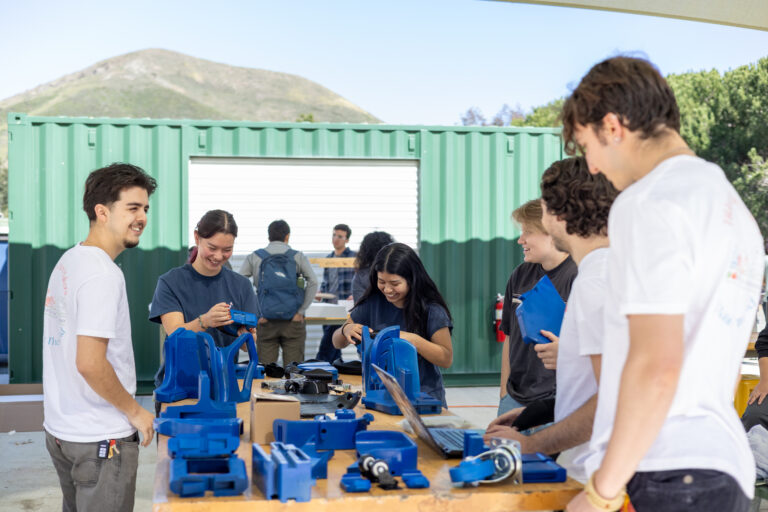
They also arrived with proof judges could hold. Arreguy purchased circuit breakers ahead of time and brought the receipt to show they were readily available. Fontanilla 3D-printed electrical panel models to demonstrate the difference visually during the pitch.
“You don’t jump to solutions,” Arreguy said. “You learn to understand the problem first.”
Arreguy’s path to that podium started the way many students find the club, by showing up one Tuesday night.
He joined the club in 2022 after a friend mentioned there would be free food. By the end of the night, he had a lead on an internship, and he realized the mix of business and engineering fit him. Arreguy had considered both paths, and sales engineering offered a way to stay technical while working directly with people.
He became an account manager as a sophomore, then stepped into leadership. Over the past two years, he has served as club president, helping guide a student organization that mirrors the structure of the industry it feeds.
Fontanilla’s entry point looked different. A transfer student from Sacramento City College, he arrived at Cal Poly in fall 2023 still unsure how mechanical engineering would translate into a career he enjoyed. He first heard about the club during a presentation in a design class, delivered by Arreguy. They didn’t know it then, but they’d become best friends.
“He talked about running a business within a business,” Fontanilla said. “It wasn’t pure sales. You still had to be an engineer, because you’re selling complex systems and you have to understand the product.” Fontanilla started attending regularly and later became the club’s vice president of finance, managing budgets and working directly with sponsors.
That structure is intentional. The club operates as a pipeline, introducing students early to employers through company spotlights and career fairs. Leadership roles carry responsibility, from managing sponsor relationships to organizing events.
For students like Arreguy and Fontanilla, the experience has shaped not just their resumes but how they approach problems and conversations.
When Fontanilla talked about Nashville again, he was already packing up his life in San Luis Obispo.
He had wrapped up his final coursework at Cal Poly just hours earlier and was ready to head east for his next chapter. The second-place trophy sat back in the club’s locker room, but the habits that earned it were coming with him.
Fontanilla will begin work as a sales engineer at Johnson Controls, a role that fits the version of engineering he discovered through the club. “I didn’t know what I wanted to do with my career two years ago,” he said. “But I found my place within mechanical engineering.”
Arreguy is already beginning to hand off the role. He’ll start transitioning out as club president this spring, then stay one more semester in the fall to finish his master’s degree. Before he leaves, he plans to compete once more.
Years ago, the first national Sales Engineering Competition was held at Cal Poly. In early October, the club returned with another top finish and a reminder that its momentum comes from the steady handoff between students just arriving and those already stepping into what comes next.
Want to join? The Sales Engineering Club meets Tuesdays from 6 to 7 p.m. in the Bonderson Club Room (Building 197, Room 104). Details at calpolysec.org.
By Emily Slater