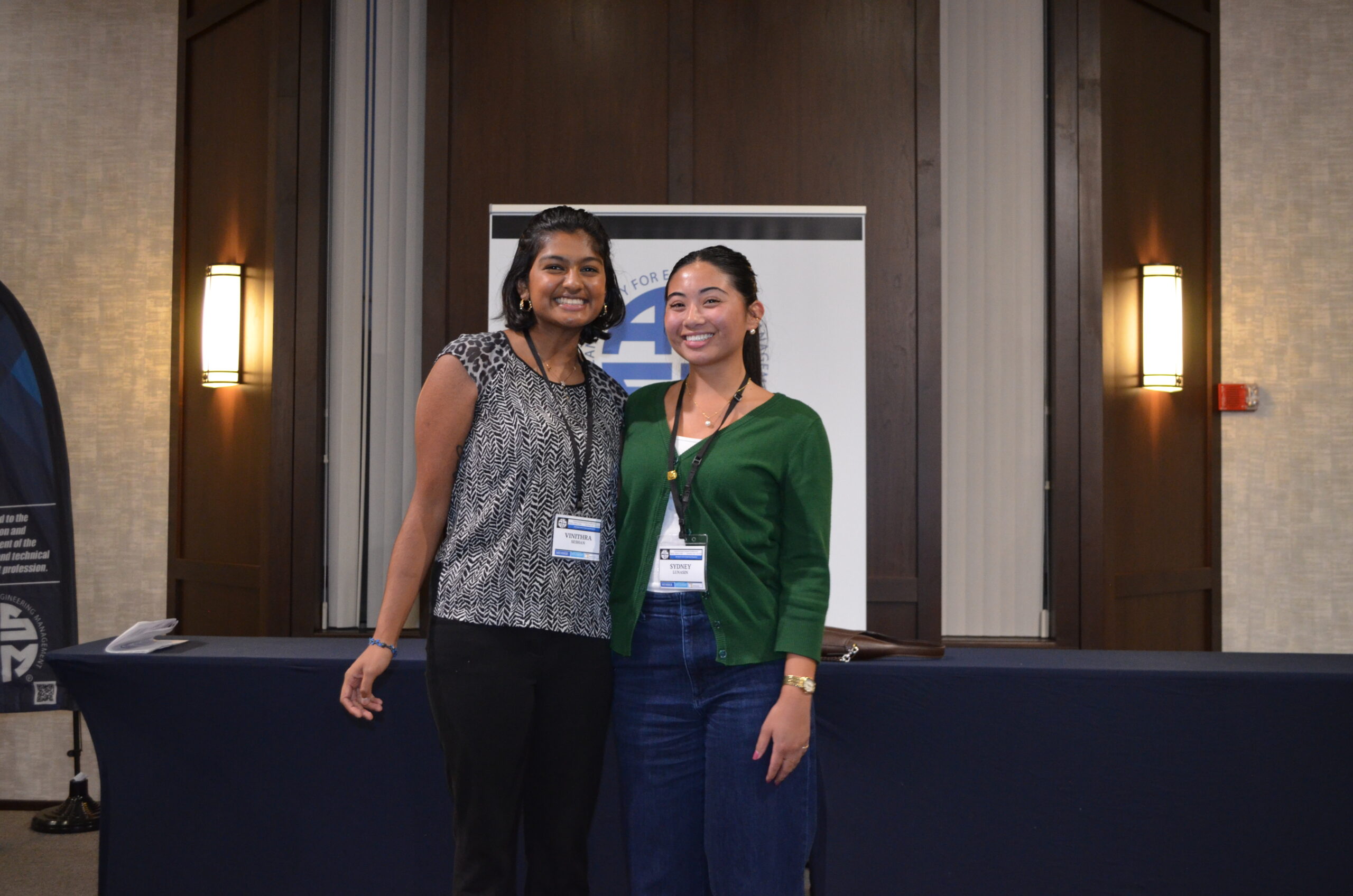
On a stage in Boise, Idaho, Sydney Lunasin and Vinithra Seshan stepped up with a goal of unveiling a societal problem. They wanted to share their findings on the challenges women and minority business owners face and spread awareness while carving out a path for change.
As industrial and manufacturing engineering students, Lunasin and Seshan know all too well how critical women- and minority-owned micro-, small- and medium-sized businesses are to local economies, yet they face unique challenges.
They wanted to dive in and take steps to find solutions to help these essential businesses. Funded and supported through the Believe, Educate & Empower, Advocate, Collaborate, Nurture — or BEACoN — program, Lunasin and Seshan got to work speaking with 25 business owners in San Luis Obispo and Santa Barbara counties to gather data for their research. They worked under the advisement of assistant professors of industrial and manufacturing engineering Jill Speece and Mohamed Awwad.
Their research showed that good customer service could make or break a business.
“Being part of the community helped build the businesses’ customer base,” Lunasin said. “Building connections internally through employees and externally through customers while creating a unique brand identity helped businesses provide a strong mission and vision.”
While the solution to making a successful business may seem straightforward, there are barriers that can get in the way.
“One person may own the business and be a mom, and finding time to balance both can be difficult,” Seshan said. “They have these goals but might not have time. This applies to most small businesses because it’s usually only one person behind the scenes.”
Part of the solution is, when hiring employees, to hire people who support a clear mission.
“If 20% of your employees don’t believe in your mission, it affects customers and the business as a whole,” Lunasin said.
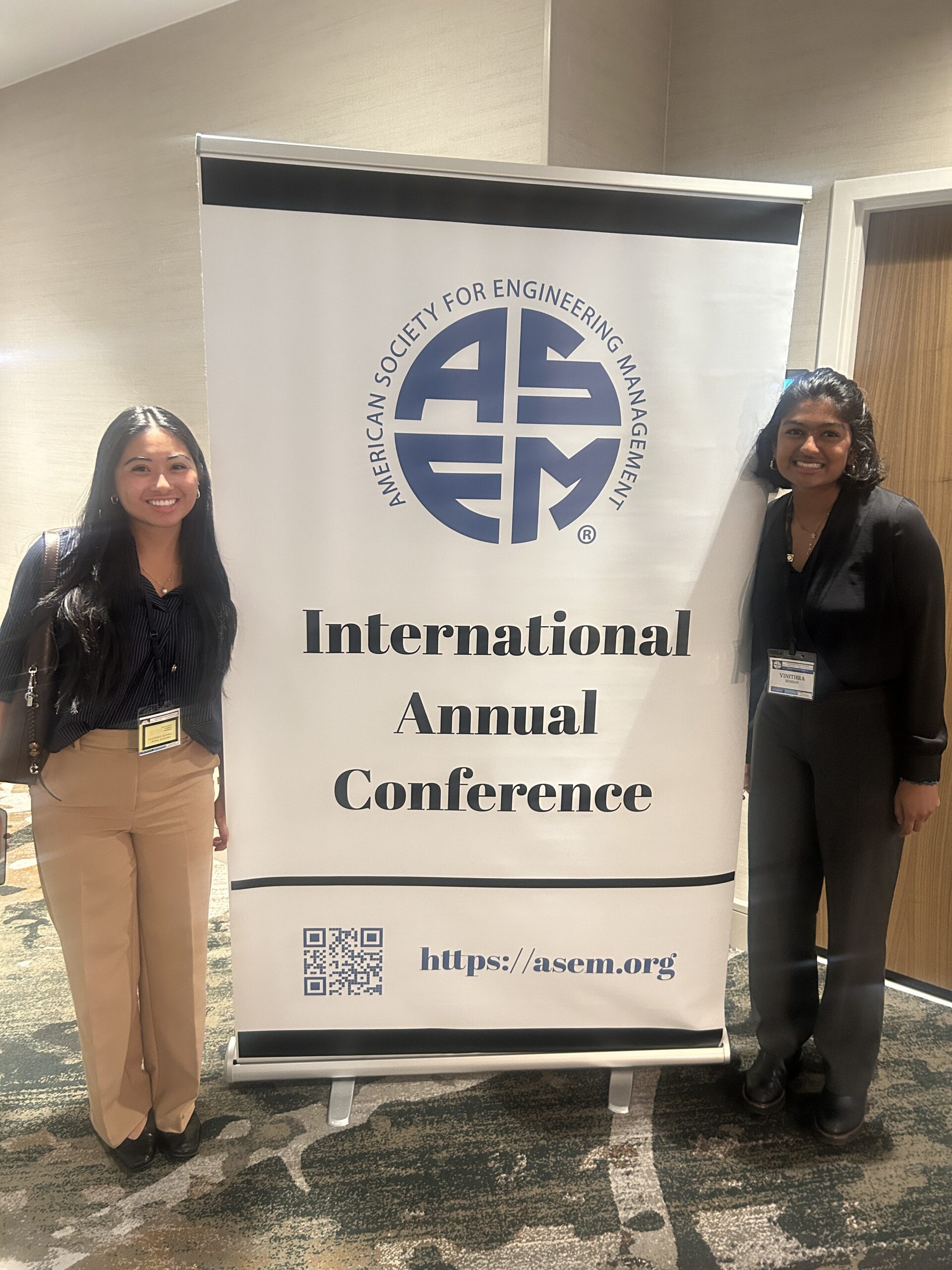
In September 2025, Lunasin and Seshan presented their findings at the American Society for Engineering Management International Conference in Boise, Idaho.
“We were really excited to present,” Seshan said.
“For me, this was my first conference, and I was pretty nervous,” Lunasin said. “But it felt a lot easier because the people who showed up to our presentation cared about the topic. We had also been going over the information for so long that we felt really familiar with it. That helped with the anxiety.”
Both Lunasin and Seshan are currently working toward their master’s degrees, Lunasin at Cal Poly and Seshan at Virginia Tech.
By Taylor Villanueva