
A Winning Pickleball Paddle Puts Composites in Play

Mechanical engineering graduate Donovan Furtado claims the top prize in SAMPE’s inaugural paddle design competition
Donovan Furtado surveyed a wall of pickleball paddles at Dick’s Sporting Goods with an engineer’s eye.
Some had smooth faces, while others felt like sandpaper. Many handles seemed too narrow for his hands, and a few paddles felt awkwardly weighted. Furtado studied those differences and came away with a clear goal: to build a lighter, more forgiving paddle with a thicker grip and a polished finish.
That design became the winning entry in the Society for the Advancement of Material and Process Engineering’s inaugural Student Pickleball Paddle Design Competition, a new category that asked students to apply materials science and manufacturing principles to a familiar piece of sporting equipment.
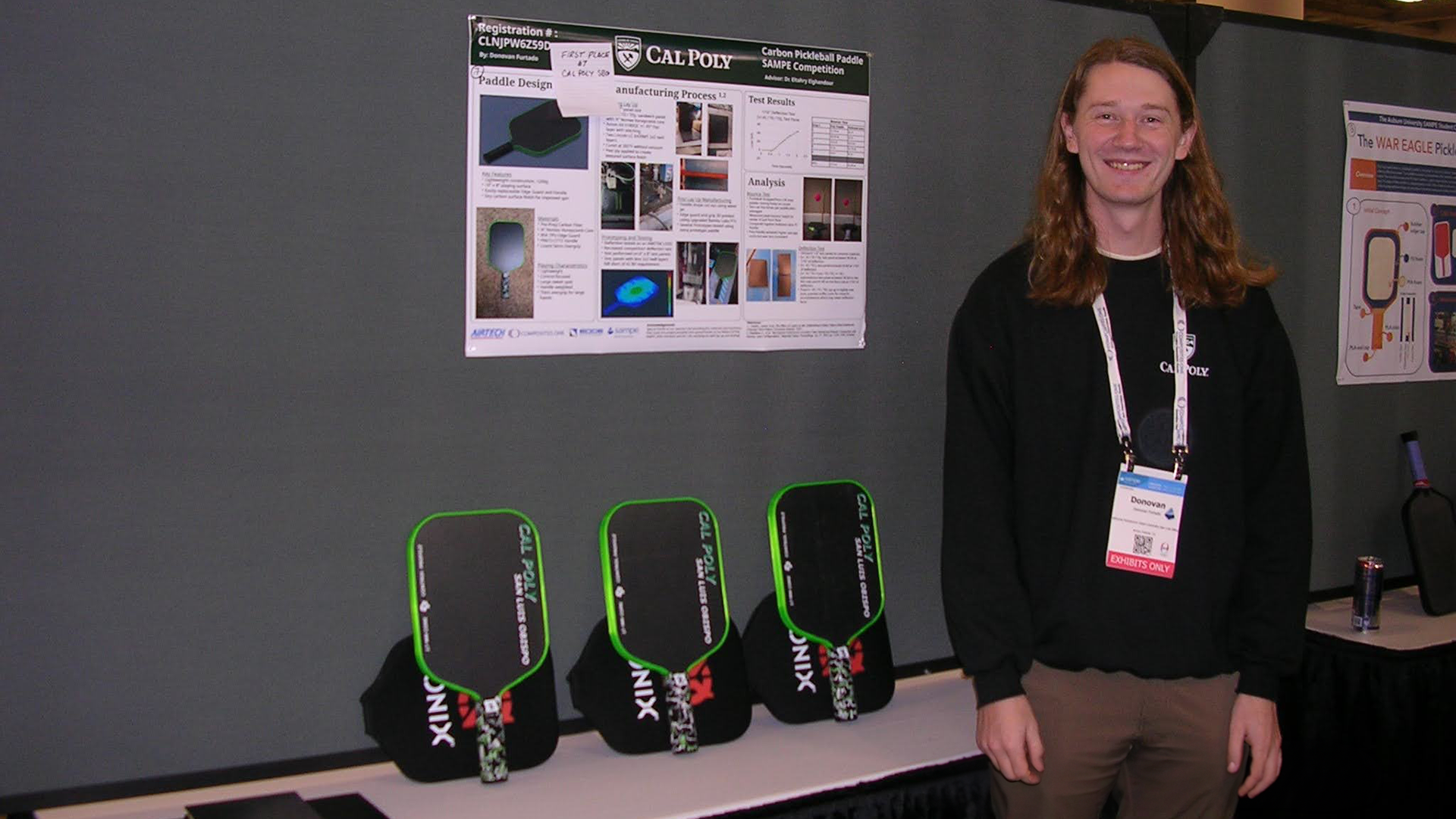
Furtado did not know where he stood until the awards were announced. “It felt like a cliffhanger,” he said. “I was surprised and really excited to learn I had won the top prize.”
Furtado developed the paddle as his final project and entered it through Cal Poly’s SAMPE Club shortly before graduating with a degree in mechanical engineering. The international competition gave him a chance to test his work against entries from schools across the United States and abroad.
Competition rules required each entry to include three identical paddles, making repeatability part of the challenge. Entries were judged on their originality, fabrication quality and accompanying poster, then mechanically tested for stiffness and consistency. Stiffness accounted for the largest share of the score, with up to 30 points available.
Furtado spent much of the project determining the number and orientation of carbon fiber layers needed to reach the desired performance.
“I was there nearly every day it was open,” he said of Cal Poly’s composites lab, where he spent four months refining the carbon fiber layup.
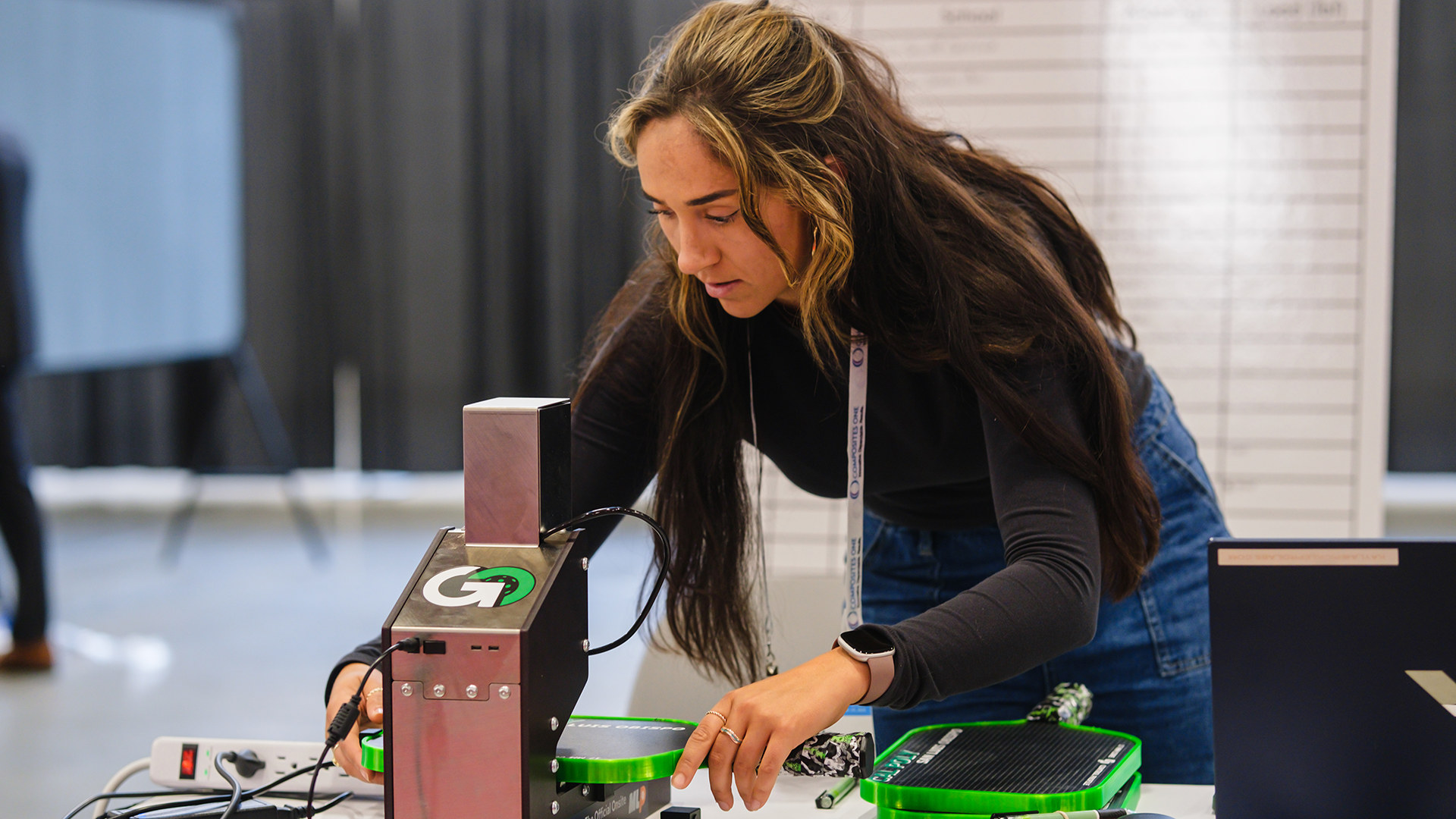
He cut the finished shape with a waterjet and built a thicker, baseball-style grip that better accommodated larger hands. At 8 inches wide and almost 16 inches long, the paddle was designed to maximize its hitting surface and make it more forgiving.
He also worked to keep the paddle light. The finished paddle was about 100 grams lighter than some commercial models he examined.
“I found that it’s more fun to maneuver if it’s lighter,” he said.
The paddle also had to look finished. Furtado used bright green thermoplastic polyurethane, or TPU, for the edge guard as a nod to Cal Poly and created raised graphics with a sticker cutter. He wanted the paddle to look factory-new, with the polish of a commercial product.
Furtado’s entry led a strong showing for Cal Poly in the new category. Mechanical engineering students Caleb Singh and Conor Junge placed second, while the university’s SAMPE Club earned first place overall after competing across seven categories.
Furtado credits mechanical engineering professor Eltahry Elghandour with creating an environment where students can develop projects tied to their interests.
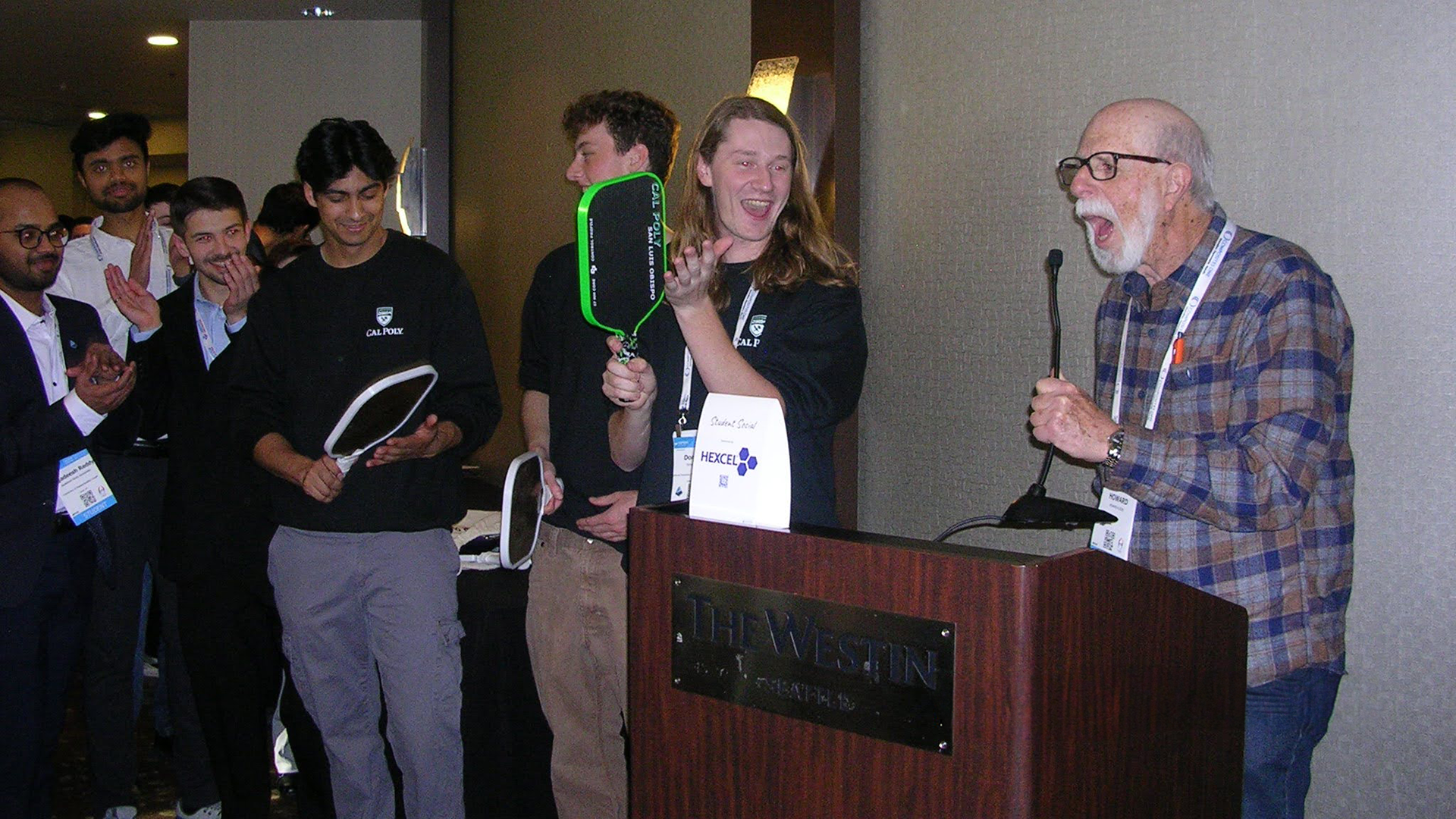
“His program works,” Furtado said. “He puts energy into making composites fun.”
The project took Furtado through every stage of carbon fiber fabrication. He is already considering how he might apply the material to his car and has not ruled out making paddles for friends if he can access the necessary equipment.
Along the way, Furtado discovered a new sport. The Arroyo Grande High School graduate, who took tennis lessons as a child, learned pickleball while testing his design. Now he plans to keep playing.
“I have a really nice paddle now,” he said, “so I might as well!”


