
They Saw a Problem in the NICU. Then They Changed Their Plans

Cal Poly engineers Aidan Geurts and Josiah Waltner gave up jobs they had accepted to pursue a startup focused on premature infant respiratory care
The breathing apparatus looked enormous against the tiny faces of premature babies.
Mechanical engineering student Aidan Geurts was stunned by the mismatch inside the neonatal intensive care unit: fragile infants, their faces obscured by bulky nasal masks and headgear that looked far more rudimentary than the sophisticated technology he had expected.
“I don’t like the entire device,” he recalled thinking.
Geurts had come to the NICU with a Cal Poly senior project team exploring a problem in respiratory care. As he and biomedical engineering student Josiah Waltner spent more time in NICUs and spoke with families, the work became increasingly personal.
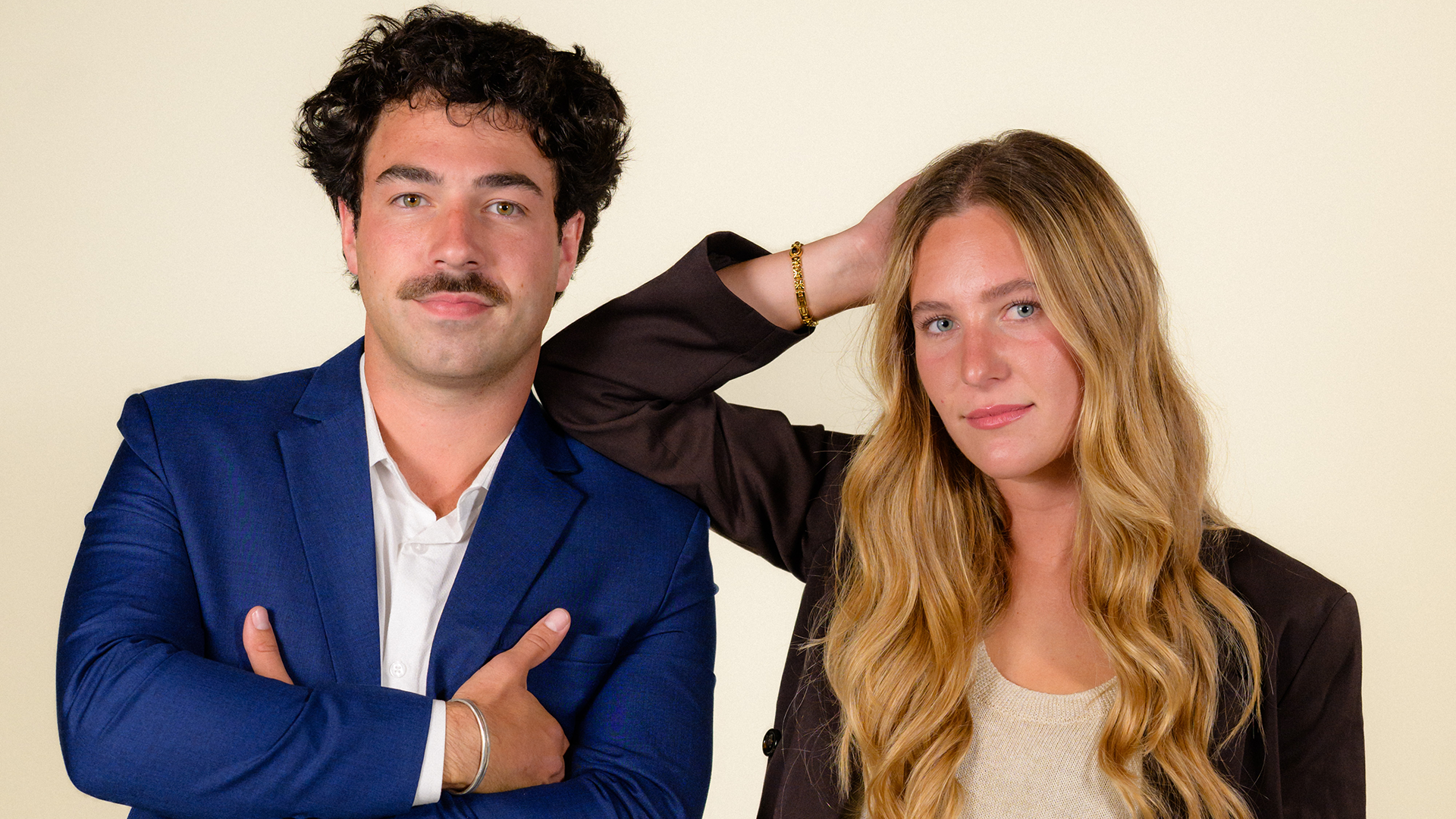
During one visit, a mother whose baby weighed just 1 pound gave the students most of the limited time she could spend with her child to examine how the breathing apparatus fit her baby. Waltner used her hands to show just how small the infant was as she recalled the encounter.
“She gave us her precious hour,” she said.
The NICU changed the stakes. Soon, the project would demand a decision neither had expected to make.
Rethinking the Device
The problem first reached Waltner a year earlier, when neonatologist Steven Van Scoy brought the challenge to students through Cal Poly’s EMPOWER program. Waltner spent her junior year working on it before carrying it into an interdisciplinary entrepreneurial senior project course, where Geurts joined the team.
As they looked more closely, the concerns went well beyond bulk. Poor fit and sustained pressure can damage delicate skin, increasing the risk of infection and tissue deformation. Compression around the mouth and palate can disrupt breathing and cause vital signs to drop, while condensation can pool near a baby’s face and threaten breathing.
The more Geurts and Waltner learned, the less interested they became in tweaking the existing design.
“We want to make a full change,” Geurts said. “It would be revolutionary rather than evolutionary.”
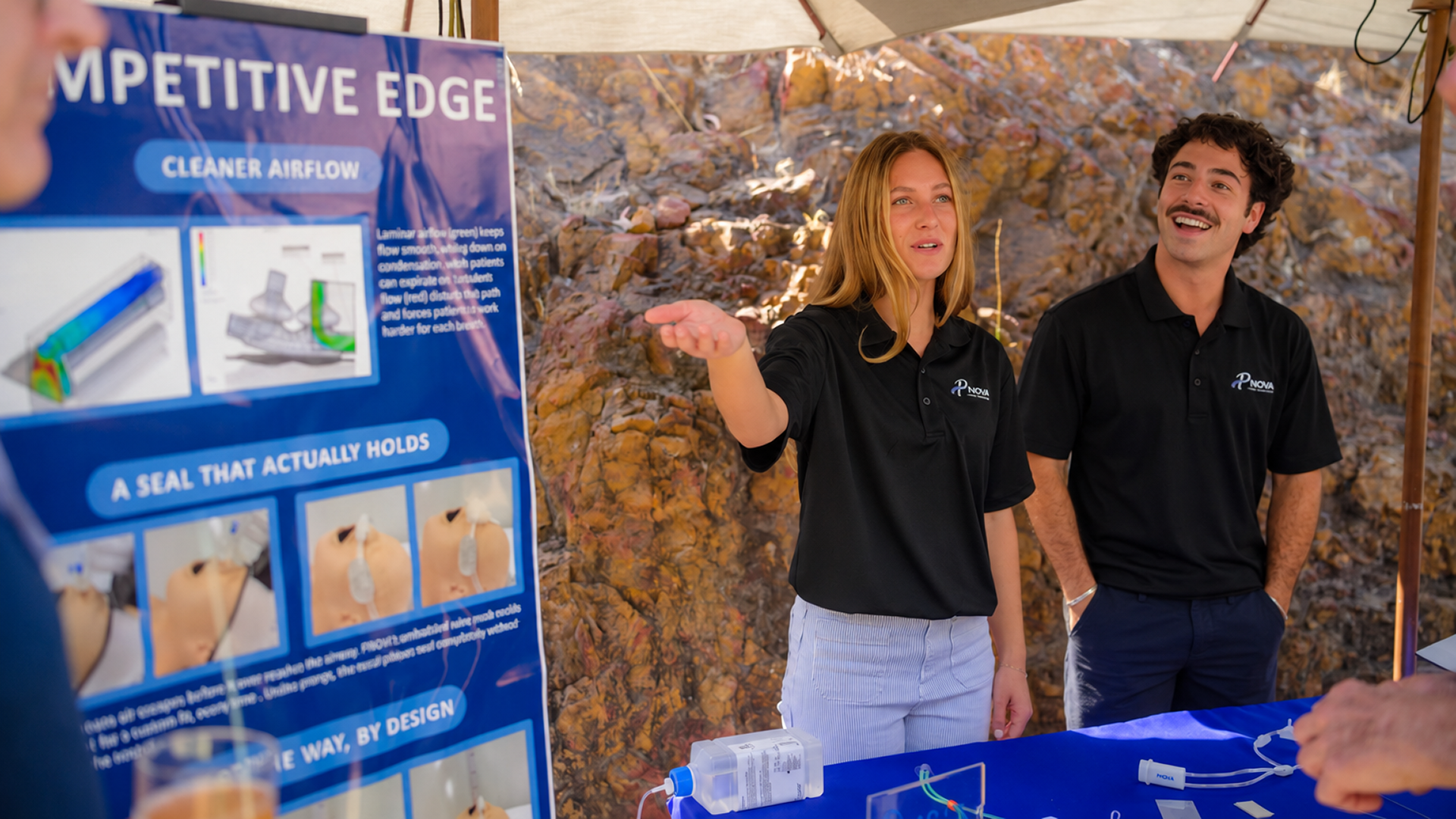
Questioning the existing design did not mean assuming they had the answer. The team spent its first quarter on customer development, visiting NICUs and talking with clinicians who used the equipment every day. Geurts was ready to dive into the design, but CIE Academic Director Tom Katona, an engineering and entrepreneurship professor who taught the course, pushed the team to understand the problem first.
“I wanted to start engineering, but we had to learn from the people around the issue,” Geurts said. “Now I realize why that’s so important. You have to design for the problem.”
More than 50 clinicians have since weighed in. Because existing devices do not always fit well, clinicians sometimes rely on tape and other makeshift fixes to secure them around tiny patients.
One respiratory therapist put the frustration bluntly: “Why have we been solving this problem with arts and crafts?”
That feedback is shaping a lower-profile nasal interface and tubing designed to control where condensation collects. Each conversation, they said, gives them something new to carry into the next prototype.
Waltner put the purpose more simply.
“We are advocating for people who can’t advocate for themselves,” she said.
A Different Path
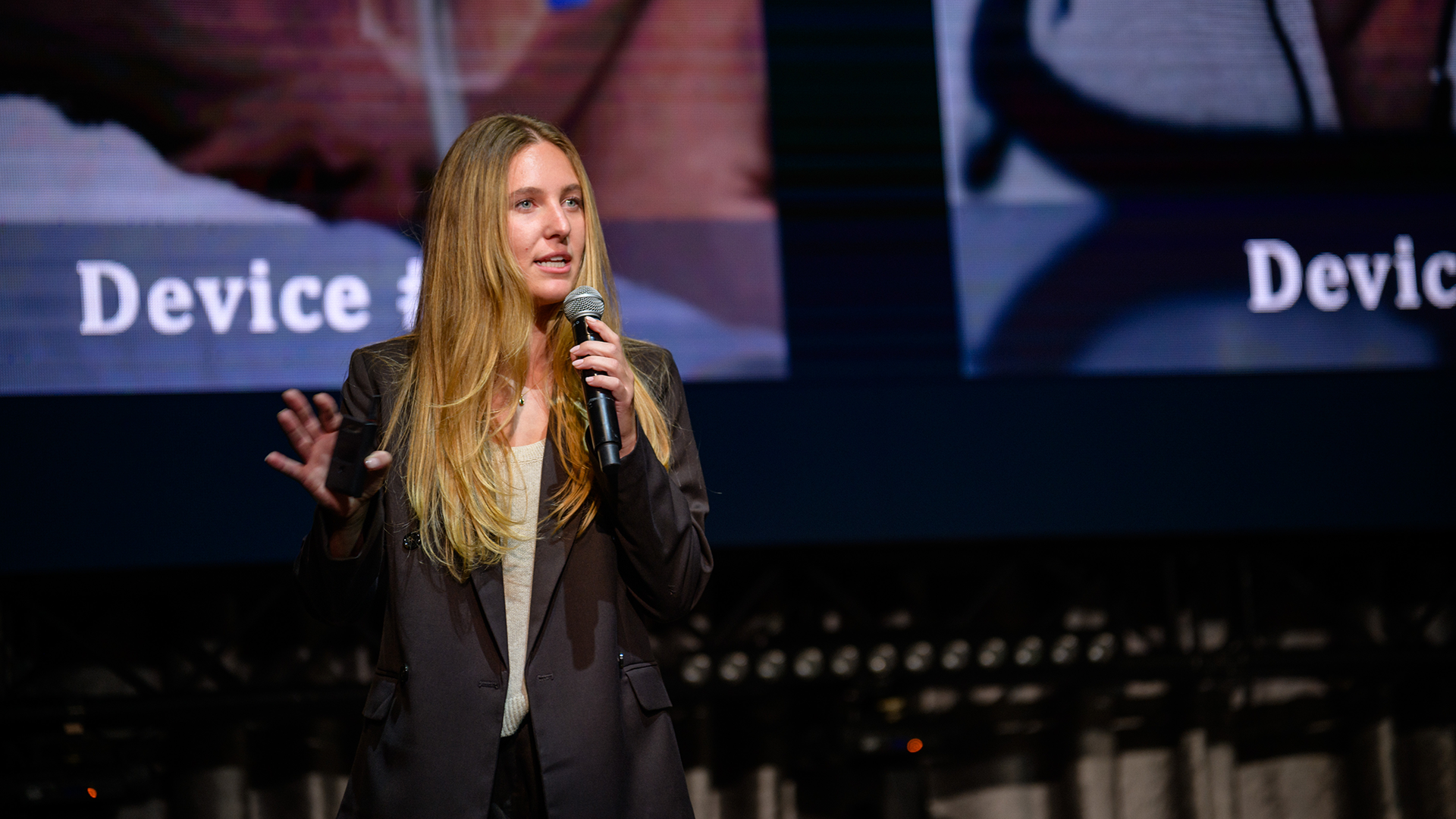
After a quarter spent listening, the team moved into CAD and 3D printing and eventually put prototypes in front of clinicians. Near the end of the academic year, they entered Innovation Quest almost as an afterthought. CIE’s annual competition asks students to pitch business ideas to judges for startup funding.
“We applied on a whim,” Waltner said.
They knew how to tackle the engineering. Turning their solution into a company was unfamiliar territory. Neither had experience developing a business model or bringing a medical device to market.
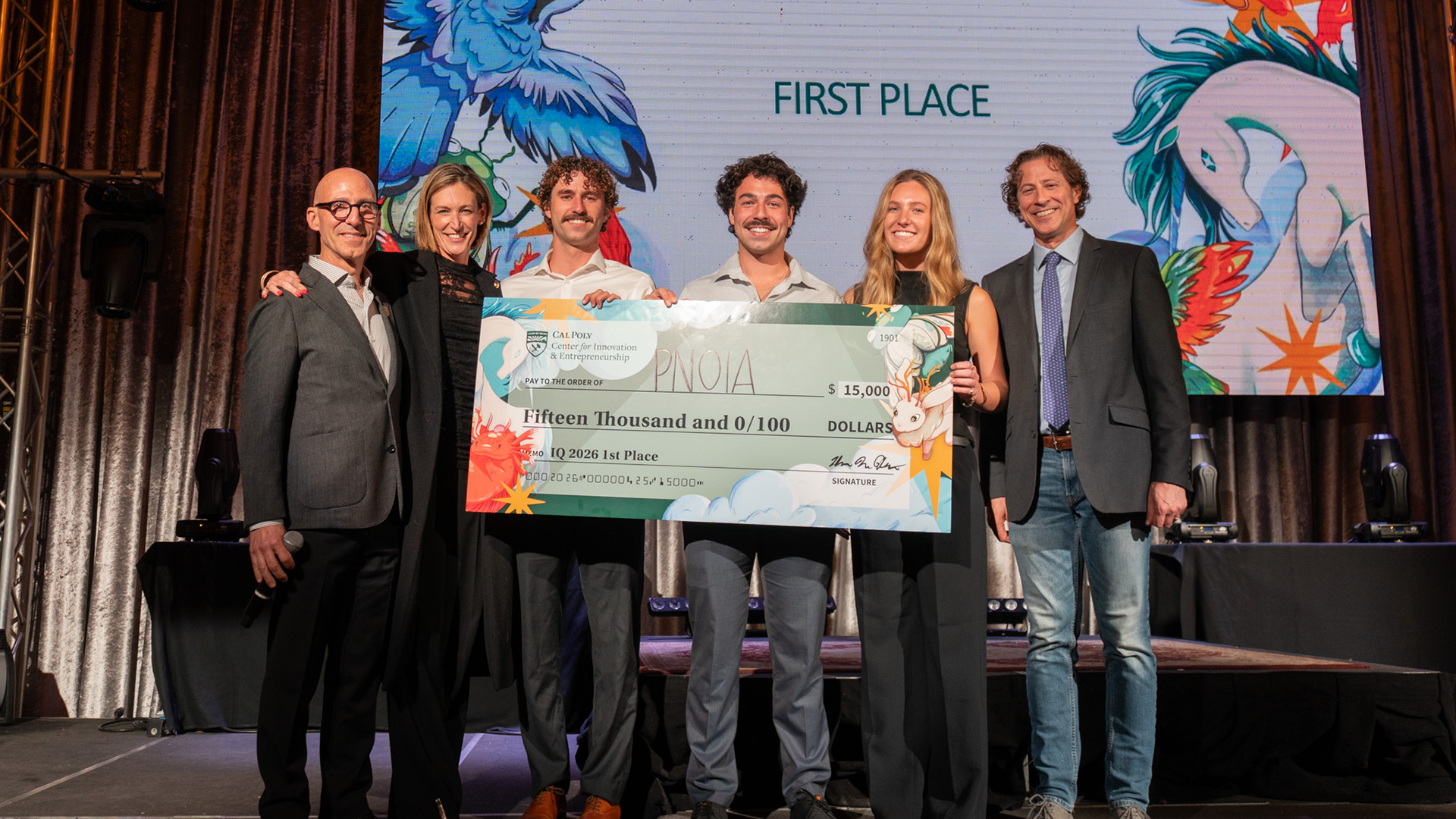
They won first place and $15,000.
The win brought a response neither had expected. Entrepreneurs who had built companies told them they needed to pursue the idea. Some skipped straight to the next question: When were they going to quit their jobs?
Both had already accepted positions they considered dream opportunities after graduation. Pursuing the startup meant giving up that certainty for a medical-device company that still needed to raise money and navigate testing and regulation. Waltner described the decision as a leap of faith.
She also recalled other parents becoming emotional as they spoke with the students, grateful that someone was pursuing a solution for their babies.
Geurts described a similar pull. “The project took ahold of me,” he said. “Both of us wanted to one day be entrepreneurs, and we both realized this is a problem that needs to be solved.”
Ultimately, they answered the question others had begun asking after Innovation Quest. They quit the jobs they had already accepted and committed to building Osos Medical.
“This is so much bigger than us,” Geurts said.
Building Beyond the Prototype
After graduation, Geurts and Waltner joined CIE’s Summer Accelerator, an intensive program for students and recent alumni building startups.
“The Accelerator is like sink or swim,” Waltner said.
“And we built a raft,” Geurts jumped in.
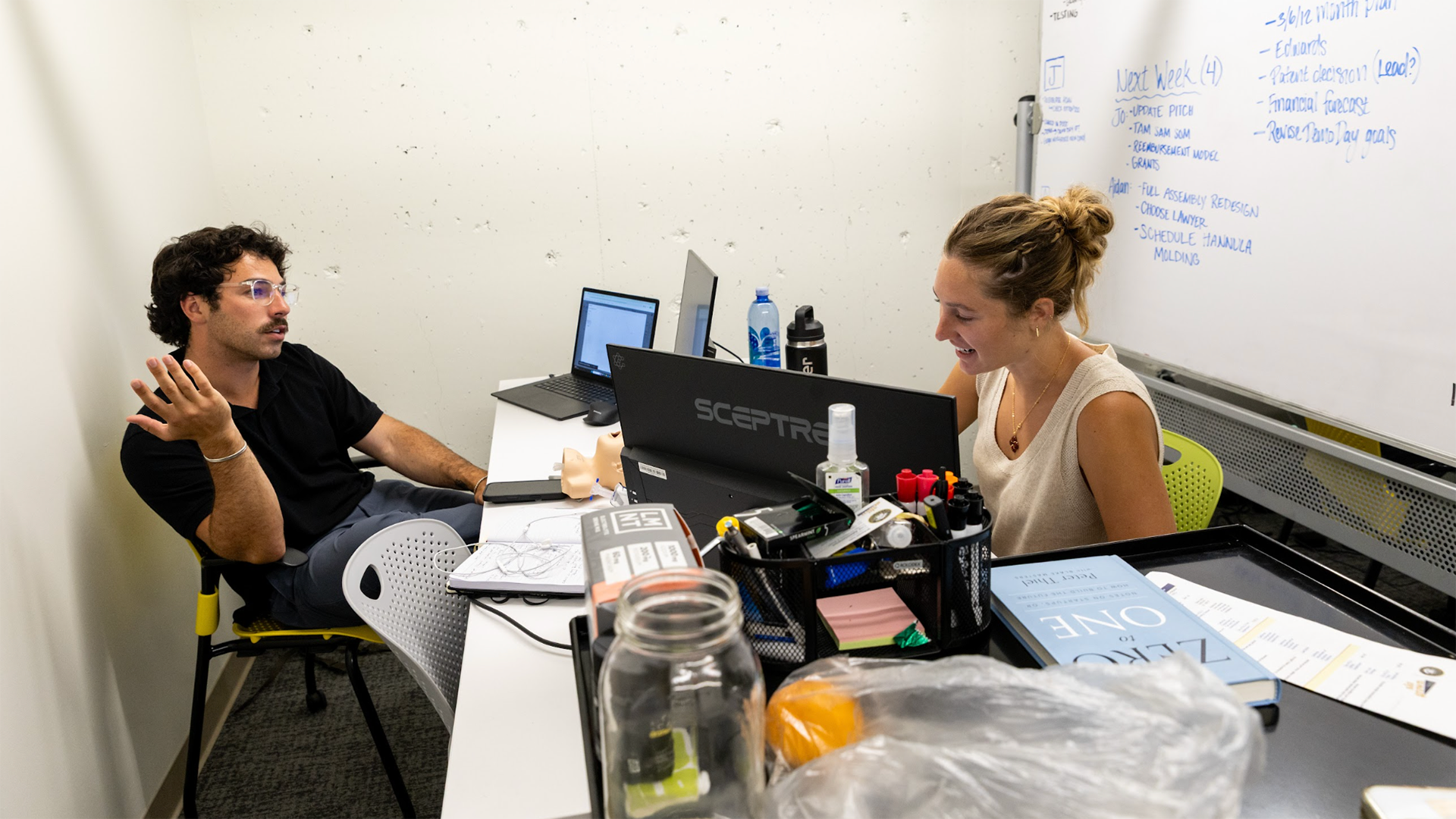
Their back-and-forth reflects their partnership. Waltner is more measured and quietly focused, while Geurts bubbles over with energy. In conversation, they build on each other’s thoughts, adding detail or another perspective.
Waltner said the community of entrepreneurs surrounding them was the program’s greatest value. By the second week, Geurts was calling his parents, thrilled by what he was learning.
“I thought, ‘We can do this,’” he said.

They kept refining the device while learning how to raise money and navigate the regulatory process. They also filed a provisional patent.
In one test, a nurse placed a lower-profile prototype in about 15 seconds, compared with roughly 3 minutes for the existing setup, Waltner said.
At Demo Day, the Accelerator’s culminating showcase, potential investors approached them about the company. The founders have since begun their first fundraising round while continuing the testing and development needed to move a prototype toward hospital use.
That work will carry into CIE’s two-year Incubator program. Geurts and Waltner plan to lock in the design in early spring 2027 before moving into the next phase of testing; until then, clinician feedback will continue shaping each new version.
Seeing the Problem
Katona has watched other Cal Poly medical-device teams navigate a similar path. Alydia Health grew from a biomedical engineering senior project that led to the Jada System, an FDA-cleared device used to control postpartum bleeding. Novocuff is developing a device intended to help delay premature birth, while Everest Medical is working on a device to assist during shoulder dystocia, a childbirth emergency in which a baby’s shoulder becomes lodged during delivery.
Together, they are part of a growing line of Cal Poly startups focused on maternal and infant health. Their founders have also created institutional knowledge newer teams can draw on; Katona connected Geurts and Waltner with entrepreneurs who had already made the transition from student project to company.
Still, Katona sees a more fundamental hurdle in getting students close enough to consequential problems to know they exist.
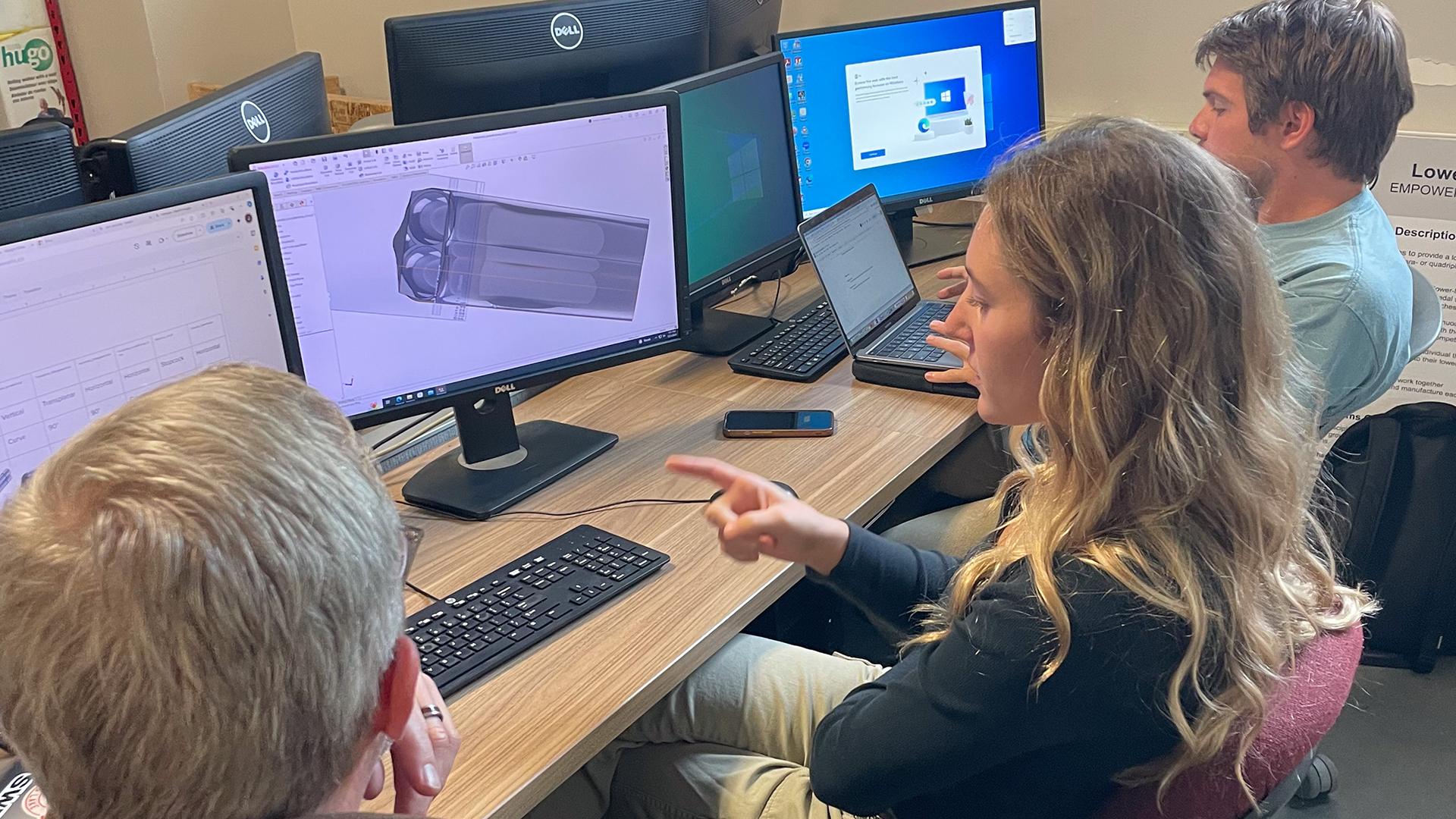
Geurts and Waltner are a case in point. Neither knew about the shortcomings of respiratory devices for premature infants until Van Scoy brought the issue to students. Katona said students can have the skills to tackle problems well before they have had the chance to see them firsthand.
“It’s not that they don’t have the experience to solve the problem,” Katona said. “It’s an exposure problem.”
One Cal Poly program is already built around that kind of exposure. Led by biomedical engineering professors Chris Heylman, Michael Whitt and Ben Hawkins, the Biomedical Clinical Engineering Partnership, or BiCEP, places students in hospital settings to observe clinicians and identify needs that can become engineering projects.
Katona wonders how many more companies could emerge if students had more opportunities like BiCEP to see unmet needs firsthand, some of which they may already have the skills to address.
Geurts and Waltner did not come to Cal Poly knowing this gap in respiratory care existed. Now they are building a company around trying to address it.
Top photo: Aidan Geurts, left, and Josiah Waltner examine respiratory equipment with neonatologist Steven Van Scoy at Adventist Health Sierra Vista’s neonatal intensive care unit in San Luis Obispo.


