
College of Engineering Names Three Lockheed Endowed Professors

The College of Engineering has named Puneet Agarwal, Lubos Brieda and Derek Manheim as the next Lockheed Endowed Professors.
The two-year professorship provides seed funding for tenured and tenure-track faculty whose work reflects Cal Poly’s teacher-scholar model. The support helps faculty advance emerging research, build collaborations beyond campus and position their projects for future industry or agency funding.
Puneet Agarwal
Industrial and Manufacturing Engineering
Seeing the Sidewalk: An Automated Walkability Quality Index Using Computer Vision and Multimodal Large Language Models

Agarwal’s project takes a closer look at what makes a street truly walkable.
Common tools such as Walk Score often rely on nearby amenities and street layouts to evaluate walkability. Those measures can miss what pedestrians experience on the ground, including broken sidewalks, missing curb ramps, poor lighting or other barriers that affect safety and access.
Agarwal’s research will use street-level imagery and AI tools to assess walkability based on observed conditions. Computer vision models will identify sidewalk continuity, curb ramps, crosswalks and other infrastructure features, while a multimodal large language model will help generate ratings and plain-language assessments.
The project will lead to a new Walkability Quality Index designed to give planners, local agencies and community stakeholders a clearer view of where pedestrian improvements are needed most.
Lubos Brieda
Aerospace Engineering
Experimental and Numerical Characterization of Multimode Electric Propulsion Concepts

Brieda’s project focuses on one of the key trade-offs in satellite design: electric propulsion offers high fuel efficiency, but chemical propulsion is still needed for rapid maneuvers.
Because most satellites rely on separate systems for those functions, they carry extra tanks, plumbing, electronics and thruster hardware. Brieda’s research explores a multimode thruster that could operate in both regimes using shared hardware, a development that could reduce mass and complexity for small satellites.
The project will begin with numerical simulations to identify the best thruster geometry, followed by prototype development and testing at Cal Poly using nitrogen and air as propellants. Additional validation with hydrazine will take place at Stellar Exploration Inc., a San Luis Obispo company with expertise in monopropellant systems.
The work will also support the build-out of Cal Poly’s electric propulsion laboratory, restoring an active research capability on campus and creating a foundation for future collaborations with industry and government partners.
Derek Manheim
Civil and Environmental Engineering
Integrated Experimental and Machine Learning Framework to Quantify Microplastic Impacts on Methane Generation in Anaerobic Digesters
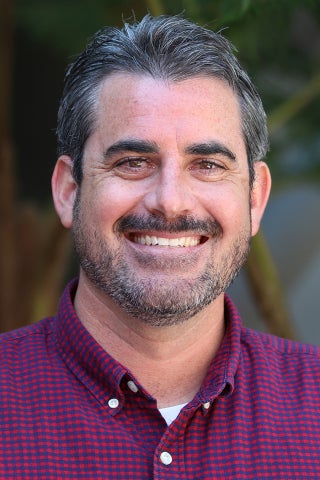
Manheim’s project examines how microplastics may affect anaerobic digestion, a process that converts organic waste into renewable energy through biogas production.
As California diverts more organic waste from landfills, improving methane yields and system stability has become increasingly important. Microplastics are now routinely found in organic waste streams and digestates, but their effects on the microbial communities that drive methane production remain poorly understood.
Manheim’s research will use controlled biochemical methane potential experiments to study how different microplastic types, sizes and concentrations influence methane generation. Machine learning models will then be trained on the resulting data to predict methane yields and identify the factors that have the strongest influence on system performance.
The project will produce open data and modeling tools that can support broader efforts to optimize anaerobic digestion systems and strengthen the role of organic waste in California’s renewable energy future.


