
Faculty Scholars to Guide AI Innovation in Engineering Education

Puneet Agarwal and Jiun-Yao Cheng will help shape a responsible approach tailored to different engineering fields
Artificial intelligence has already changed how students learn and engineers work, raising questions about where it can add value and where caution is warranted. Two faculty scholars will lead a collegewide effort to address those questions.
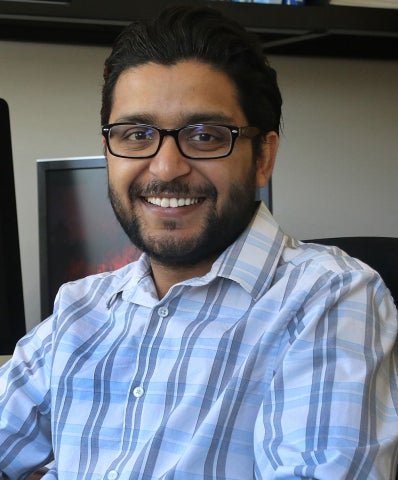
Puneet Agarwal, assistant professor of industrial and manufacturing engineering, and Jiun-Yao Cheng, assistant professor of civil and environmental engineering, have been named faculty scholars for AI Innovation and Engineering Education. Together, they will examine how AI is being incorporated across the college and gather perspectives from students, faculty, alumni and Industrial Advisory Board members.
Their findings will inform roundtable discussions aimed at developing guidelines and best practices for the ethical and effective integration of AI in engineering education.
“We recognize that a one-size-fits-all approach will not be appropriate, and Puneet and Jiun-Yao will work closely with stakeholders to address domain-specific needs and considerations,” said Zoë Wood, associate dean for diversity and student success.
Working with Wood and Chris Lupo, director of the Noyce School of Applied Computing, the faculty scholars will develop innovative AI solutions designed to support student learning across the College of Engineering, including the Noyce School.
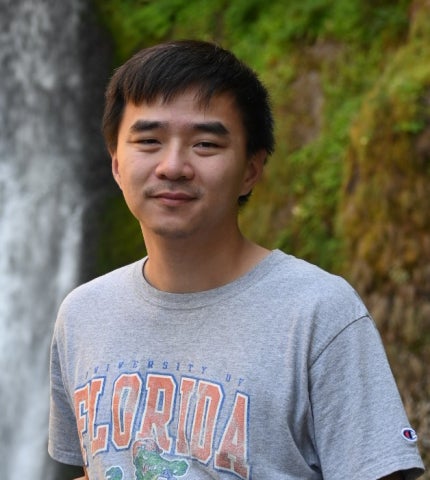
Rather than applying the same expectations to every program, Agarwal and Cheng will consider how appropriate AI use may vary among engineering disciplines. They will also help the college community make informed decisions about adopting new tools.
Agarwal’s expertise includes generative AI, machine learning, predictive analytics and decision science. His research applies AI to complex engineering and societal challenges, while his teaching explores how students can effectively incorporate new technologies into engineering practice. His work has appeared in publications including Risk Analysis, Decision Support Systems, and Reliability Engineering & System Safety.
Cheng studies human-technology interaction in construction, with a particular focus on AI literacy and the responsible adoption of artificial intelligence in engineering education. He has contributed to National Science Foundation-funded projects examining safe human-robot interaction on job sites and completed an NSF internship fellowship at the National Institute for Occupational Safety and Health Robotics Center.
His scholarship has appeared in journals published by the American Society of Civil Engineers, including the Journal of Computing in Civil Engineering and the Journal of Civil Engineering Education. He is also active in professional societies that support educational innovation.
The college plans to introduce its other faculty scholar roles more widely in the fall. Agarwal and Cheng may begin preliminary surveys or interviews before then as they prepare for the next phase of the initiative.


