
Cal Poly on Track to Launch Data Science Degree in Fall 2027

Bachelor’s program awaits final Chancellor’s Office approval after a decade of data science education at Cal Poly
Cal Poly is preparing to launch a bachelor’s degree in data science in fall 2027, pending final approval from the California State University Chancellor’s Office. The new degree will build on a cross-disciplinary minor launched a decade ago.
The 120-unit program will be jointly operated by the College of Engineering and the Bailey College of Science and Mathematics. Its curriculum will draw on expertise from both colleges.
“Data is increasingly central to nearly every field, creating growing demand for graduates who can work effectively with it,” said computer science professor Paul Anderson, chair of the Data Science Curriculum Committee. “This program would give students a clear pathway into data science while preparing them with the computational, mathematical and statistical skills employers need.”
As committee chair, Anderson has helped lead development of the proposal, coordinating faculty around a shared curriculum.
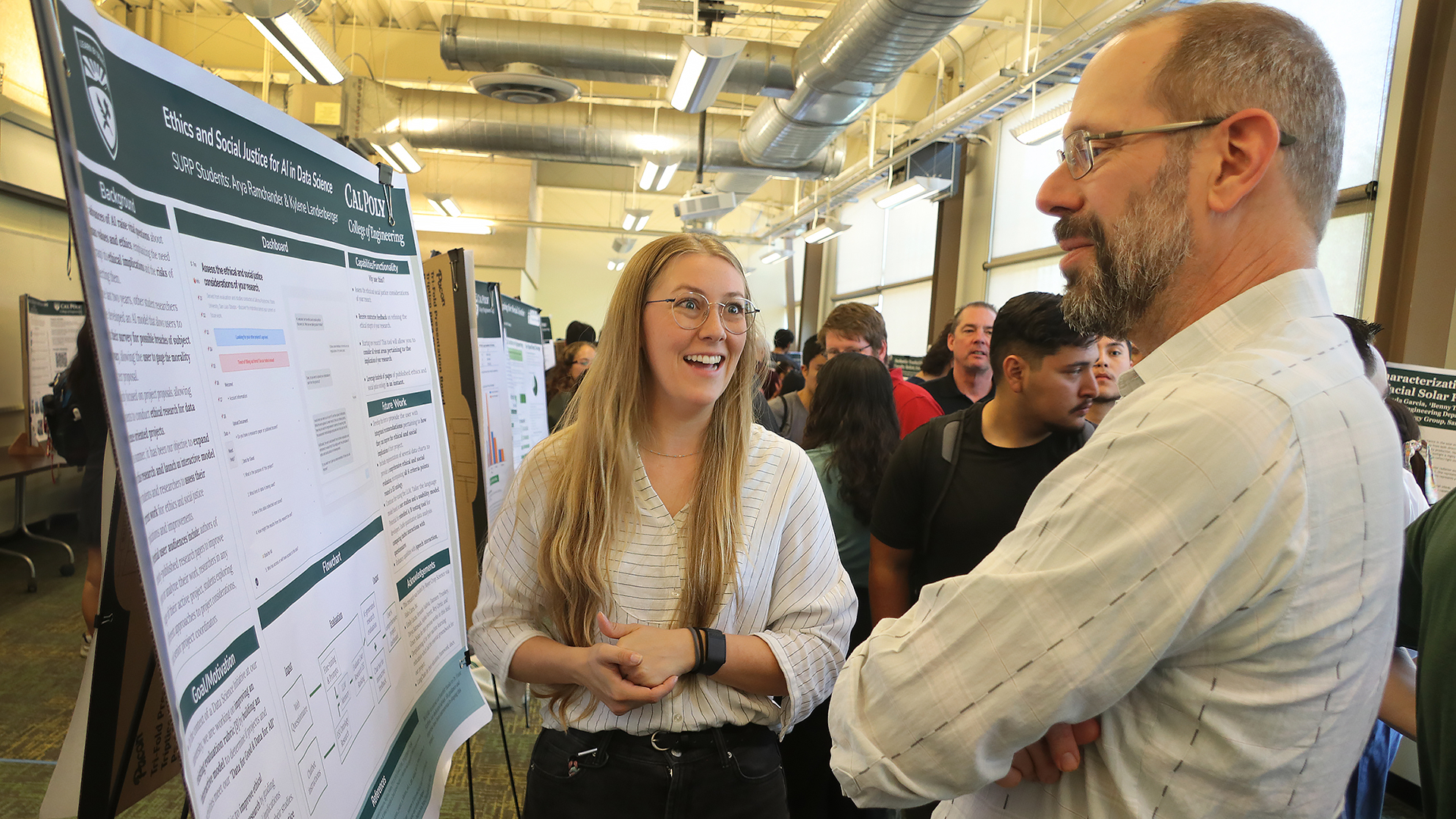
The program expands Cal Poly’s Cross-Disciplinary Studies Minor in Data Science, established in 2016 and jointly administered by the Statistics and Computer Science and Software Engineering departments. Seven cohorts have completed the minor, which has reached or nearly reached capacity in recent academic years.
The bachelor’s program will carry that work into a full degree, preparing students to use computing and quantitative analysis across a range of fields. Graduates will be prepared to pursue careers in data science, data engineering and related roles in public and private organizations.
Workforce trends and industry input also helped shape the program. State and national employment projections point to strong demand for data scientists, while members of the College of Engineering Industrial Advisory Board affirmed that the proposed concentrations align with current industry needs.
“Data science lives at the intersection of computer science, mathematics and statistics, so bringing those disciplines together gives students a genuinely integrated experience,” Anderson said. “They learn not only how to build computational tools, but also how to understand the mathematics behind them and reason rigorously about data and uncertainty.”
Students will begin with courses in programming, calculus and statistics before learning how computers can identify patterns and make predictions from large amounts of data. A team-based senior project will ask them to apply those skills to an open-ended problem while considering the ethical and legal questions involved.
Three concentrations will allow students to tailor the degree to their interests.
Mathematical Foundations will focus on the theories behind data science, while Statistical Modeling will emphasize methods for interpreting data. Machine Learning Engineering will prepare students to develop systems that use data to make predictions or support decisions.
Across those pathways, students will also learn to communicate data-driven findings clearly and recognize concerns involving privacy, bias and broader societal effects.
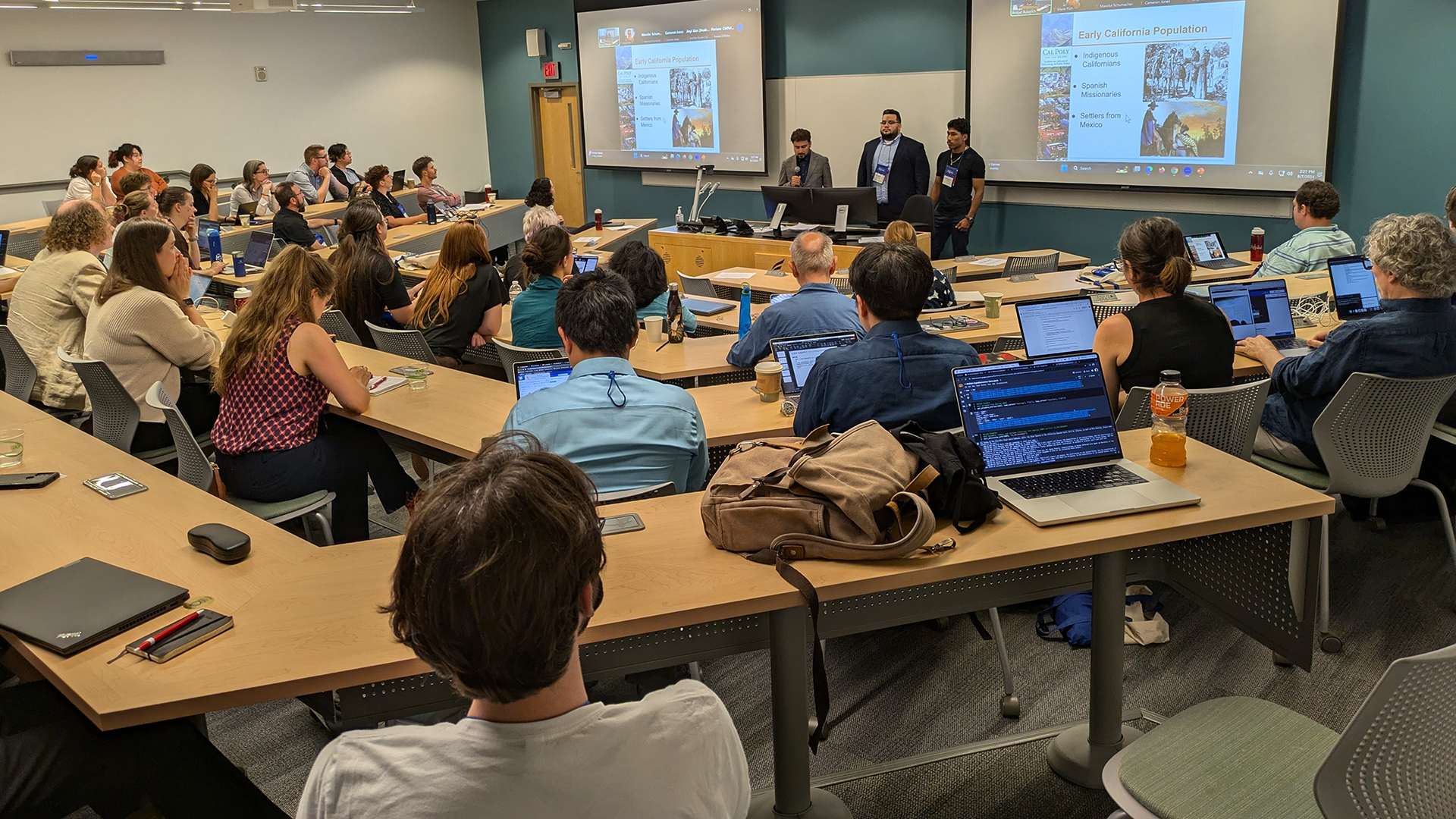
Much of the program will use courses, faculty expertise and facilities already available at Cal Poly. Only one new course will be needed to launch the major — a sophomore seminar that will introduce students to data science and help them select a concentration.
Faculty co-directors from the two colleges will oversee course scheduling, enrollment and student advising, with additional oversight from the director of the Noyce School of Applied Computing.
Cal Poly students work together on computing projects. The proposed bachelor’s degree in data science will bring together computing, mathematics and statistics through an interdisciplinary curriculum.


