
Outside Experts to Take a Closer Look at Cal Poly Engineering

A 6-year accreditation review will examine how programs prepare students, meet national standards and continue to improve
When a 21-member accreditation team arrives at Cal Poly on Sept. 13, reviewers will spend three days taking a close look at how the university’s engineering programs prepare students for their professions, from what happens in the classroom to the work they do in labs.
Evaluators will talk with faculty and students, study curricula and visit labs and shops as part of Cal Poly’s latest accreditation review by ABET, a nonprofit organization that accredits college and university programs in engineering, computing and related fields. The review includes an on-campus evaluation every six years.
“It’s important to have a process,” said Bridget Benson, the College of Engineering’s associate dean of research and assessment and its ABET coordinator. “We’re ensuring the program is meeting national standards and not just standards we set for ourselves.”
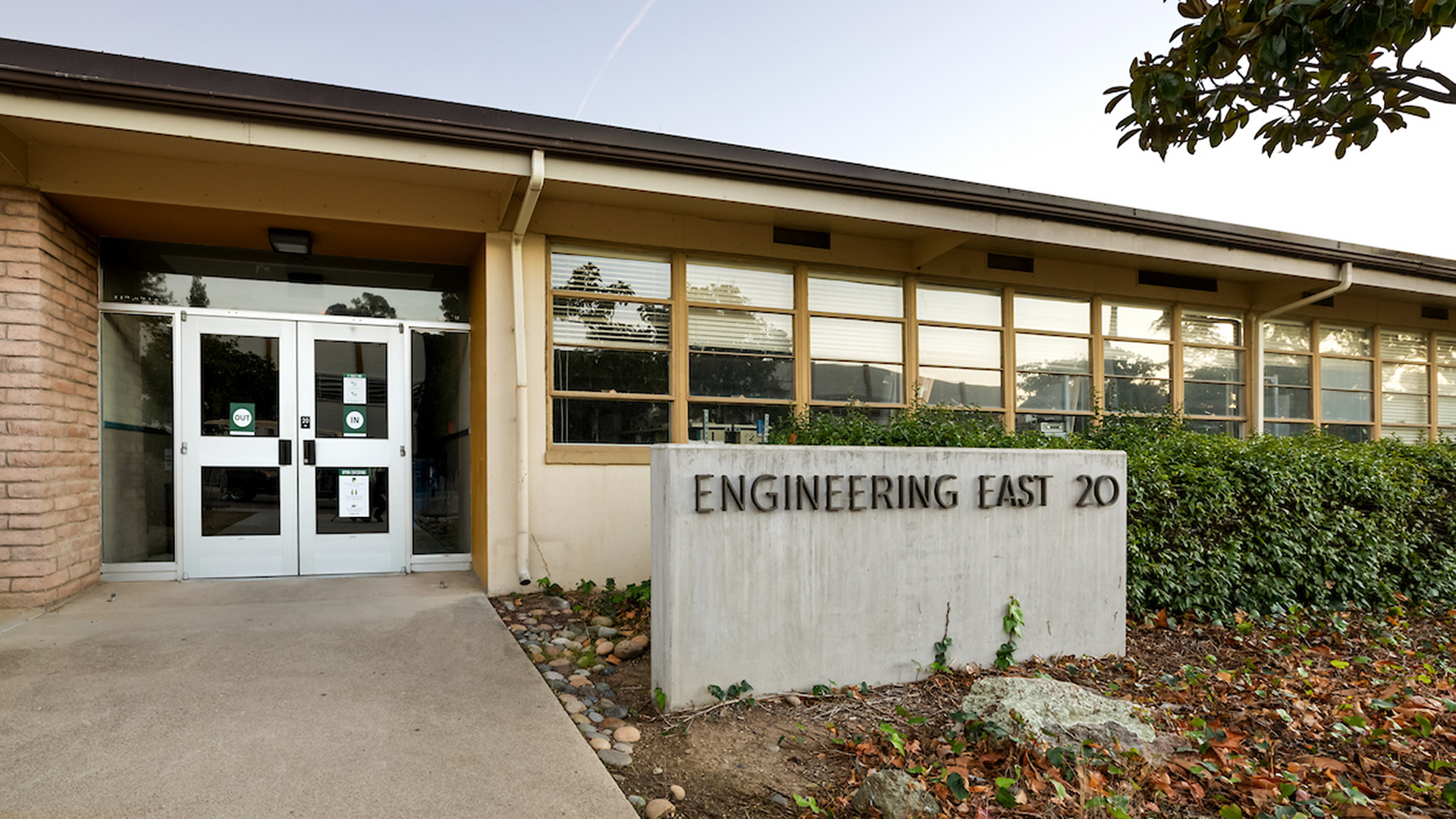
Cal Poly has 15 programs accredited by ABET, including 12 in the College of Engineering. Eleven College of Engineering programs fall under its Engineering Accreditation Commission, while computer science is accredited by its Computing Accreditation Commission. The remaining three include two programs in the College of Agriculture, Food and Environmental Sciences and one in the College of Architecture and Environmental Design.
ABET reviews areas such as student outcomes, curriculum, faculty and facilities. The standards consider whether students are progressing toward graduation and developing the knowledge and skills they will need as professionals.
Outside perspectives are another benefit of the review. Evaluators come from universities and industry across the country. ABET’s criteria also evolve along with the fields it accredits. Computer security, for example, has become a more prominent part of computing education over the past decade.
Cal Poly’s Learn by Doing approach aligns naturally with ABET’s emphasis on engineering design, Benson said, as students apply what they learn to develop solutions. Accreditation can also have benefits after graduation, particularly for engineering students pursuing professional licensure.

The work behind accreditation, however, happens year-round.
Each accredited program has a faculty ABET coordinator who gathers and summarizes information on how well students are meeting defined outcomes. Faculty review the findings annually and determine whether changes are needed. Benson also brings Cal Poly’s 15 program coordinators together three or four times a year to exchange assessment practices and ideas.
At the university level, Benson and another College of Engineering ABET coordinator serve on Cal Poly’s Academic Assessment Council. Led by Academic Programs and Planning, the council brings representatives from the university’s six colleges together to share assessment practices. The office supports assessment and program review across campus, including programs that are not accredited by ABET.
Within the College of Engineering, those annual reviews can lead to changes students see directly.
In computer engineering, faculty found that students were struggling with some circuits and electronics concepts and lacked confidence putting them into practice. The program revised coursework to give students more opportunities to apply what they were learning.
Follow-up interviews showed that students viewed the material as more relevant, though some gaps remained. Faculty are continuing to refine instruction rather than treating the issue as solved.
Environmental engineering made similar adjustments after assessment and stakeholder feedback pointed to a need for stronger computational skills. Faculty added more opportunities for students to work with programming and modeling tools.
That ongoing work will be part of what the visiting team examines during the September review. This year’s team includes 15 evaluators, five team chairs and one observer. The evaluators are selected through professional societies and serve as volunteers, with some coming from academia and others from industry.
Cal Poly will receive initial findings at the end of the three-day visit, with a final accreditation decision expected in July 2027.
ABET by the Numbers
15
Cal Poly programs accredited by ABET, including 12 in the College of Engineering
6 years
Time between on-campus accreditation reviews
21
Members of the ABET team expected for Cal Poly’s Sept. 13-15 visit
7
Student outcomes expected of graduates in programs accredited through ABET’s Engineering Accreditation Commission
2 years
Time a program may have to correct a shortcoming identified during the accreditation process


