
Cal Poly Unveils NVIDIA-Powered AI Factory to Expand AI Education and Research

New $3 million system gives students and faculty direct access to advanced AI computing as Cal Poly prepares graduates to evaluate and help shape the technology
Students entering the workforce will increasingly need to understand artificial intelligence well enough to question its output and recognize its limits. Cal Poly is expanding how it prepares them for that reality with a new $3 million NVIDIA-powered AI Factory that gives students and faculty direct access to advanced AI computing on campus.
Funded by the Noyce School of Applied Computing, the factory brings together four NVIDIA DGX B200 systems with the storage and networking needed to train large AI models using university-controlled resources. Cal Poly formally unveiled the AI Factory during AI Day on Oct. 22.
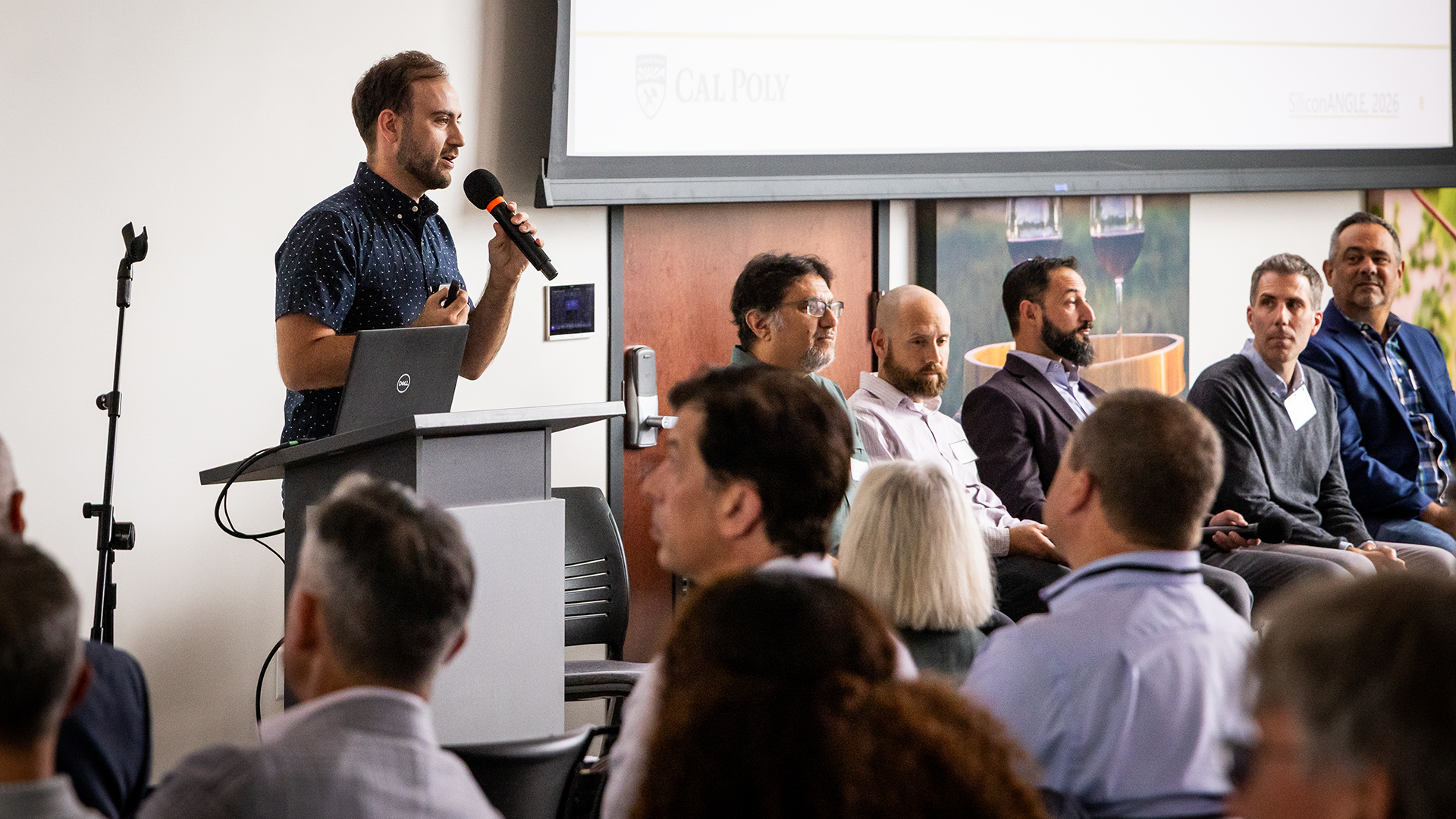
Computer science professor Alex Bisberg said owning the hardware gives Cal Poly greater control over how students learn and faculty conduct AI research at a time when much of AI development is concentrated within large private companies.
“Owning the hardware means owning our digital destiny,” he said.
When Bisberg was a student, he could train many AI models on a laptop. Today, the scale of advanced models and datasets can exceed what a typical computer can handle. The AI Factory gives students the computing power to work directly with those larger systems.
“We do have a responsibility to teach the tools, but a holistic education about how they work is really important,” Bisberg said.
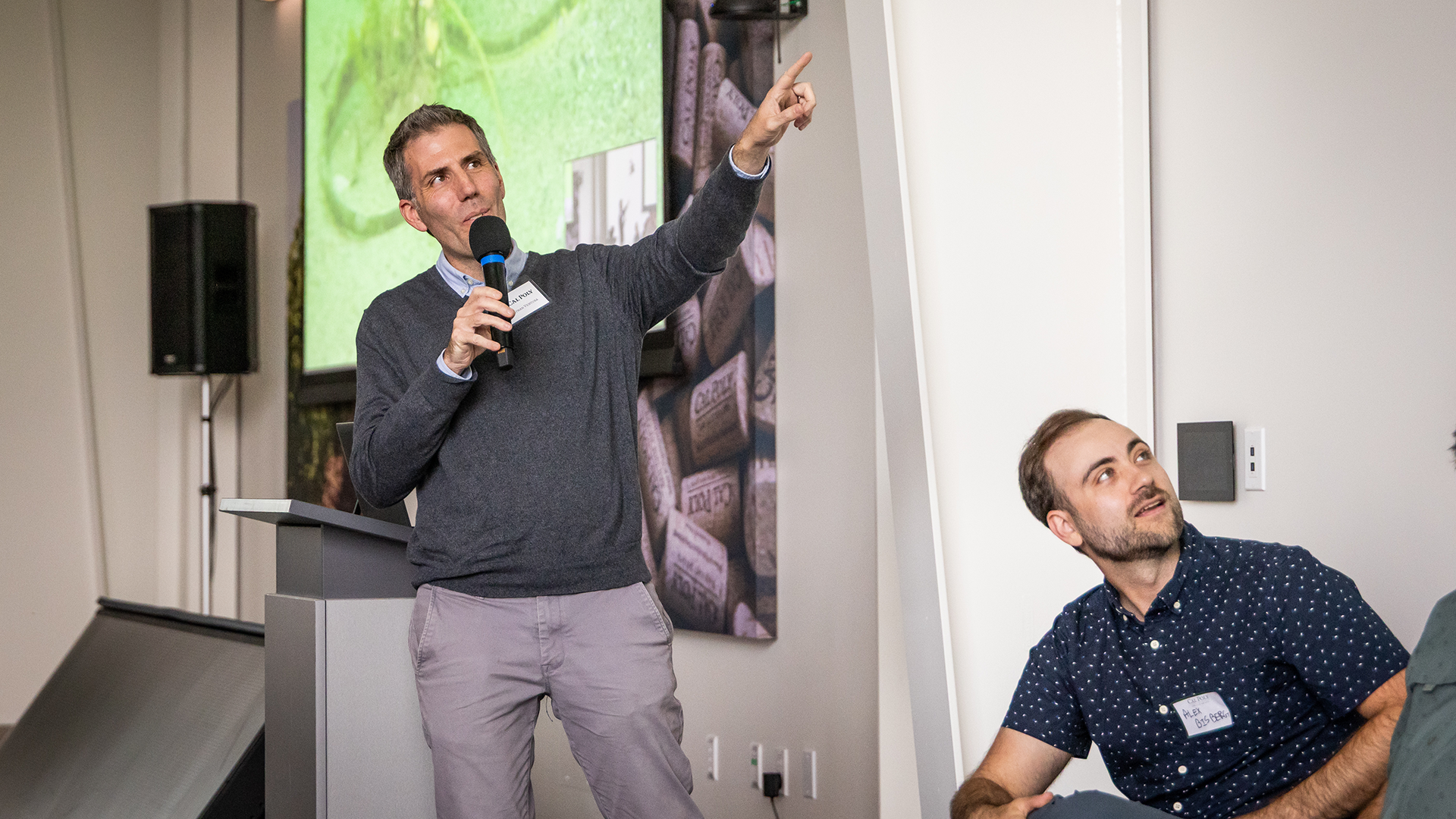
Computer science professor Jonathan Ventura is among the faculty already putting that capacity to use. He is applying machine learning to drone imagery of eelgrass in Morro Bay. Researchers once had to annotate those images by hand; Ventura’s system matched the quality of that analysis while processing them roughly 10 times faster.
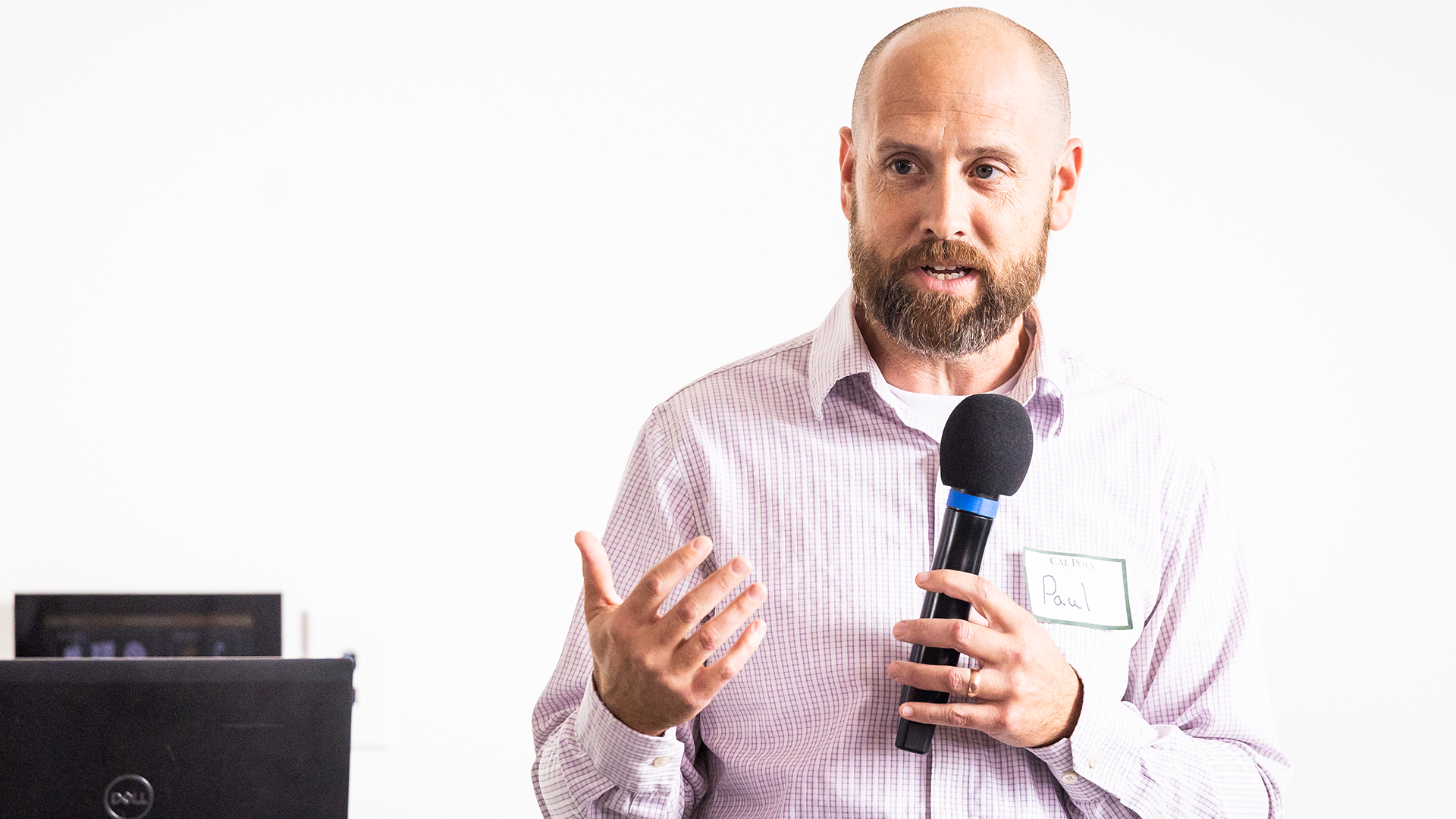
Sensitive medical data presents a different challenge. Computer science professor Paul Anderson is working on spinal cord injury and genetic risk projects that use AI to search for patterns in complex medical data. Because protected patient information cannot be sent to outside AI services, the AI Factory allows researchers to train models locally.
“Before the AI Factory, we couldn’t work on a problem like this,” Anderson said. “Now we have the compute to train frontier models.”
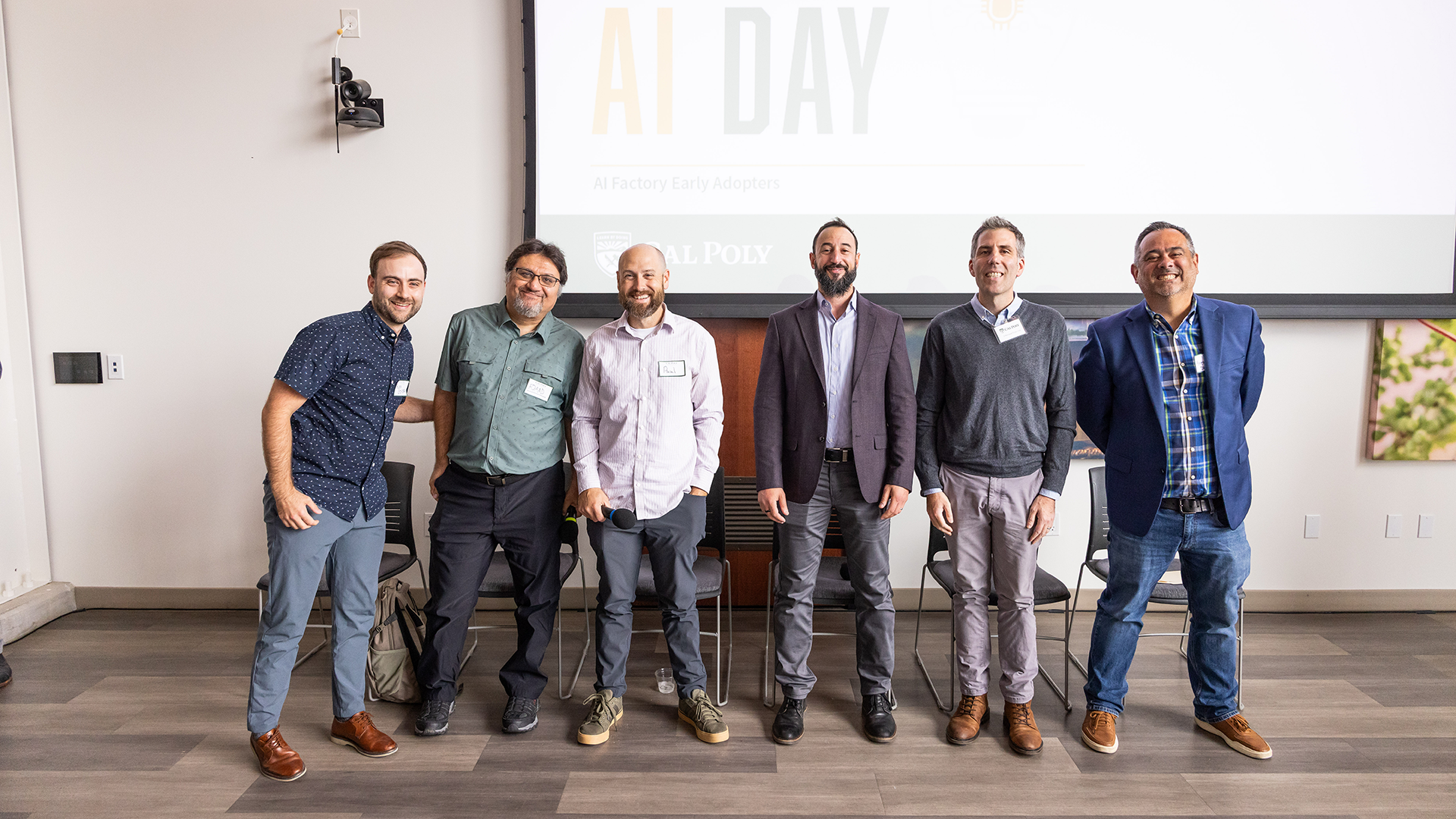
AI Day broadened the conversation with a student showcase that explored AI’s role in areas including legal evidence and learning.
Computer science student Jillian Bogosian is developing a tool to help legal professionals assess whether digital images submitted as evidence may have been altered. Working with lawyers helped shape the design, leading to a tool that presents indicators they can weigh before making their own determination.
Graphic communication student Cahlan Kim helped develop Orbit.IQ, a browser tool that summarizes students’ AI activity and includes a prompt budget intended to encourage more deliberate choices. The project grew from her team’s effort to help students use AI while preserving the thinking that supports learning.
Faculty across Cal Poly are weighing related questions as they decide where AI can strengthen learning and what students still need to master for themselves. For Bisberg, academia’s obligation to the public good includes preparing students to contribute meaningfully to AI’s development and to the technical and ethical choices that shape the systems they will work with.
“By training the models themselves, they can both learn about them and research new ways to make the system better,” he said.
About the Noyce School of Applied Computing
The Noyce School of Applied Computing is the first interdisciplinary school of its kind at Cal Poly, established through a transformative $60 million gift from the Robert N. Noyce Trust.
Housed within the College of Engineering, the school brings together Electrical Engineering, Computer Science and Software Engineering, and Computer Engineering, with Statistics as an affiliate. The structure creates opportunities for students and faculty across computing fields to collaborate on complex problems using computational principles and technologies.
Top photo caption: Cal Poly President Jeffrey D. Armstrong, at the podium, joins NVIDIA Vice President, Americas, Charlie Wuischpard and other campus and industry leaders for the AI Factory digital ribbon cutting during Cal Poly AI Day on Oct. 22.


