More Than a Puzzle: A Student-Built Platform Turns Play into Research

Cross-disciplinary project unites engineering, psychology and older adults in the community to explore cognition and loneliness
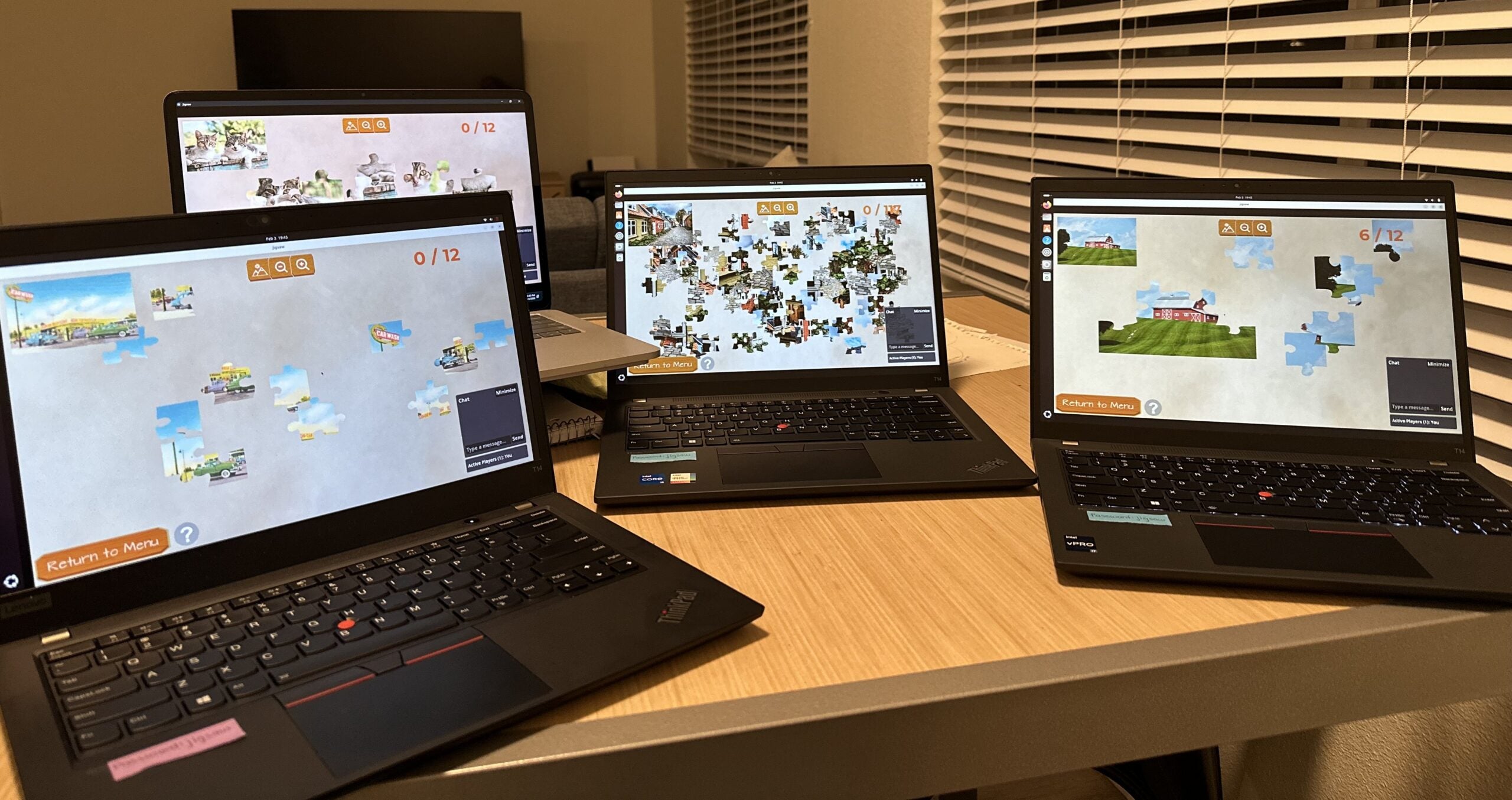
On one laptop screen, a player searches for edge pieces. On another, someone else sorts by color. Slowly, the image of a cherry red Ford Mustang takes shape, built piece by piece across two screens as two players work together on the same puzzle from different places.
The puzzle itself was only one part of a larger Cal Poly effort. Computer engineering students built the platform, psychology researchers shaped the study behind it and older adults in the community helped ground the work in how participants actually used it.
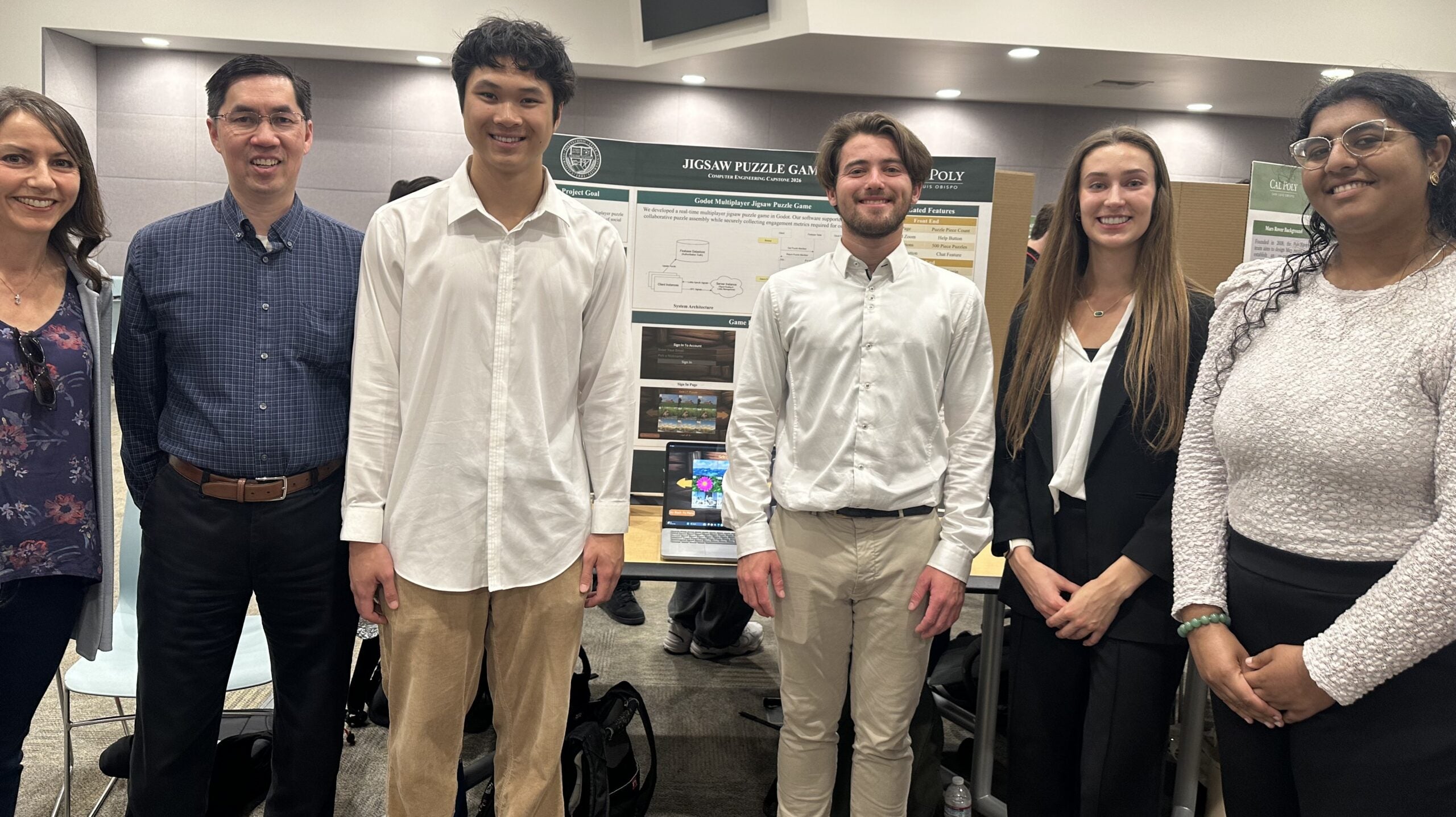
The collaboration made it something more layered than a typical capstone. The game had to feel approachable enough for people to want to use it while also giving researchers a way to study how participants engaged with it over time. “It was rewarding to work on something where we were thinking about the user first,” said computer engineering senior Audrey Hansell, the project manager. She said she valued building around the needs of people who would use it.
By the time the Mustang appeared across two screens, the project had already taken several forms. Each version brought the next set of changes into clearer focus.
Rethinking the Build
Before the game moved to laptops, it lived inside a wooden box.
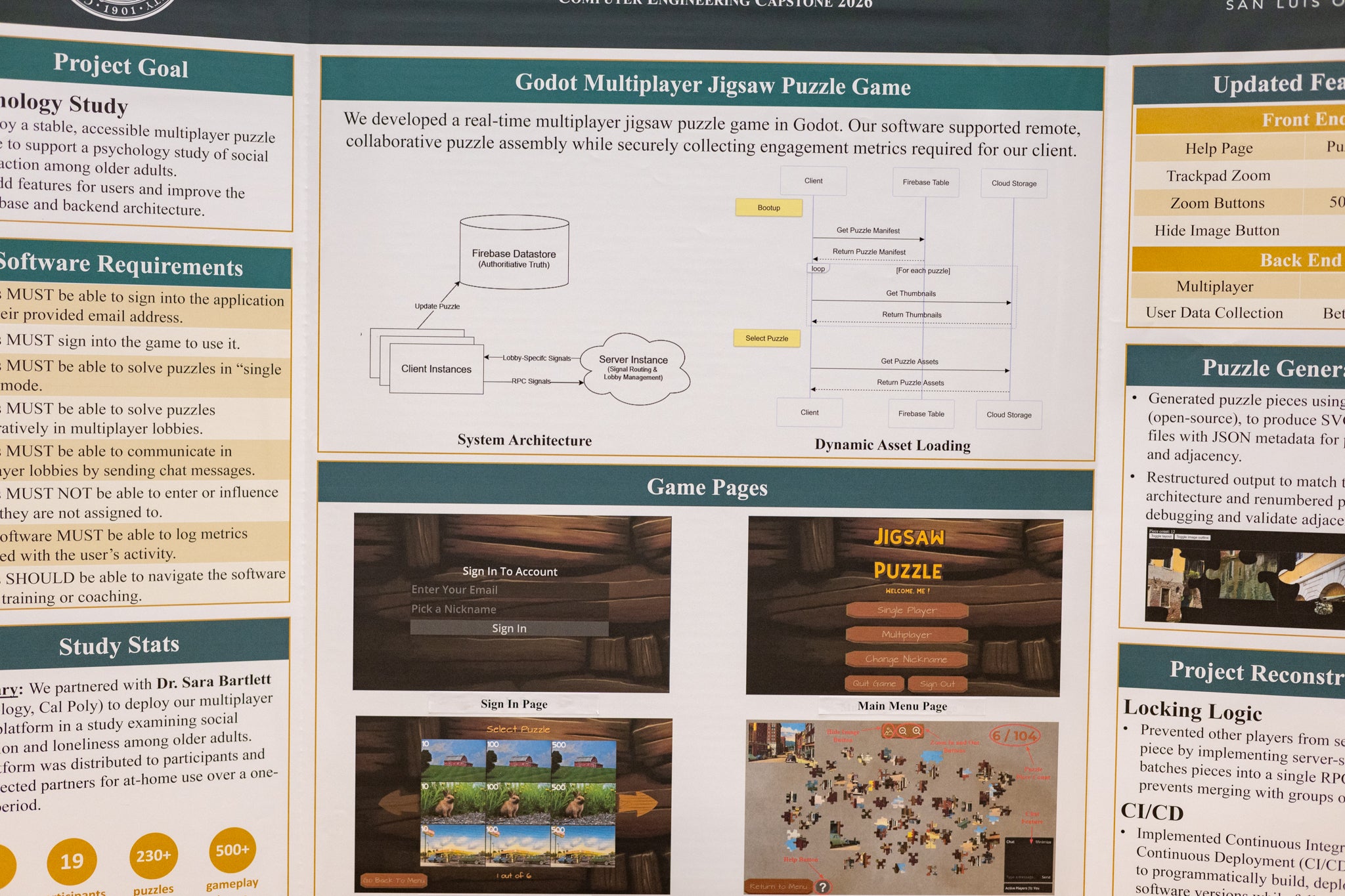
In fall 2024, the project was moving forward on two connected fronts. Psychology lecturer Sara Bartlett was shaping the study with student researchers, exploring how virtual puzzles might relate to cognition and loneliness. At the same time, computer engineering professor John Seng brought the idea into his capstone course, where students began building the technology behind it.
From the start, the project was designed as both a game and a research tool. A year later, that purpose remained central when Hansell’s team joined the work in fall 2025. “We needed to collect user data, so that’s why we set up from scratch,” she said.
The first version took shape inside custom-built consoles created by earlier computer engineering students. Set within slanted wooden frames, the devices included a large screen, buttons and a roller ball meant to feel simple and approachable for participants. They also gave researchers a way to begin watching how people used the game.
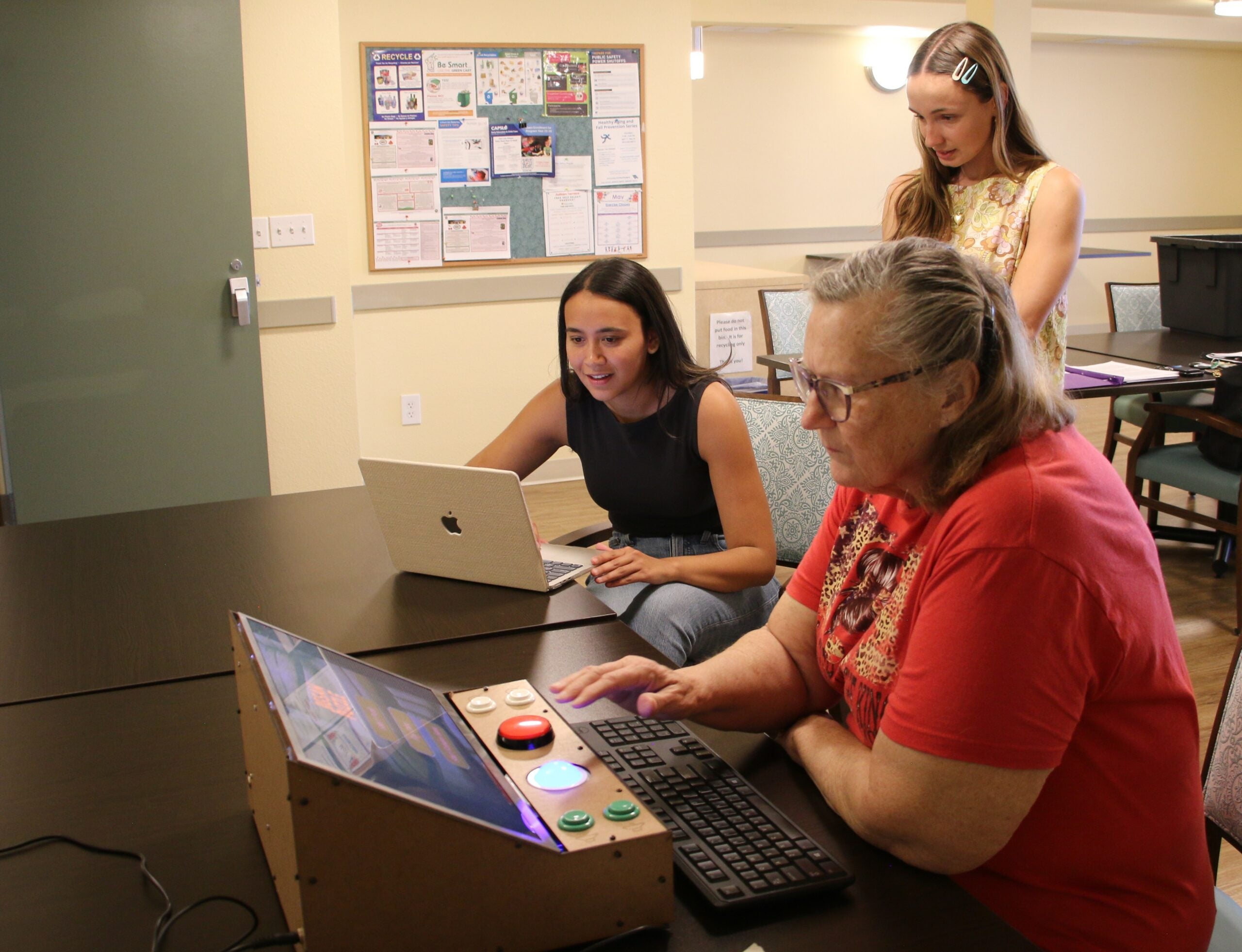
The boxes helped prove the idea, but they also exposed a limit. The console version could not support the shared play at the center of the study, so the next capstone team inherited a different challenge. Their job was to adapt the game for laptops and make shared play possible. Hansell worked alongside fellow computer engineering majors Jacob Nater, Srinitya Choudary Doppalapudi and Noah Tran to carry that next phase forward.
In the new version, a puzzle that once lived on a single console now had to work across two laptops, with both players able to see the same board as it changed. “It’s a lot more complex when you have two people playing at once,” said Nater, the team’s technical development lead. One of the biggest hurdles was synchronization, making sure that when one person grabbed a puzzle piece, no one else could move it at the same time.
“We were really focused on maximum usability and accessibility, not making the game as fast as possible,” Nater said. Repeated testing led to changes in everything from zoom speed to text size. Hansell kept asking him to make the font bigger and, after enough rounds of revision, “everything is huge,” he said with a laugh.
By then, the project was ready to reach participants again in a new form.
When the Game Reached Participants
Hansell still remembers helping the first user log in. She was excited, she said, but also nervous about how the platform would work once it moved beyond the team’s own testing. Then the puzzle began to come together on screen.
In the laptop-based study, 19 participants used the game, along with 27 more users who joined them in play but were not formally tracked for the research. Participants logged in, chose puzzles and returned to the game over time. The platform tracked which puzzles they selected, with options ranging from 10 to 500 pieces, as well as how much time they spent playing alone or with someone else.
The puzzle images mattered more than the team might have expected. Users were drawn to bright colors and familiar scenes, including barns, animals and classic cars. One participant even requested the cherry red Mustang that now opens the story.
Nater said one of the most rewarding parts of the project was seeing classroom concepts put into practice. He said the work felt different from his job as a software developer because it was smaller in scale and closer to the people it was meant to serve. Watching participants use it made the work feel more tangible.
Hansell felt that shift, too. In most classes, she said, students are the only users of their own code. Here, the platform kept changing as participants began using it.
The laptop-based pilot ran for six weeks. Researchers used the first week to help participants install the game, walk them through it and conduct pre-test measures for loneliness and cognition. Participants then used the game over the next four weeks while the team checked in with follow-up calls. In the final week, researchers conducted post-tests and interviewed participants about their experiences. Bartlett said the pilot was always meant to inform a larger effort to better understand how virtual puzzles may relate to cognition and loneliness in older adults.
When the pilot ended, the computer engineering students had done more than finish a capstone. They had built something that became part of a larger research effort shaped by community participation.