
The Long Road to Mars
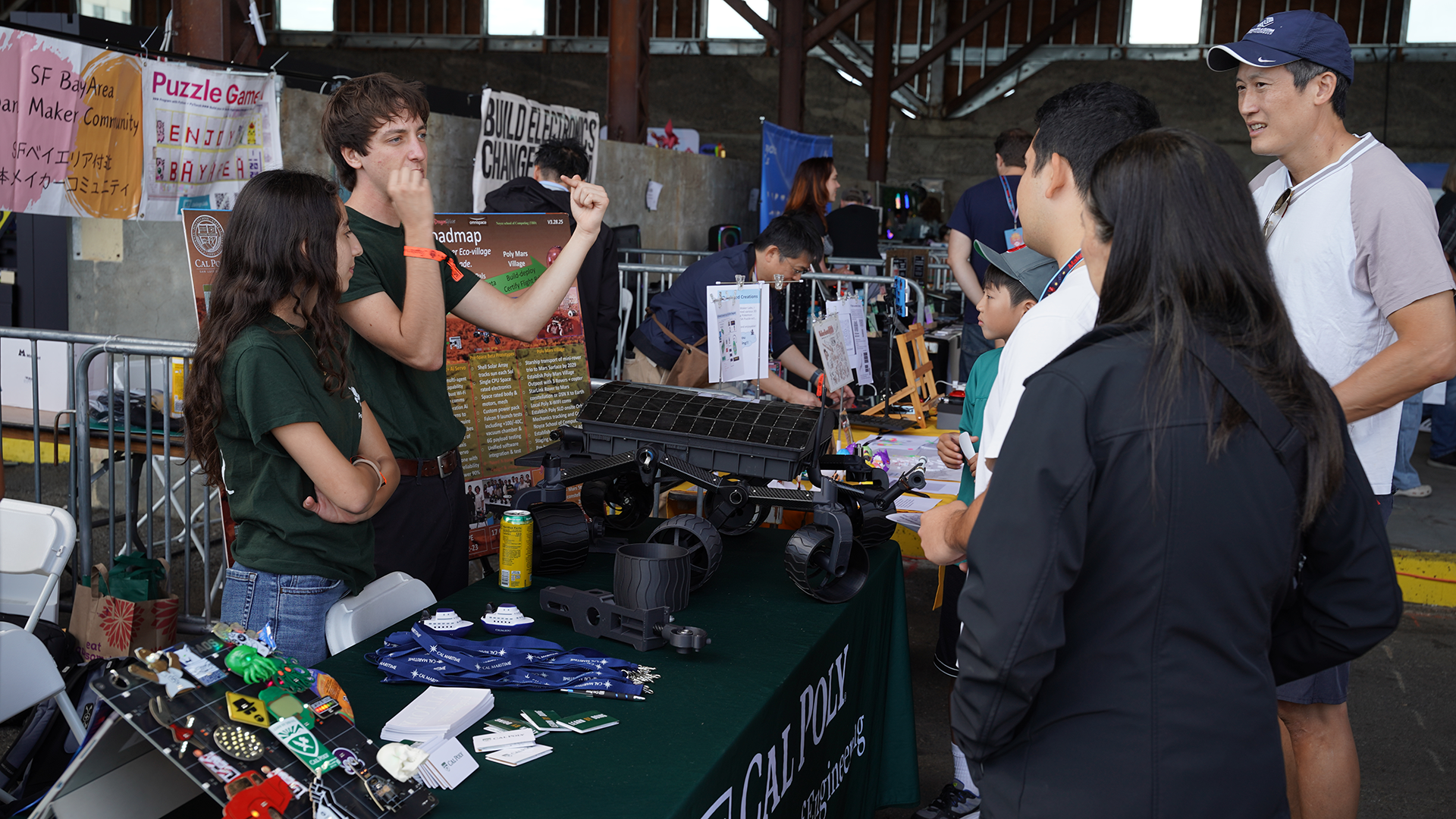
Cal Poly engineering students are developing a low-cost rover and mission control system as Poly1Rover evolves into a broader space innovation effort
A PlayStation 4 controller might seem like an unlikely tool for exploring Mars. But at Cal Poly’s aerospace engineering expo, students used one to drive a rover over a Starlink satellite internet connection.
Henry Flushman, a fourth-year aerospace engineering major, acknowledged that the demonstration may not have looked especially impressive. To the students, establishing that connection marked an important step toward the team’s larger goal: developing an affordable rover capable of exploring another planet.
“It feels like we are on the cutting edge of science,” Flushman said.
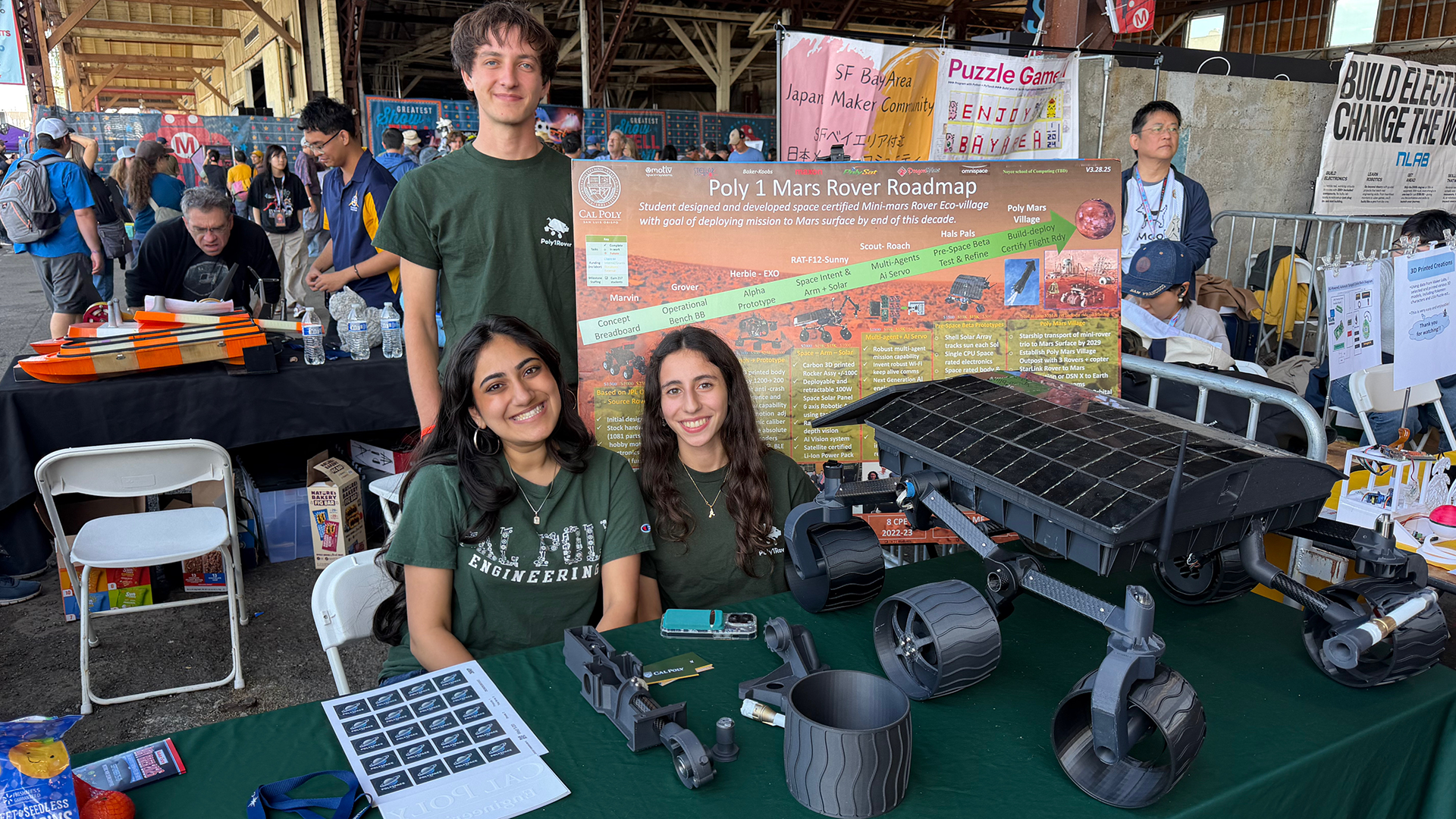
In September, Flushman and his teammates brought their six-wheeled prototype to Maker Faire Bay Area in Vallejo, where they showcased their work and discussed the challenges ahead.
The effort traces back to 2019, when computer engineering lecturer Rich Murray launched Poly1Rover through a senior capstone project. It now involves about 35 students studying aerospace, mechanical, electrical and computer engineering, among other disciplines.
Aerospace engineering professor Madhusudan Vijayakumar, who helps guide the effort with Murray, said the students hope to design a rover that could be built for roughly $1 million, a fraction of the cost associated with major Mars exploration missions.
Flushman now serves as president of the student group, which is seeking formal recognition as the Cal Poly Space Innovation Club. The proposed organization would encompass both rover development and a mission control system, with Poly1Rover as the first project to use that system.
He joined as a first-year student, drawn by his longtime interest in science, history and aerospace. He began on the testing team before moving into mission control, where he has gained a better understanding of how the systems behind a space mission fit together.
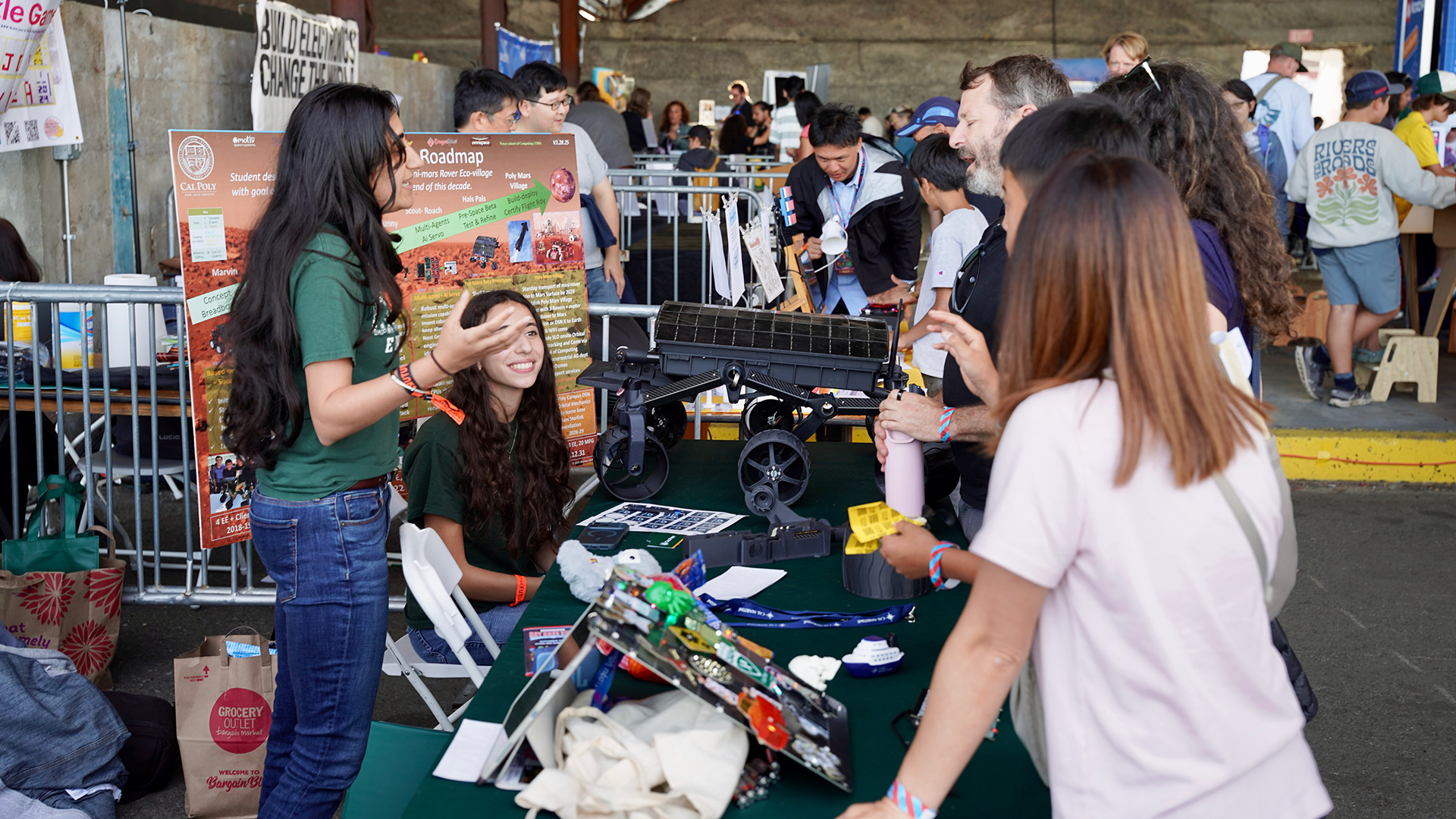
This school year, the team hopes to operate a rover through its mission control application from about 300 miles away while demonstrating that the vehicle can function without relying on GPS, which wouldn’t be available on Mars.
Third-year aerospace engineering major Tia Bajaj recently joined the mission control team, bringing experience in FIRST Robotics and a childhood fascination with space. A self-described space nerd, she saw an opportunity to combine those interests while working toward the goal of sending a rover to another planet.
As treasurer of the proposed student organization, Bajaj also wants to build a foundation that will sustain the effort as members graduate and new students arrive.
Long-distance communication is only part of the challenge. The rover itself must eventually withstand conditions far more demanding than those on Earth.
“All our prototypes are Earth-ready,” Vijayakumar said. “Our plan is to start getting them space-ready.”
Upcoming work includes examining the rover’s mechanical performance and using a Falcon 9 vibration-testing profile to simulate launch conditions. Students will also need to evaluate different materials to prepare the vehicle for space. None of the prototypes are space-rated yet, and the group is still exploring potential launch providers.
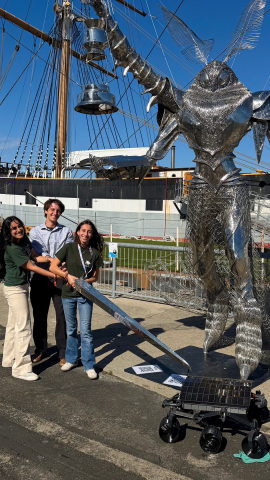
Second-year aerospace engineering major Allegra Ciarlantini hopes to move the rover beyond its current prototype stage. Her interest in space began long before she arrived at Cal Poly.
At age 5, she watched “Star Trek” with her father, and science teachers later nurtured that interest. While still in high school, she spotted a LinkedIn post about Poly1Rover and emailed Murray, becoming involved before enrolling at Cal Poly.
Ciarlantini, now the group’s vice president, is learning aerospace concepts through the project before encountering them in class.
Across seven teams, students handle responsibilities ranging from electronics and software to testing and sample collection. Flushman values the opportunity for members to work outside their majors and see how their contributions fit into the larger mission.
“We are doing different tasks but working toward a common goal,” he said.
At Maker Faire, the rover attracted industry professionals, Cal Poly alumni and younger visitors eager to learn about the students’ work.
Some high school students seemed to have already decided where they wanted to go to college. They had just one question: “How do you get into Cal Poly?”
Top photo: Henry Flushman, center, talks with visitors as Allegra Ciarlantini stands beside him at Maker Faire Bay Area in Vallejo. The students helped showcase Poly1Rover and explain the team’s efforts to develop an affordable rover for future Mars exploration.


