Cal Poly Students Create VR Space Mission for Aerospace Museum

LAES and computer science teams are developing an immersive experience for a permanent museum exhibit
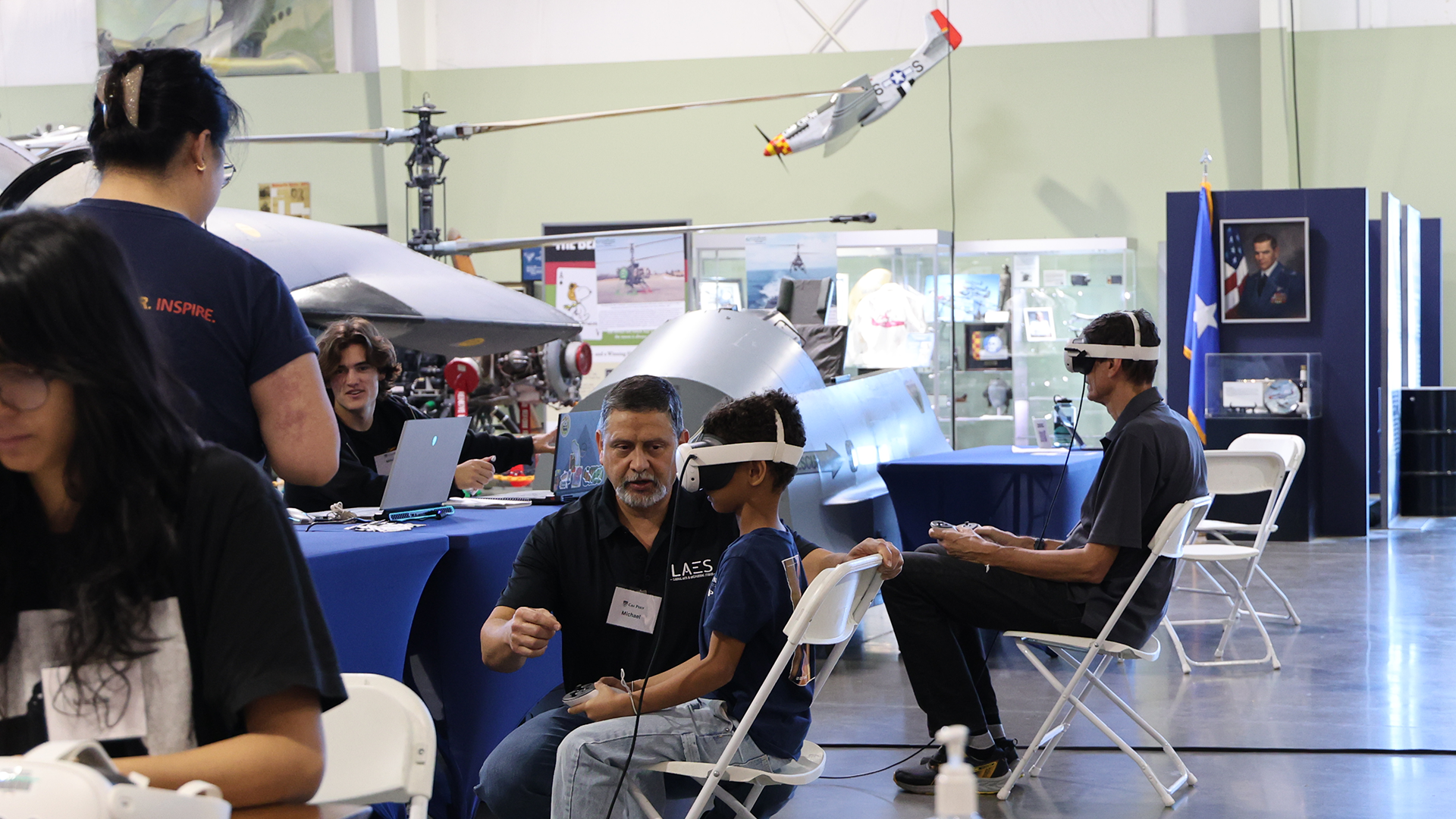
The youngest tester was 7. The oldest was 77.
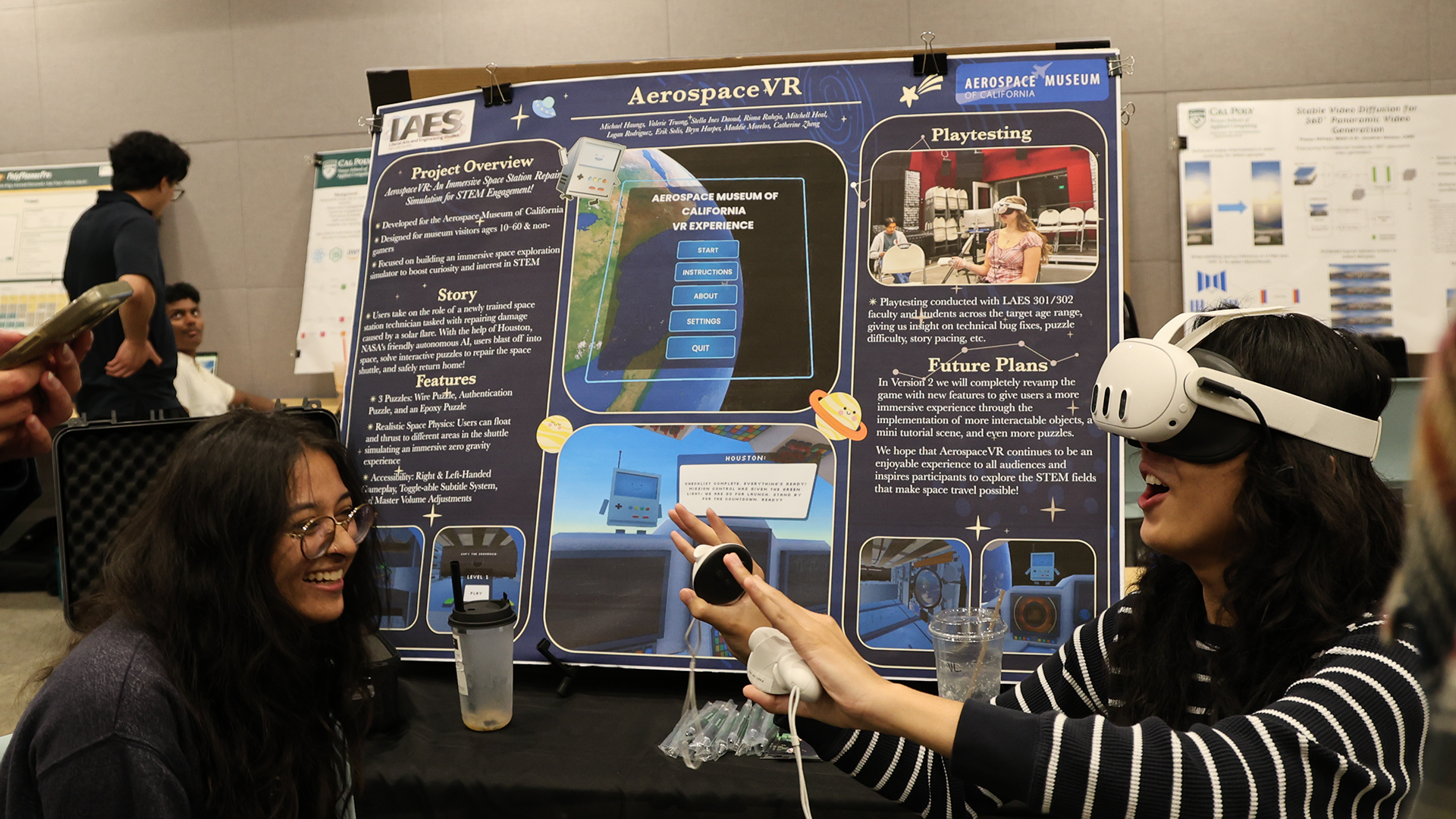
At the Aerospace Museum of California, museum guests used virtual reality headsets and handheld controllers to become astronauts. The experience Cal Poly students are creating sends users to an orbiting space station damaged by a solar flare, where they make critical repairs and solve problems as an original animated story unfolds around them.
The team brought the latest version to Sacramento in spring 2026 after refining it largely on campus. There, it reached a much broader audience, including many people trying virtual reality for the first time.
Watching people work through the mission showed the team which parts were intuitive and where adjustments were still needed.
The Sacramento visit also marked another step in an effort designed to continue beyond any one student team. Since spring 2025, students from Liberal Arts and Engineering Studies and computer science have been developing the experience in partnership with the museum, with each group building on what came before.
The finished version is intended to become a permanent exhibit.
Building a Museum Partnership
The museum’s initial request was broad: Create something involving virtual or augmented reality.
Aerospace Museum of California President and CEO Tom Jones brought the idea to Cal Poly, where Michael Haungs, co-director of Cal Poly’s Liberal Arts and Engineering Studies program and a professor of computer science and software engineering, began shaping it with students. By spring 2025, it had become a capstone project in LAES.
“We want real projects with real customers for our capstone class,” Haungs said. “It’s entertainment with an educational purpose, which makes it an ideal project.”
The museum has backed the effort with more than $9,000, supplemented by funds from Cal Poly’s Noyce School of Applied Computing, underscoring its stake in the outcome.
The first student team developed storyboards and began defining the structure of the mission, including how visitors would move through it and what they would do along the way. A second team continued the work in fall 2025.
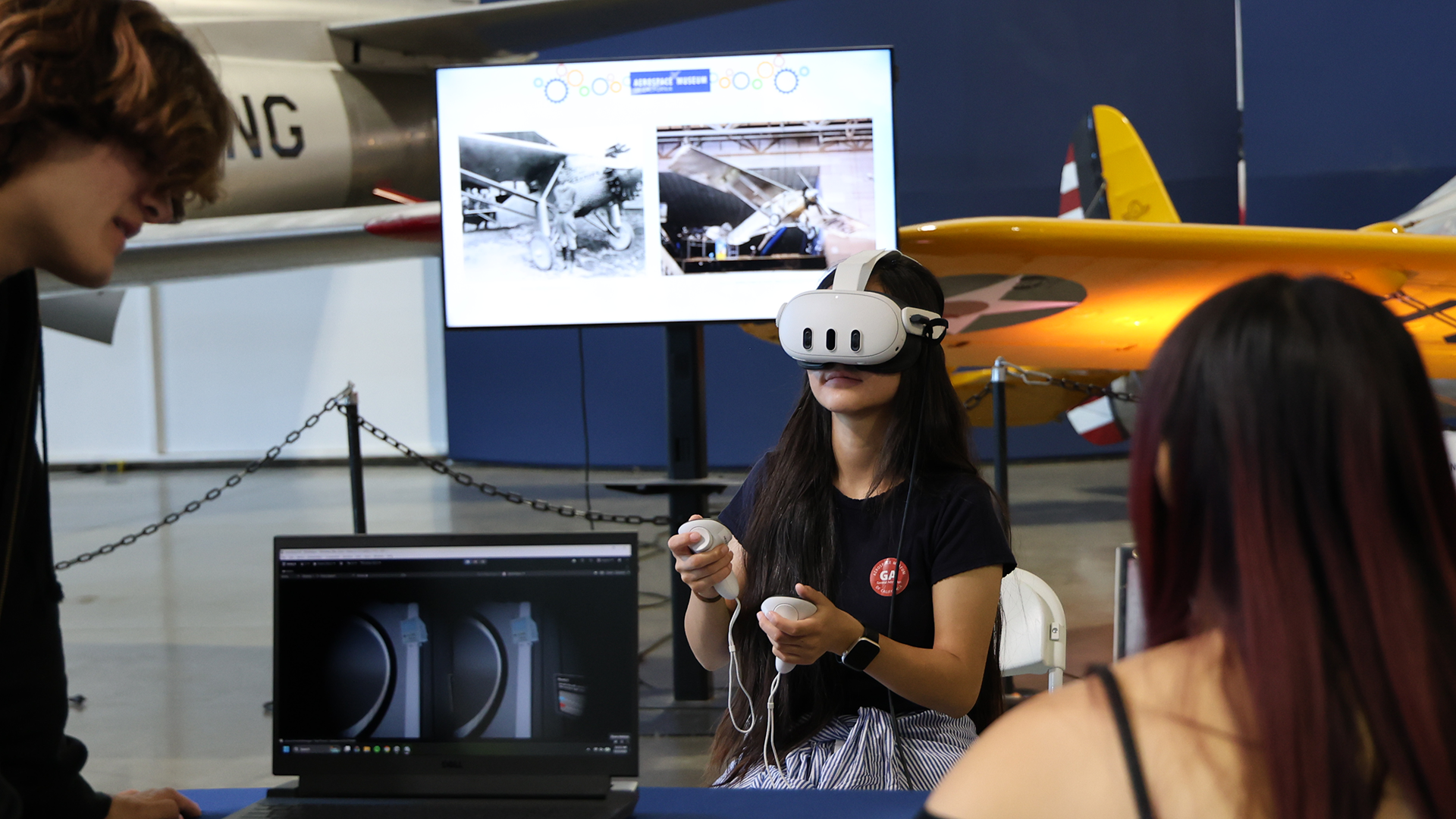
Computer science student Valerie Truong joined the next group in spring 2026, looking for a way to put her VR development skills into practice. Of several options, the Aerospace Museum work immediately appealed to her.
“I’m really passionate about space exploration,” Truong said.
As the team member with the most experience in Unity and VR, Truong took on a leadership role while also fixing bugs and implementing new features.
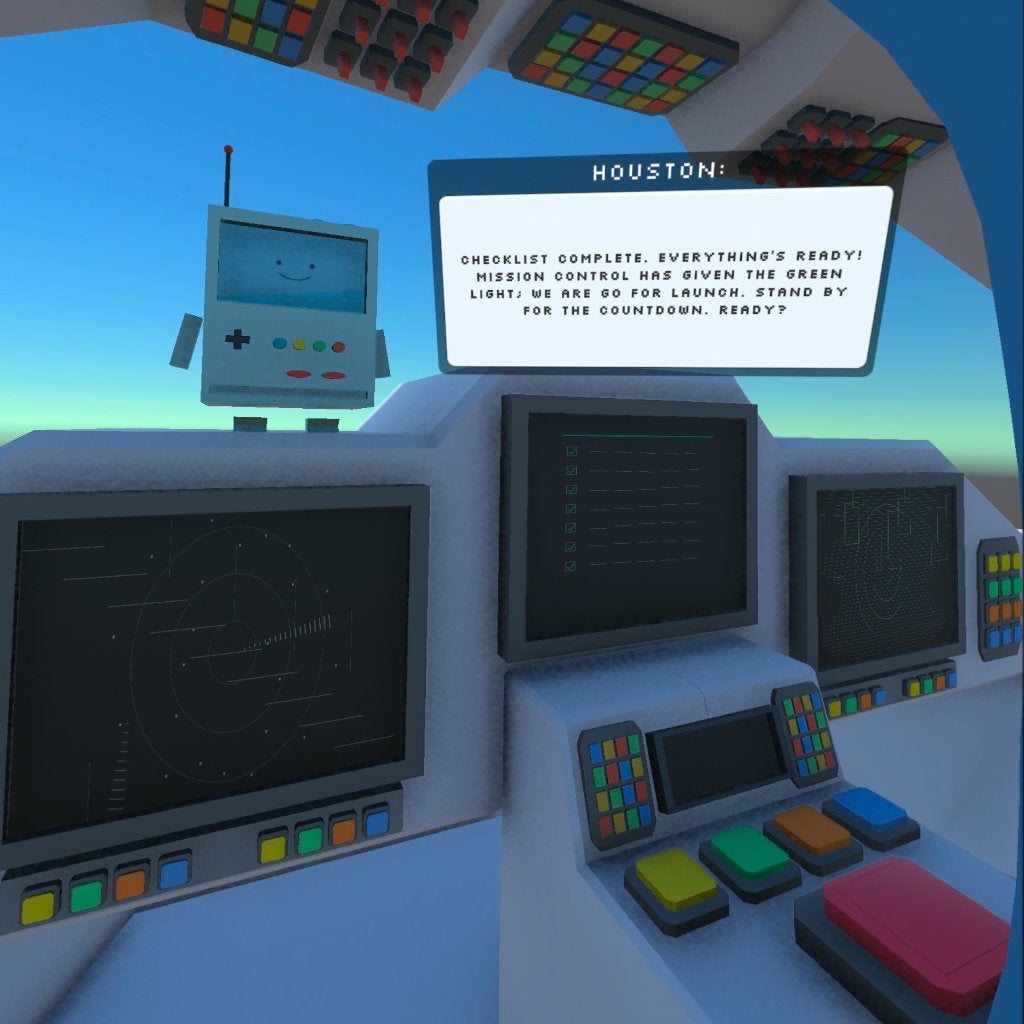
Each group inherited what came before rather than starting over. One team’s endpoint became the next team’s starting point. During a quarter, students could cycle through as many as five rounds of prototyping and testing, using what they learned to shape the next version.
The Sacramento visit put that process in front of the people who would eventually use the experience. Truong spent about two weeks helping prepare, rehearsing scripts and walking through the testing process with her teammates. At the museum, she collected visitor feedback and organized it into actionable items the team could address.
“The trip to Sacramento was such a fun experience that I’ll never forget,” Truong said. She said watching museum visitors use the team’s work was especially rewarding.
An Interdisciplinary Effort
Creating a convincing virtual world takes more than programming. LAES students have brought backgrounds ranging from digital art to computing, with computer science students also contributing to the effort.
LAES, jointly offered by the colleges of Liberal Arts and Engineering, is co-directed by Haungs and English professor David Gillette.
“We are truly interdisciplinary in LAES, which is how most teams are in the real world,” Haungs said. “You need all those skills to capture the look and feel, the sound effects and the story, all the things that make it a good experience.”
The fast-paced development process also gave Truong experience balancing coding with team coordination, similar to the kind of environment she hopes to enter professionally.
Some students have taken pieces of the museum work further through senior projects in LAES and computer science.
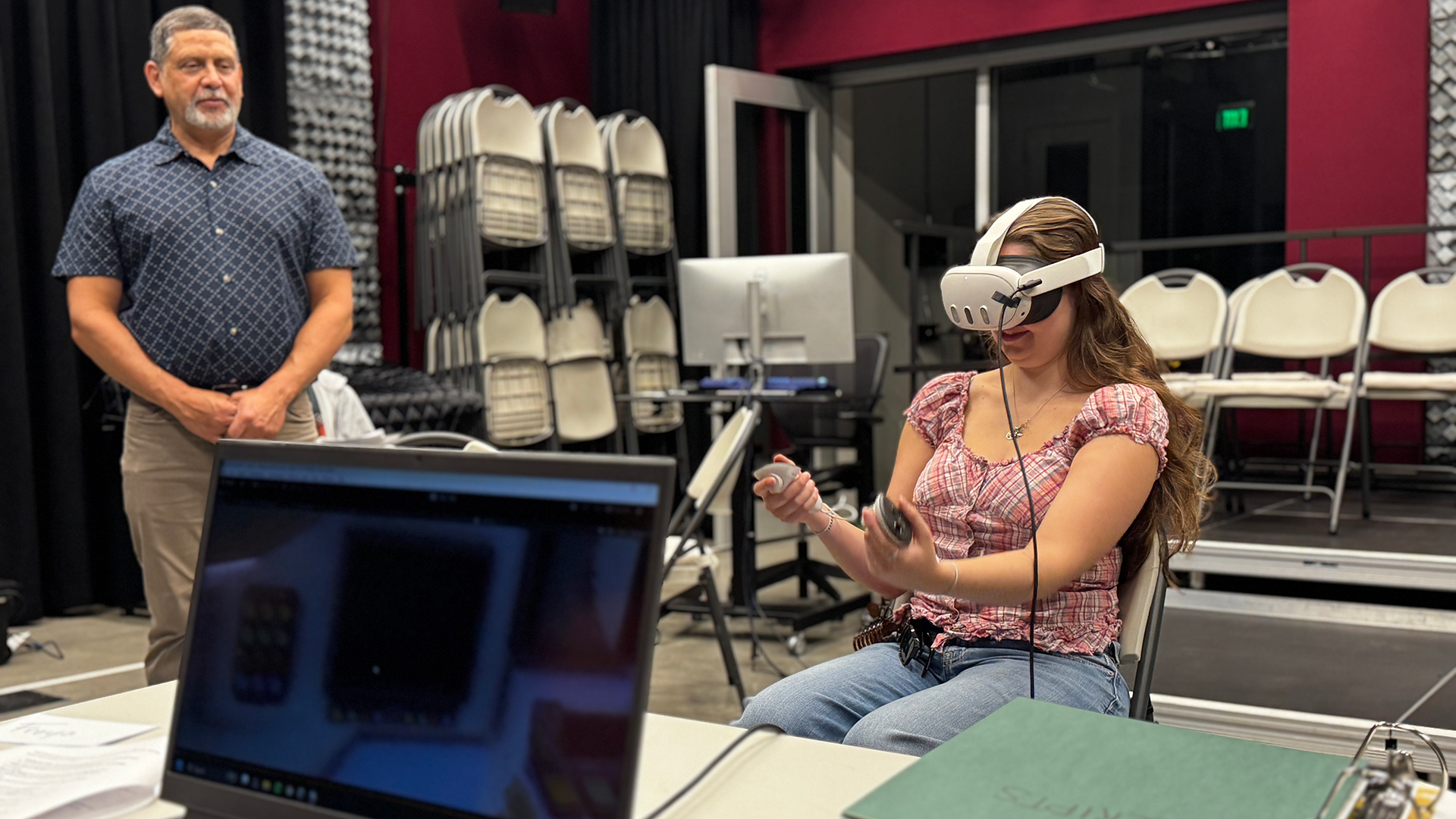
The core mission is now largely complete, with attention shifting toward how it runs and looks for museum visitors. In fall 2026, students plan to improve performance and polish the visuals, drawing in part on what the team learned through playtesting.
The current version keeps users seated as they navigate the virtual environment. Future iterations could add haptic feedback and allow visitors to move through physical space, expanding how they interact with the mission.
Haungs expects students to continue advancing the work for at least the next couple of years, leaving future teams room to explore ideas beyond the version now taking shape.
Truong, who hopes to become a VR developer, said the experience has also clarified what she values in the work.
“Being able to contribute meaningfully and actually see something I worked on used by people is such a fulfilling feeling,” she said.