A 72-Step Process, One Student’s Plan to Improve It

Max Scott’s master’s project brings data and student feedback into Cal Poly’s Microfabrication Lab
As Max Scott neared the end of his time as a Cal Poly student, he searched for a graduate project rooted in service to the university.
After earning his mechanical engineering degree from Cal Poly, Scott was finishing a master’s in engineering management and wanted his final work to continue serving students after graduation. When Scott shared that goal with mechanical engineering professor Hans Mayer, the professor pointed him toward the Microfabrication Lab, a Class 1000 clean room on campus.
“This project is a way I can give back,” Scott said. “The school has given me a lot over the years.”

That gratitude gave his final work a clear campus focus. Many graduate and senior projects are tied to outside companies or external research, he said. His would begin inside a Cal Poly lab.
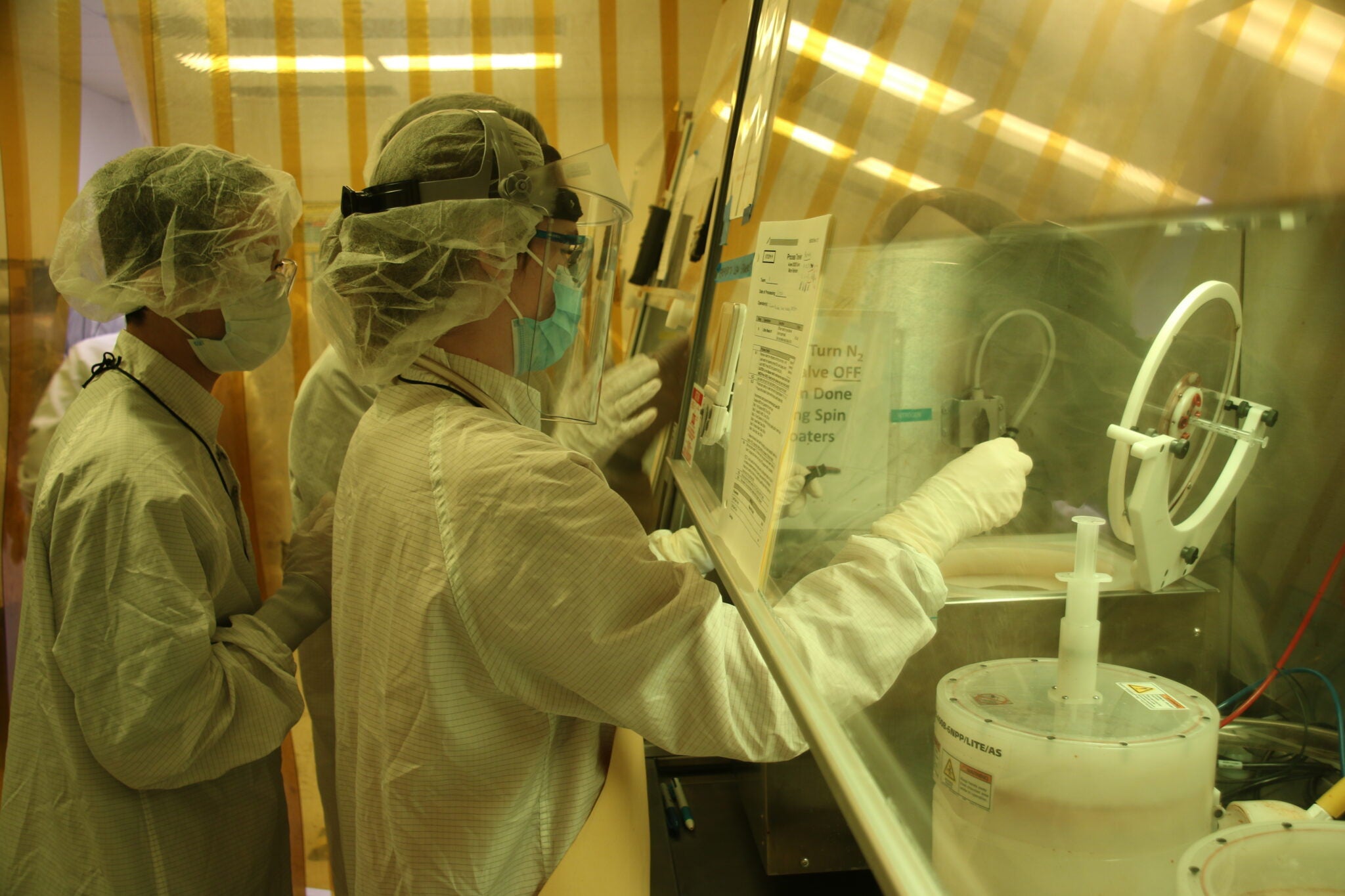
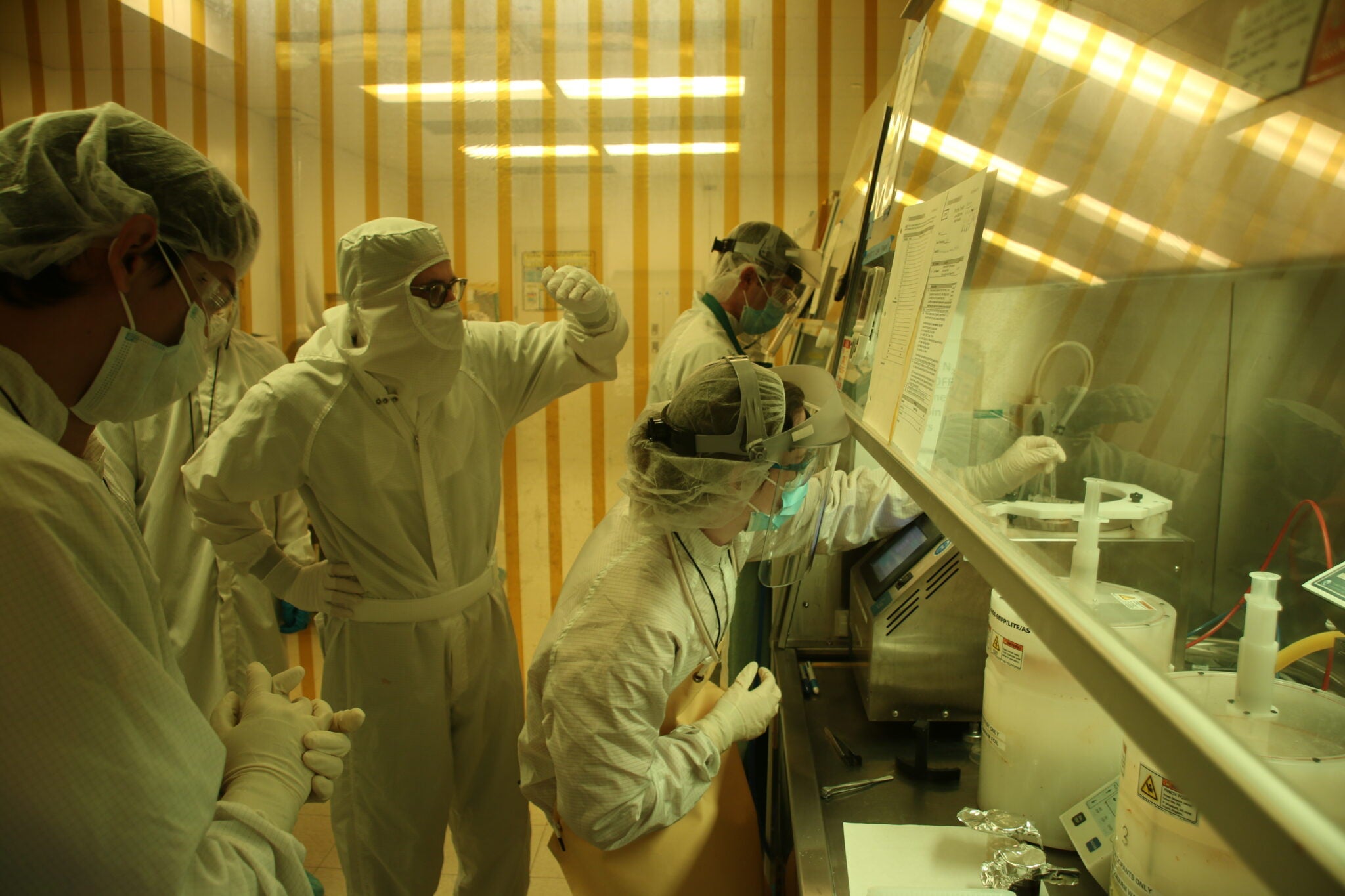
At the Microfabrication Lab, which opened in 2006, students learn clean room practices while creating small-scale devices on silicon wafers. About 50 students work in the space each year through the introductory course, research projects and the MicroSystems Technology Club. The course brings together undergraduates from a variety of majors, often including biomedical engineering, materials engineering, electrical engineering and mechanical engineering.
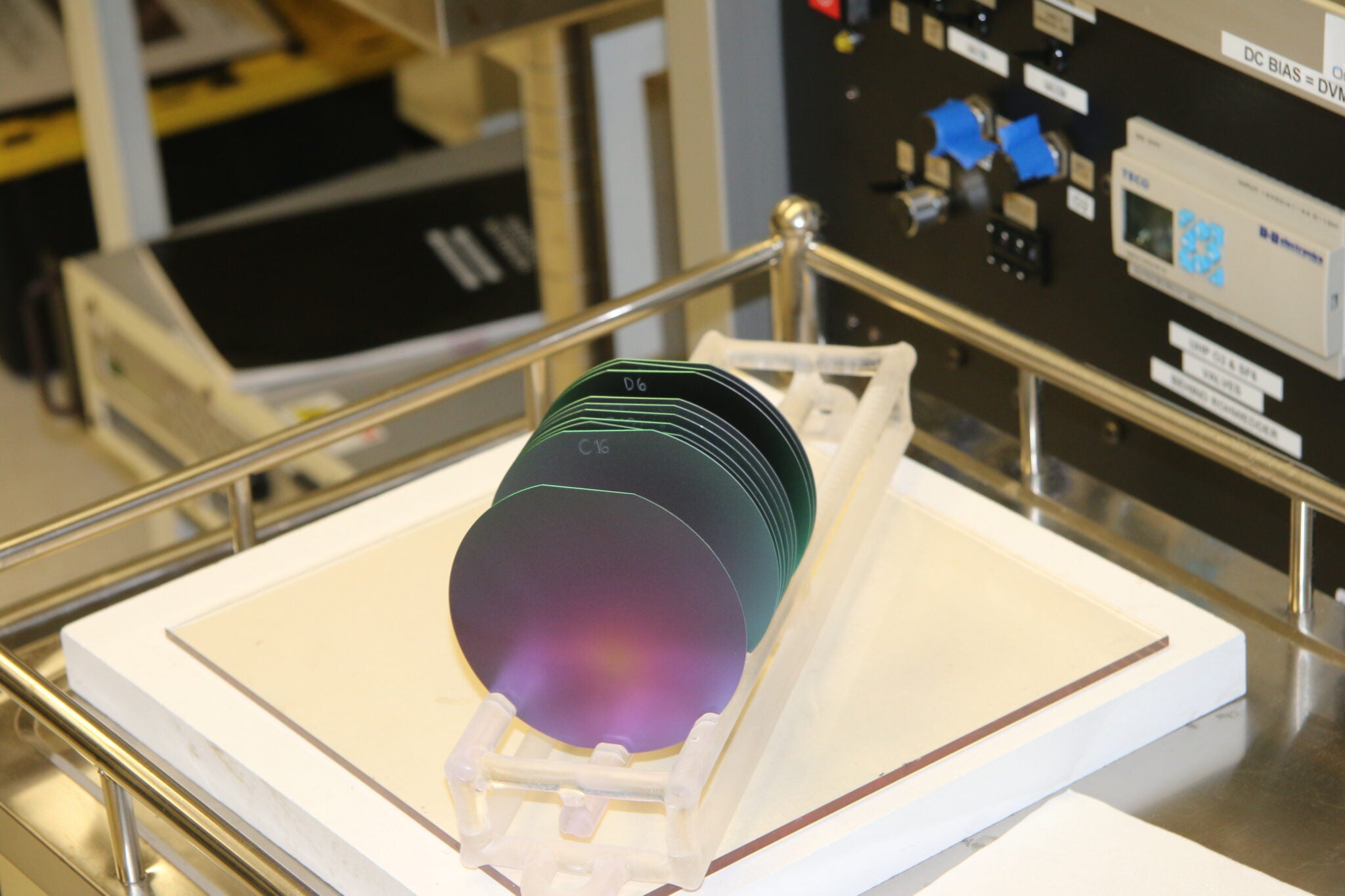
Before entering the clean room, students put on garments that keep particles from their skin and clothing off sensitive lab surfaces. Over the nine-week quarter, class sections share responsibility for nearly 20 wafers, with six intended to reach the final product stage. The work follows a 72-step paper process that carries from one class period to the next, and one processing error at any point can result in failure.
Scott’s research also pushed him into a field he had not expected to study so closely.
“It’s been outside of my wheelhouse,” he said with a grin.
That unfamiliarity helped him view the course from a learner’s perspective. A missed detail or unclear instruction can affect later steps, making coordination across class sections essential. While observing the course, Scott began to see how much the lab depended on timing and clear communication.
His observations became the foundation for a data collection framework faculty can use as the course evolves. The goal is to create a clearer record of the student experience and give faculty a practical way to identify where changes are needed.
The training comes at a critical moment for the semiconductor industry. Chips support everyday electronics as well as medical and defense systems. Federal investments have placed new attention on domestic manufacturing and the workforce needed to support it.
The broader need adds weight to the course, Scott said, while the lab’s complexity makes its most difficult steps worth studying carefully. Scott is tracking how long tasks take and which instructions create confusion, building a record that can point faculty toward specific changes instead of relying on anecdotal feedback alone.
Because his project involves student feedback, Scott first secured approval from Cal Poly’s Institutional Review Board, the group that reviews research involving human participants. He also received consent from the 23 students enrolled in the introductory microfabrication course during winter quarter 2026.
He then introduced a data collection sheet students can use during fabrication. The form asks them to rate the difficulty of individual steps and note where extra guidance would help. Collecting that feedback during the lab helps capture details students might forget once the work is done or leave out of end-of-term course evaluations.
Built for future use, the framework is simple enough to continue after Scott graduates. If the same information is collected over several years, faculty and future student researchers could recognize recurring challenges and evaluate whether changes are working.
As Cal Poly prepares to move from quarters to semesters, the data could help instructors make the most of the longer academic term. More time may give students a better chance to absorb the fabrication sequence, Scott said, while the framework can help faculty focus limited development time on the steps students find most challenging.
Scott sees the effort as a starting point for the Microfabrication Lab and as part of a larger pattern of Cal Poly engineers strengthening the places that shaped them. Alumni may return to support labs through gifts, equipment or renovations. Scott’s project offers an earlier version of that same impulse: using his final Cal Poly work to improve a space that will serve others.