
Cal Poly Students Put Summer Research to Work

Annual symposium showcases engineering projects spanning antenna testing and emergency response while welcoming more than 150 community college students
Inside one of Cal Poly’s anechoic chambers, where cone-shaped materials absorb radio waves, four electrical engineering students spent their summer upgrading equipment and testing antennas for Hascall-Denke, a Florida company.
With eight new designs headed for production, the company turned to the students to help confirm they performed as expected.
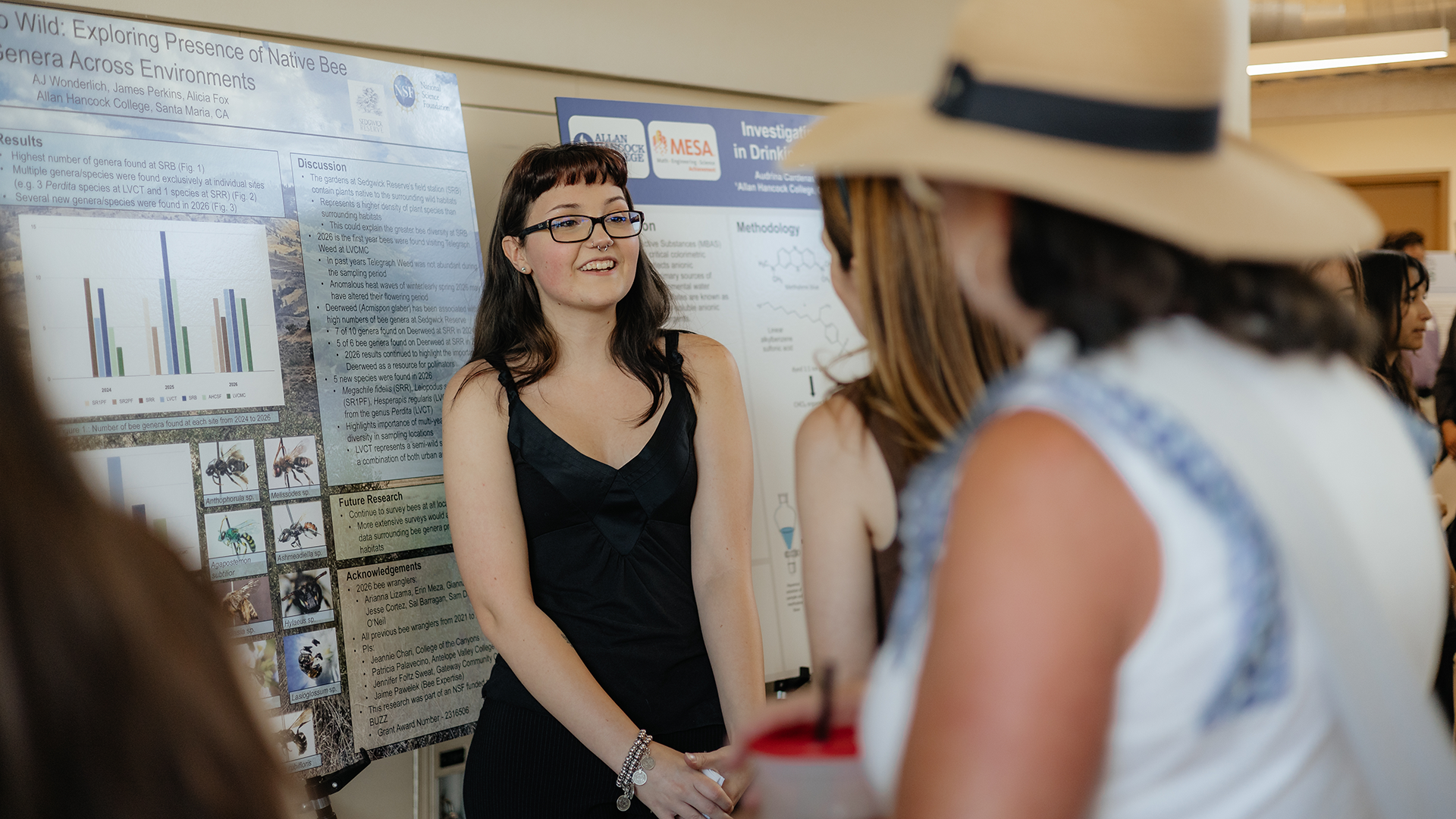
Their work was among the projects featured at Cal Poly’s annual SURP+ Research Poster Symposium on Oct. 16, which brought together Cal Poly and community college researchers to share their findings at Engineering Plaza.
The universitywide event showcased more than 150 research and creative activity projects. Within the College of Engineering, 119 students worked with 73 faculty members on 89 projects, exploring questions ranging from antenna performance to improving emergency response.
Launched in 2017, the College of Engineering’s Summer Undergraduate Research Program (SURP) gives students paid opportunities to conduct research alongside faculty, sometimes in collaboration with industry partners.
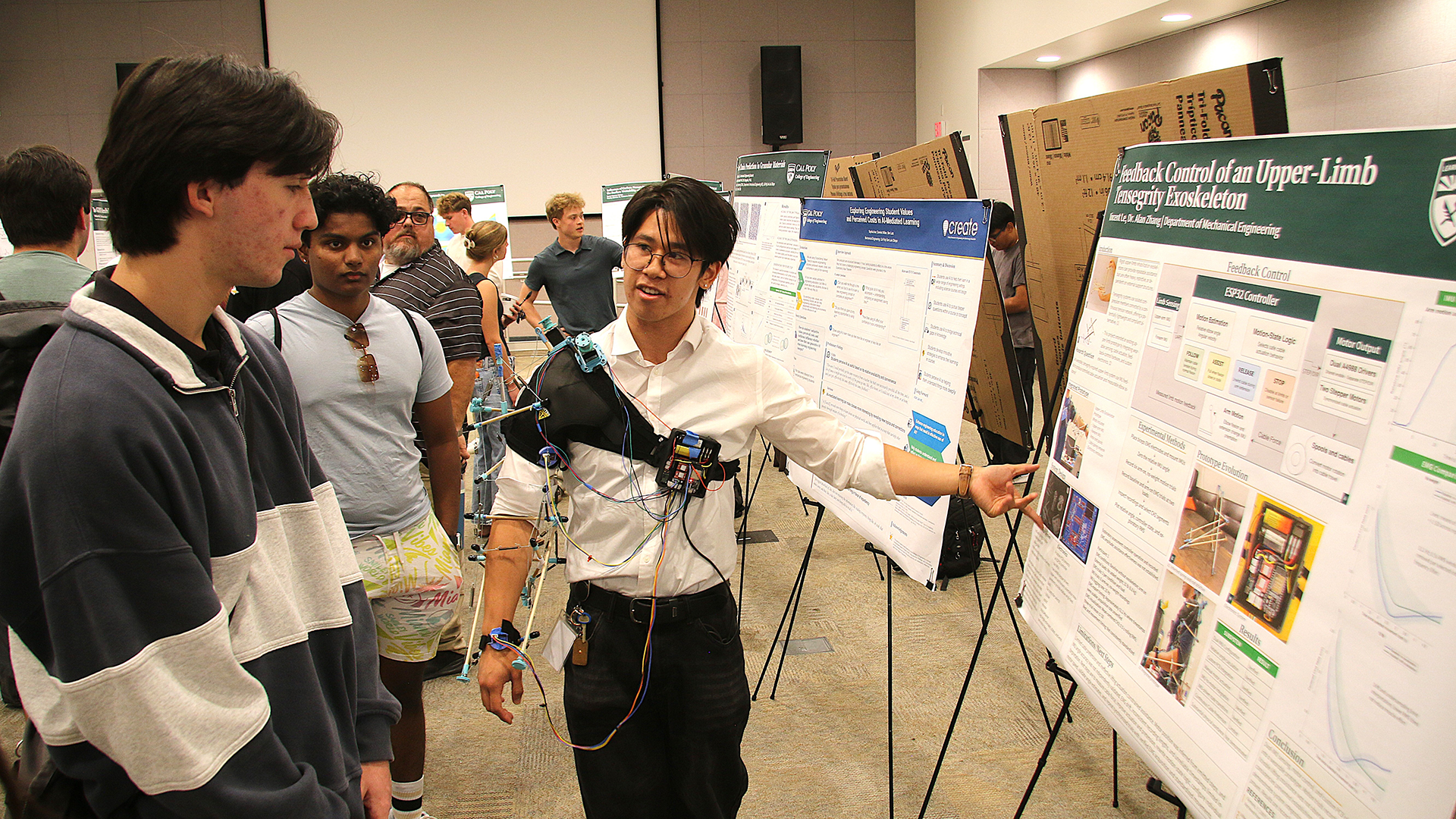
The Hascall-Denke project was one such collaboration. Students Alan Gonzalez, Monique Moreno, Ella Silberling and Katerina Tchertkov installed new equipment and updated the chamber’s control software. They also added materials to reduce interference and calibrated the system to ensure accurate results.
Once the chamber was ready, the team measured how the antennas transmitted radio waves in different directions and checked their results against Hascall-Denke’s measurements.
“We set up the antennas and then did a lot of troubleshooting,” Gonzalez said.
The company, which designs antenna systems for commercial and military customers, began its partnership with Cal Poly after an unplanned campus visit by founder Mike Hascall. He later sent executives to explore the university’s electrical engineering facilities and expertise.
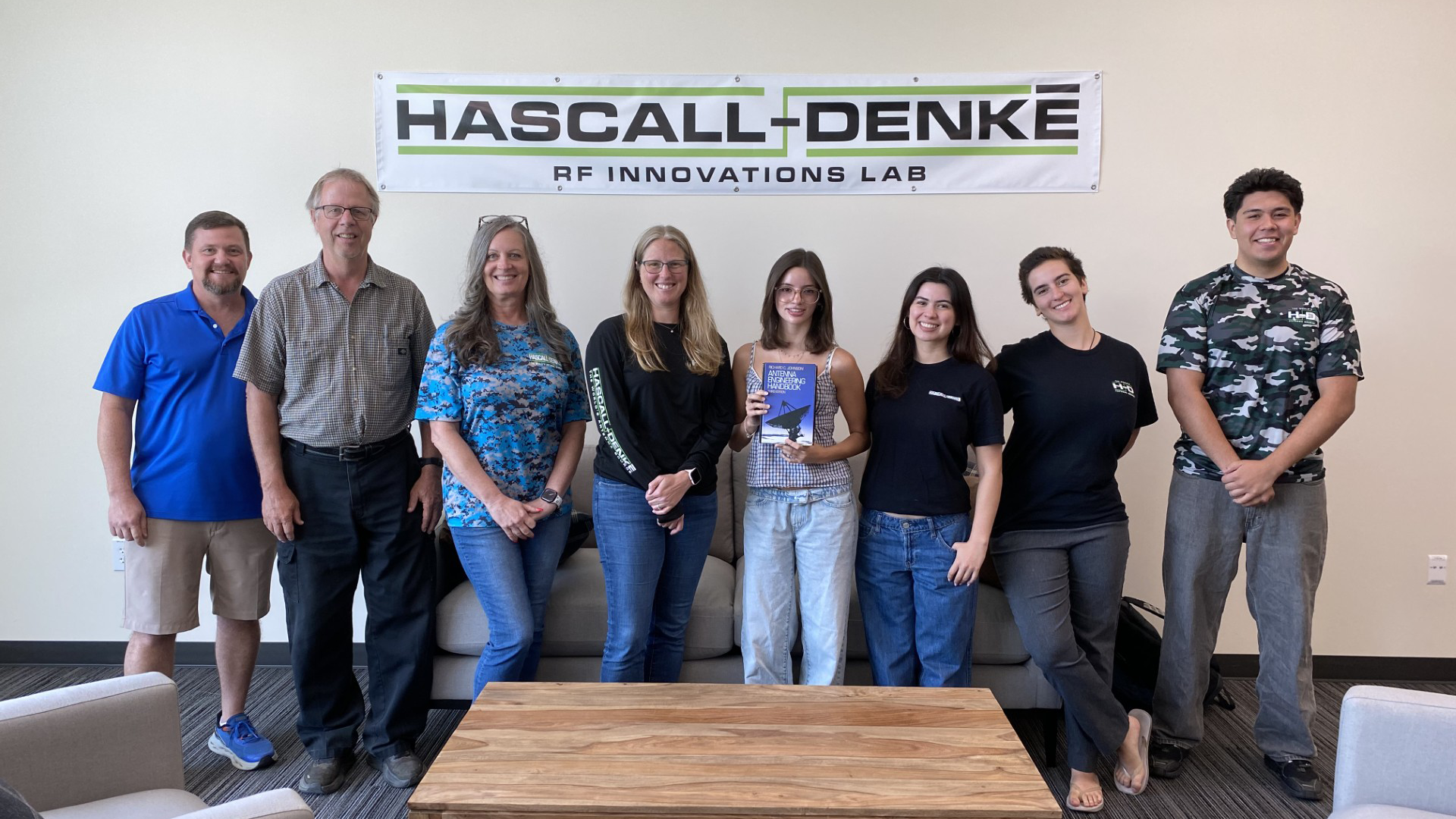
Electrical engineering professors Jenna Kloosterman and Dennis Derickson advised the student team, which received training from Hascall-Denke engineers and met with company representatives every other week throughout the summer.
Moreno said company representatives were impressed by the pace of the students’ work.
Hascall-Denke’s involvement also includes two master’s thesis projects and nine students working on senior projects, along with approximately $15,000 in equipment purchases to expand Cal Poly’s antenna-testing capabilities. The company has also rented laboratory space at the Cal Poly Technology Park to support future collaborations.
Another project featured at the symposium tackled a different challenge: how fire departments can make better decisions when engines are already responding to other calls.
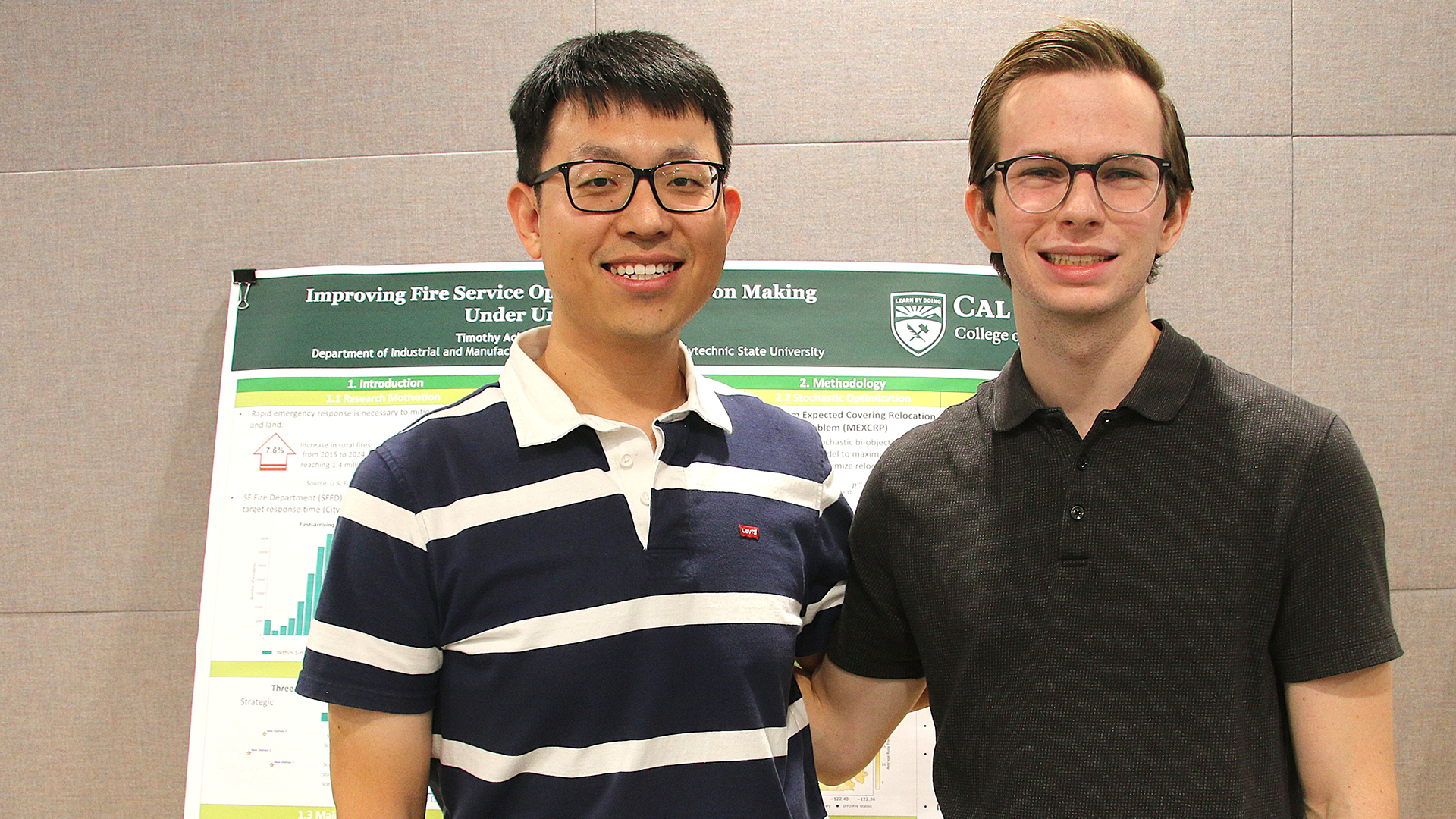
Industrial engineering student Timothy Ackerman collaborated with professor Zhiyuan Wei on a data-driven model designed to account for the uncertainty surrounding fire engine availability.
Fire departments may count on help from neighboring departments when deploying engines, Ackerman explained, but those resources aren't always available.
“We wanted to create something more robust,” he said.
Their work uses predictive models and optimization to explore how departments might position resources more effectively as conditions change. Ackerman and Wei are scheduled to present their research at the INFORMS annual meeting in San Francisco in November.
Ackerman transferred to Cal Poly from a community college in the Temecula area. The symposium gave other students considering a similar path a chance to see the possibilities firsthand.
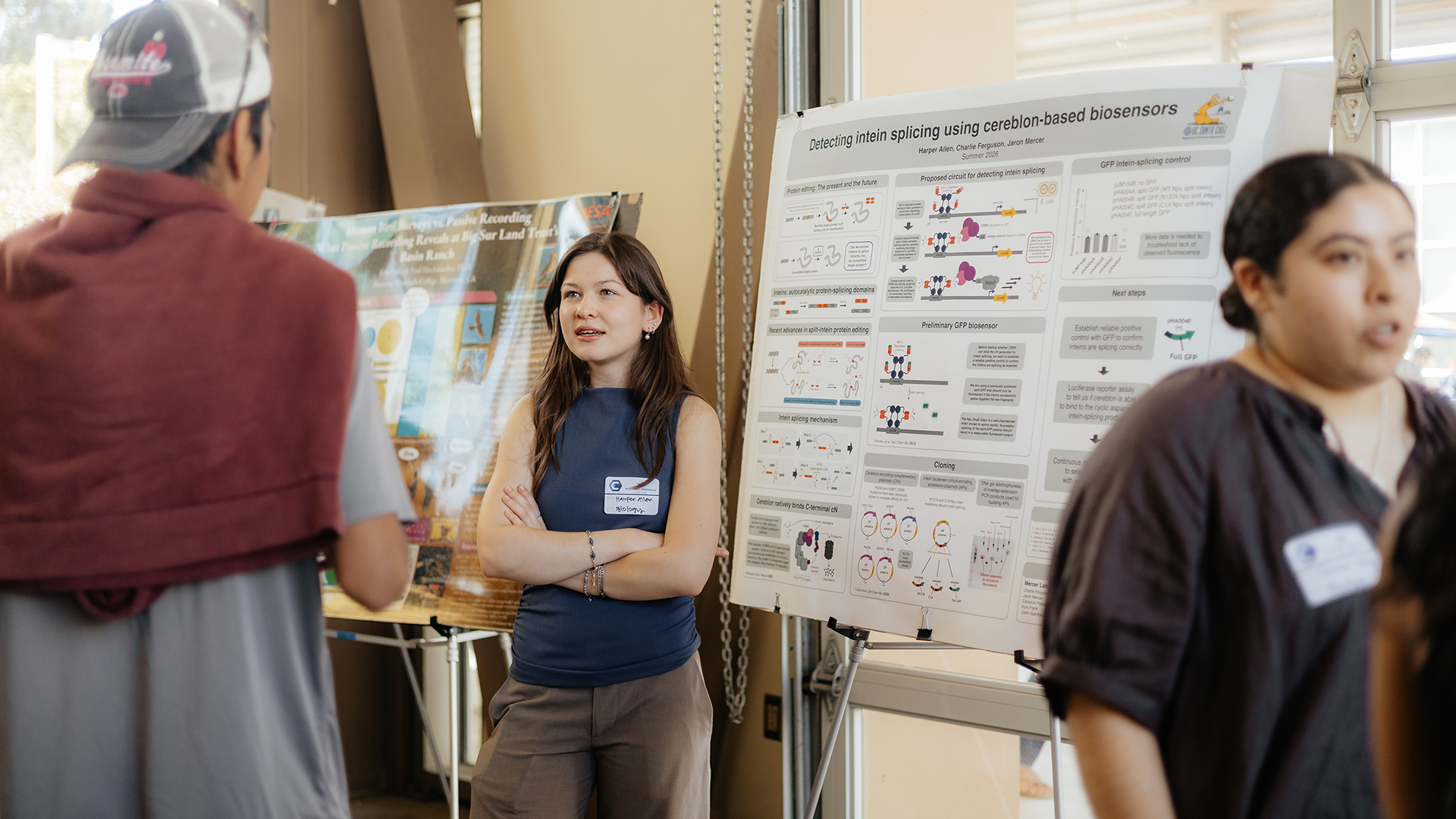
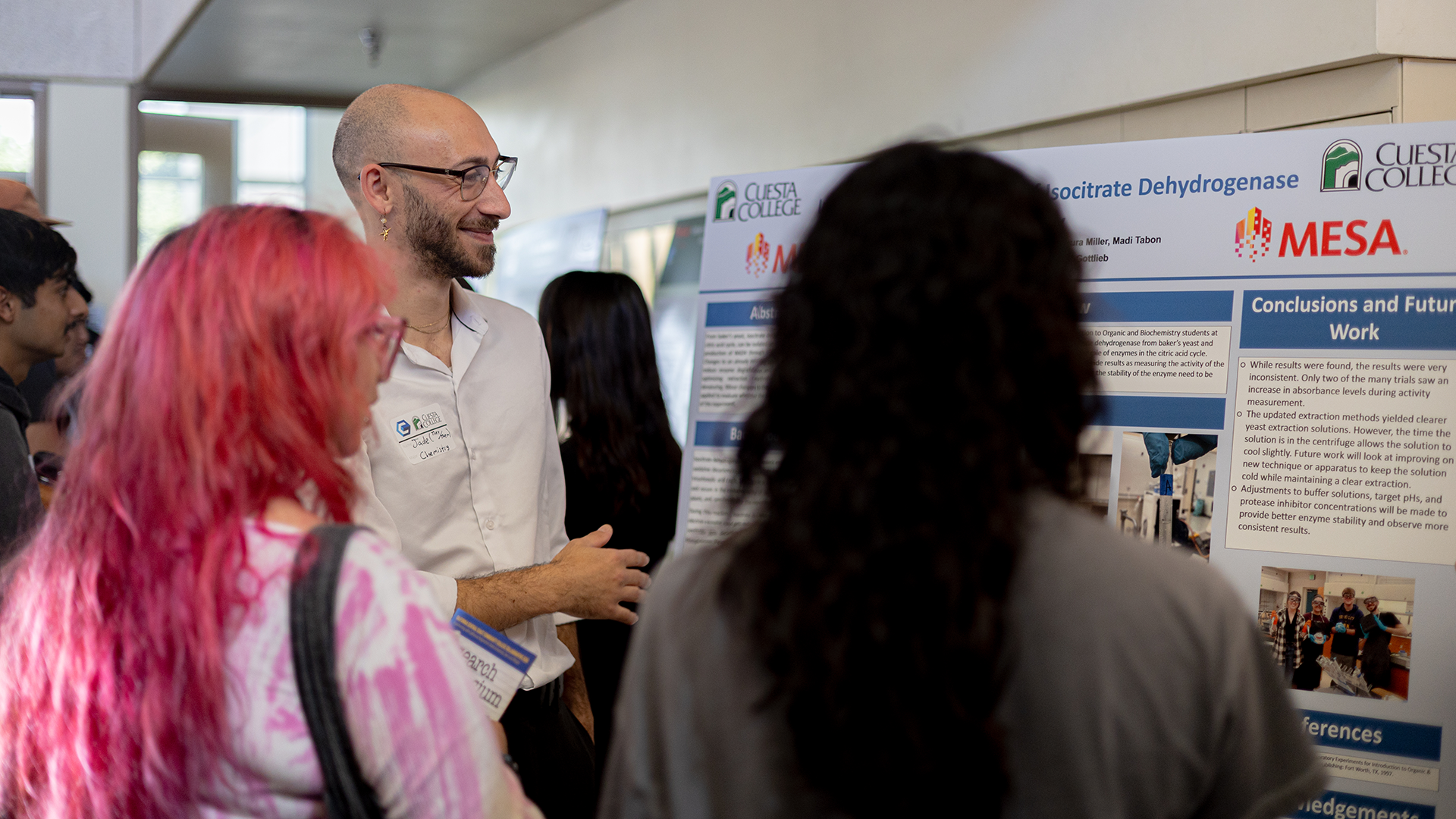
More than 150 community college students attended through the California Central Coast Community College Collaborative, known as C6, which has held its fall symposium alongside Cal Poly’s for five years.
Students from Allan Hancock, Cuesta, Fresno City, Monterey Peninsula and Oxnard colleges presented 29 posters. Cabrillo and Santa Barbara City colleges also participated. Campus tours gave visiting students a closer look at the university and opportunities to pursue research after transferring.
Dominic Dal Bello, an Allan Hancock College engineering professor and chair of its Mathematical Science Department, said the experience offers community college students an important glimpse of what's possible.
“The visit allows the students to see themselves at Cal Poly, as well as inspire them to pursue research and internship opportunities prior to transfer,” he said.
Help make research opportunities like these possible for more Cal Poly students by supporting the Summer Undergraduate Research Program Fund.
Top photo: Cal Poly electrical engineering students Ella Silberling, left, Monique Moreno and Alan Gonzalez stand beside a poster detailing their antenna research for Hascall-Denke during the SURP+ Research Poster Symposium on Oct. 16. The students helped upgrade specialized testing equipment and evaluated new antenna designs for the company.


