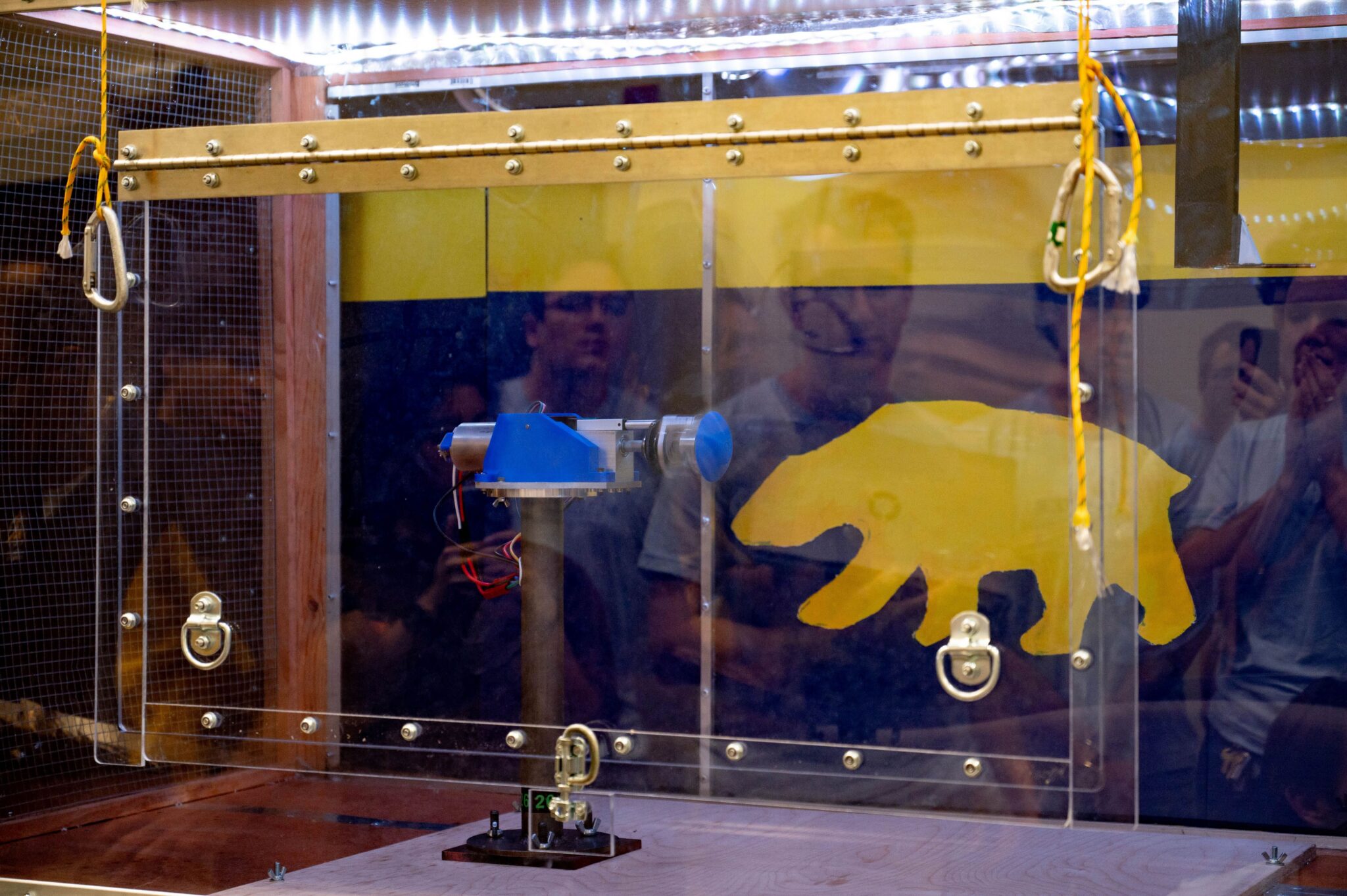
Cal Poly Wind Power Builds Its Way to First Overall Win

Maritime hosted the regional competition and won the turbine portion, adding energy to a friendly rivalry between the two Cal Poly teams
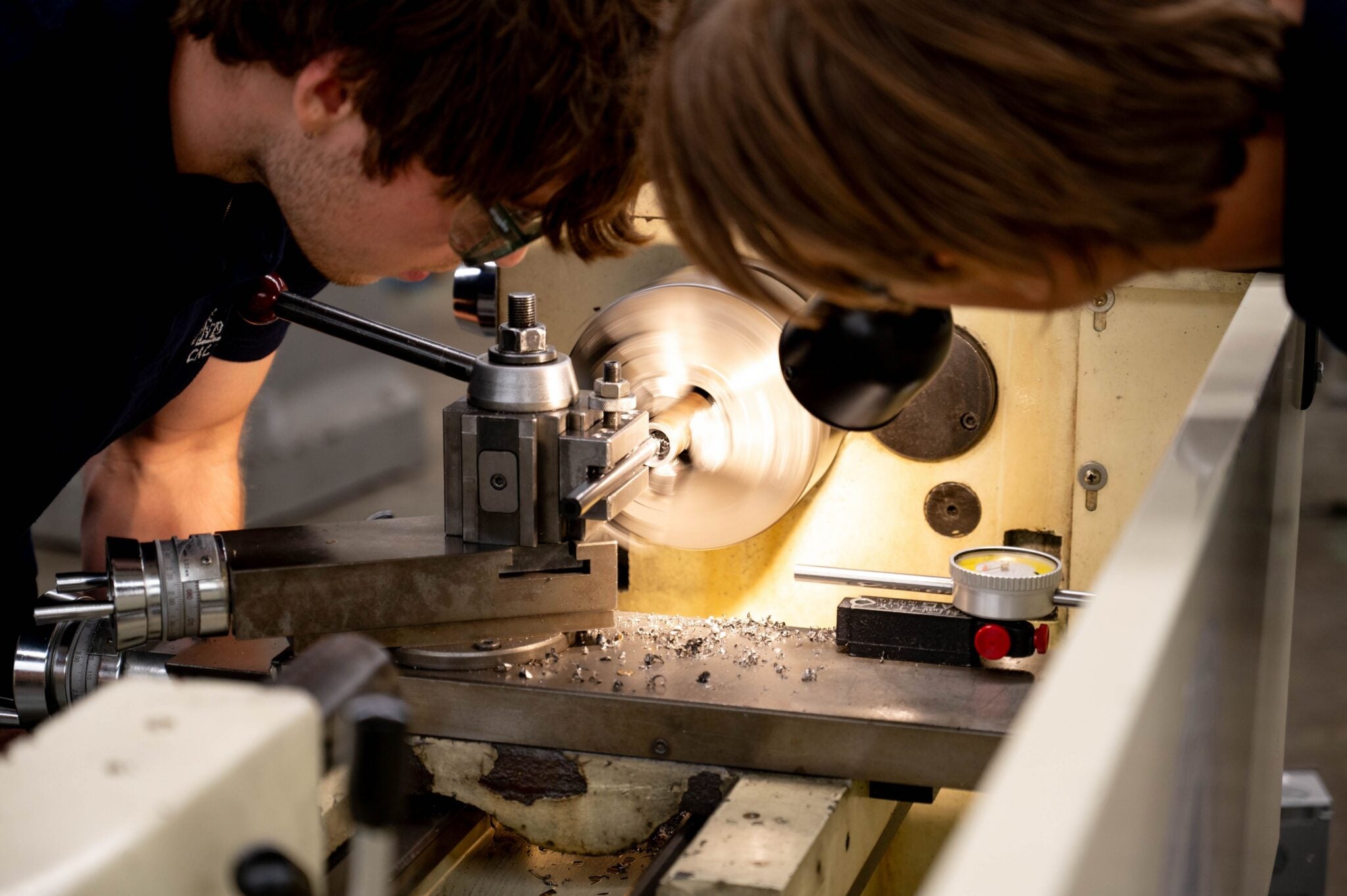
Liv Hoffsis still remembers learning the mills and lathes from older members of Cal Poly Wind Power.
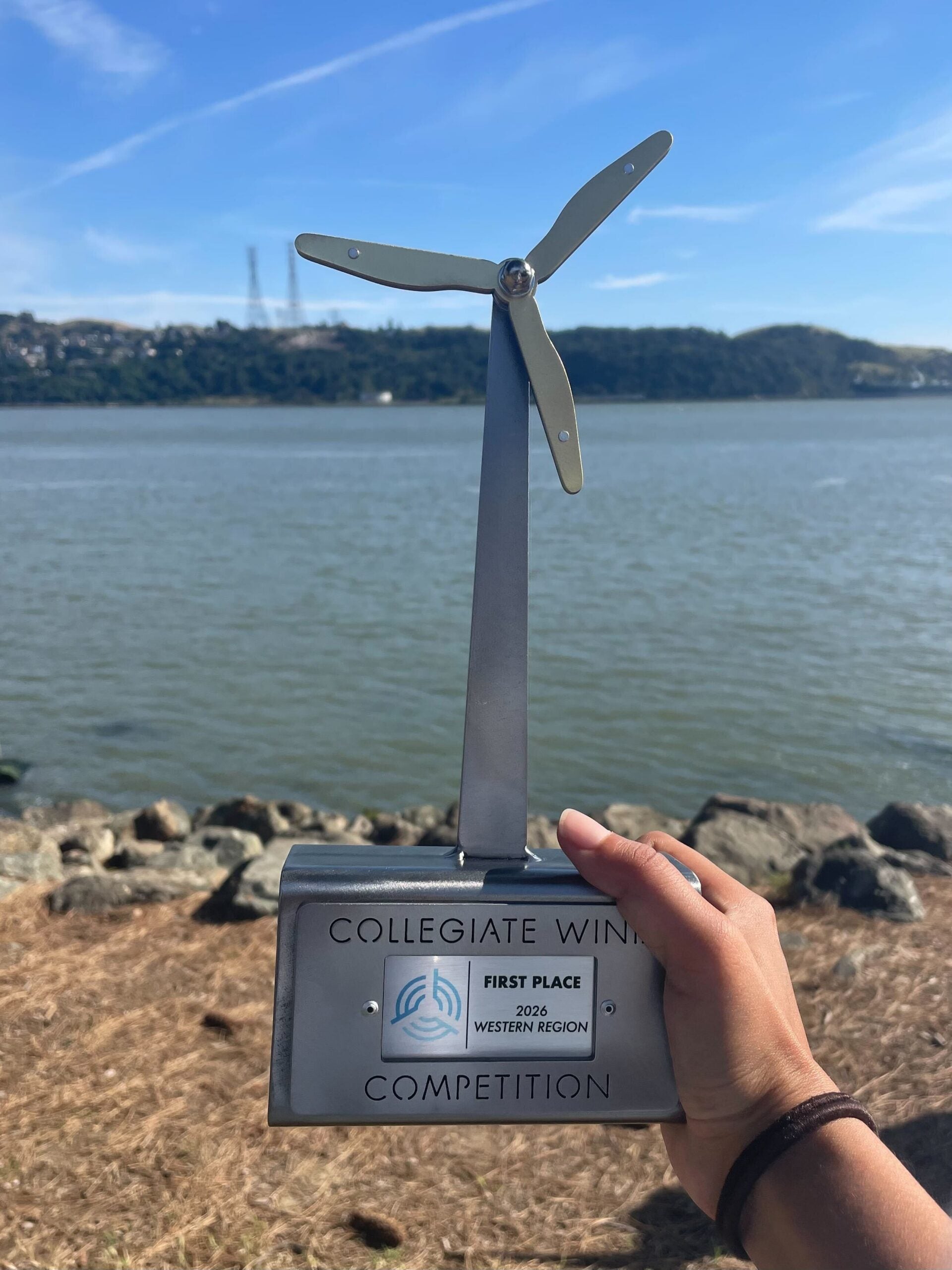
Over time, those unfamiliar tools became skills she could pass to younger students, helping turn the team into a place where knowledge moved easily from one member to another. That culture made Cal Poly’s first overall win at the 2026 Collegiate Wind Competition Western Regional feel bigger than a trophy.
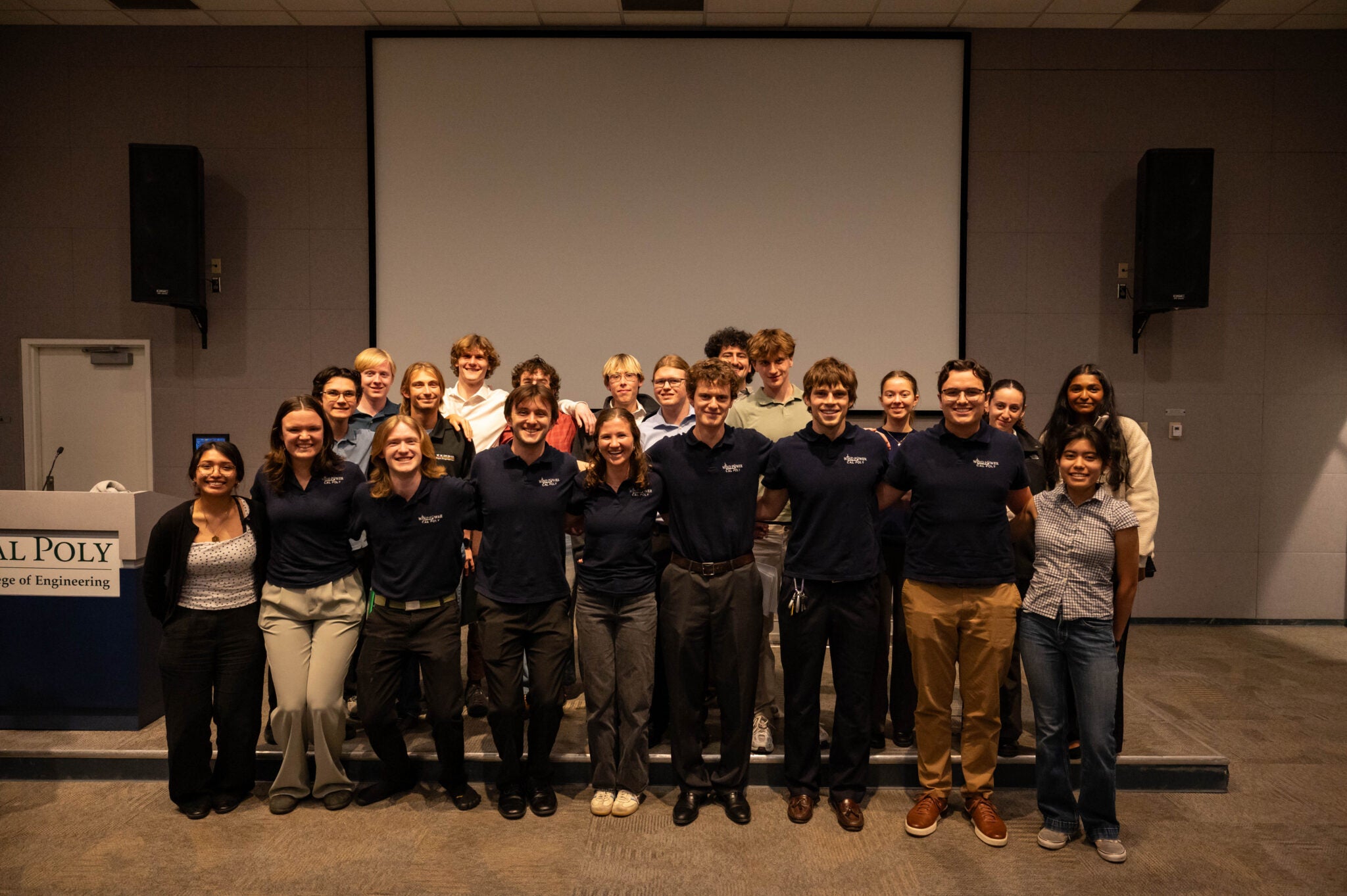
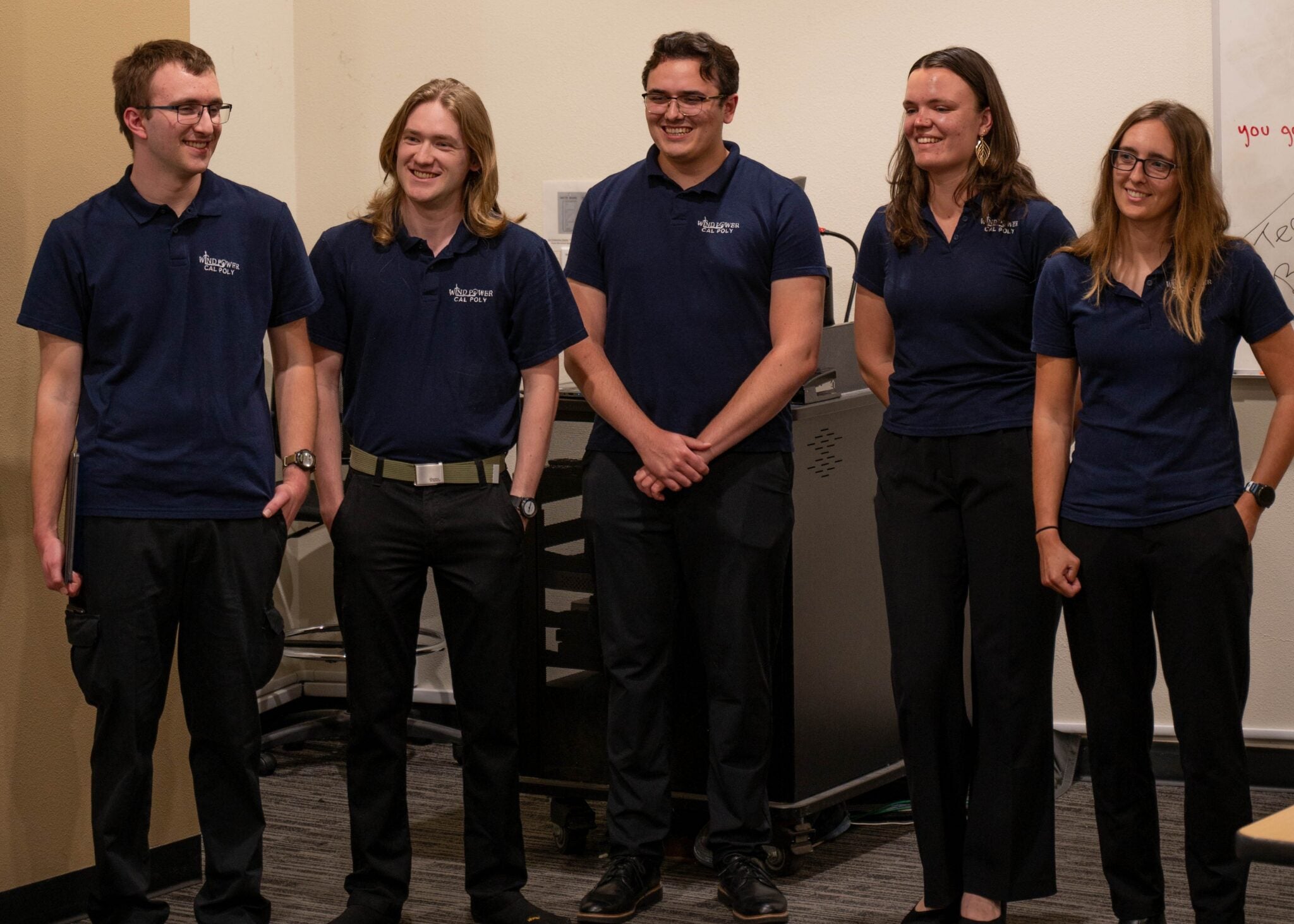
The team had placed well before, especially on the design side. Never before, though, had Cal Poly Wind Power won the overall title, a milestone that reflected its growth from a newer post-COVID team into a 50-member organization with strength across turbine design and project development.
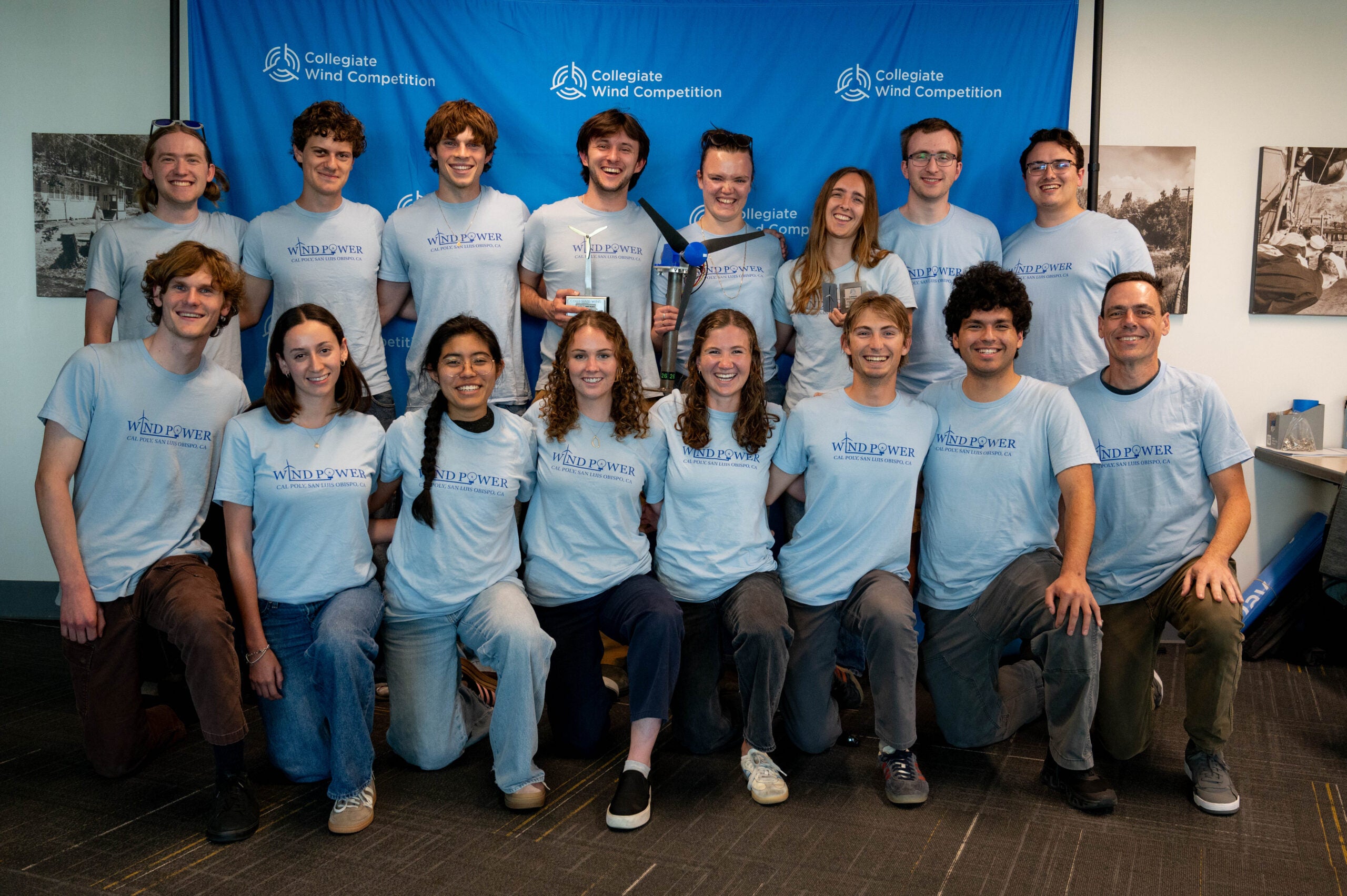
“The overall win this year is a testament to building all sides of the club,” said Hoffsis, Cal Poly Wind Power’s team manager and last year’s president.
Held May 10-12 at Cal Poly Maritime Academy, the competition connected students to the broader wind energy field through industry panels on offshore wind and career planning while challenging them to build and test a working turbine and plan a hypothetical wind farm. Cal Poly placed second in Turbine Design and Testing and third in Project Development and Engagement, giving the team the highest average ranking among 10 schools.
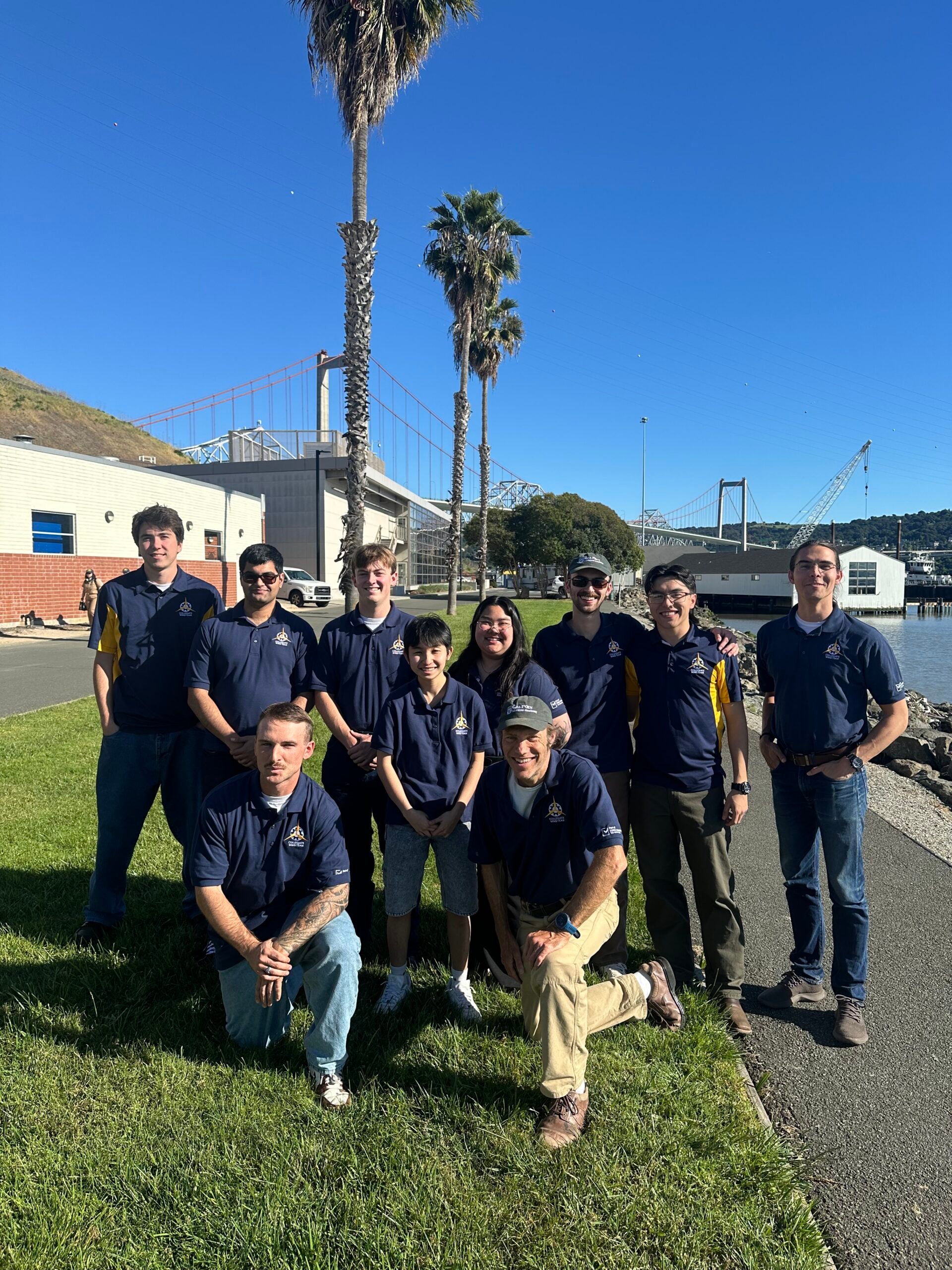
One of the sharpest head-to-head moments came on the turbine side. Cal Poly Maritime Academy, which hosted the regional competition, won Turbine Design and Testing by seven points over Cal Poly and finished third overall.
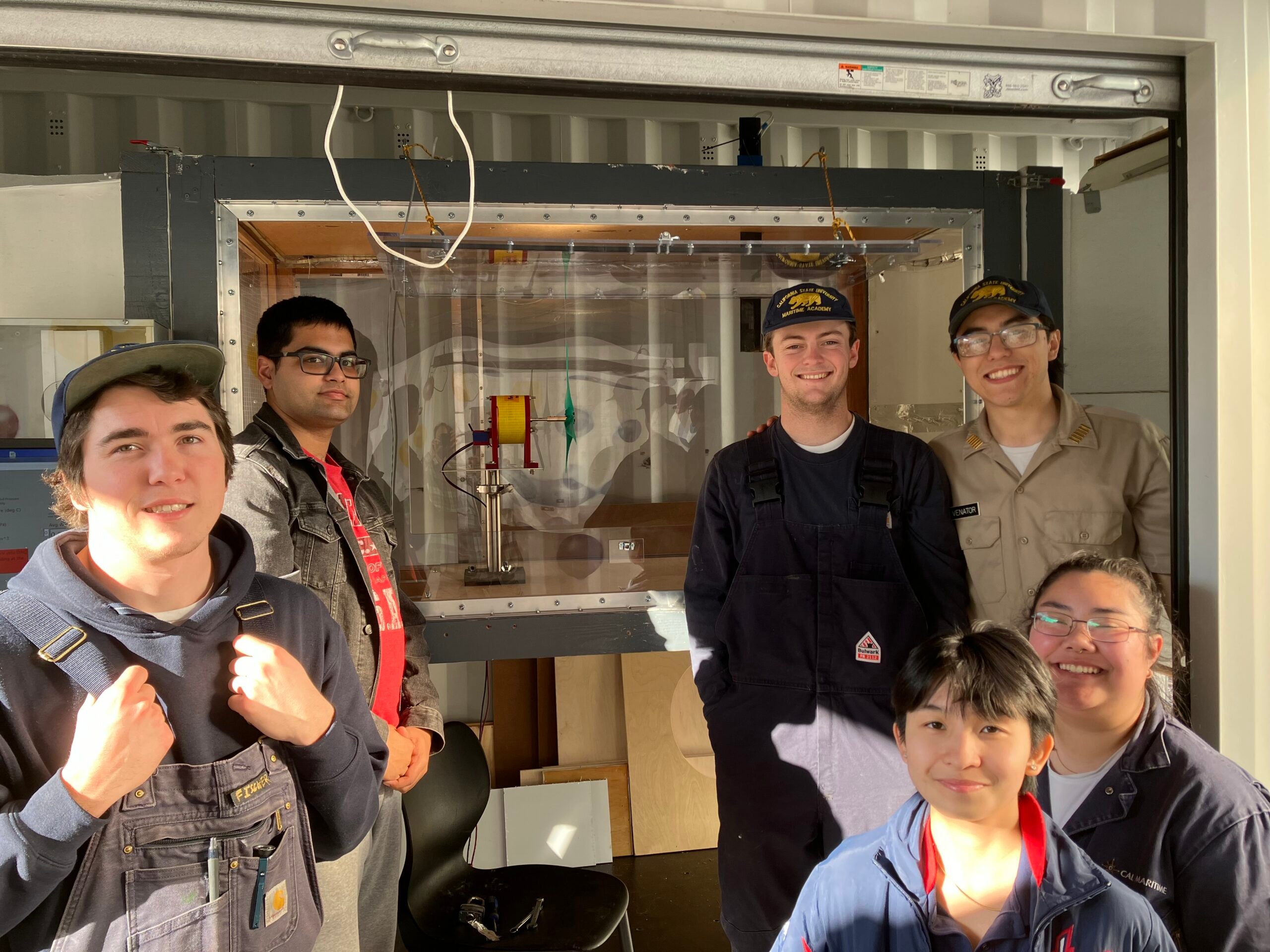
The result added energy to a rivalry that Cody Firman, Cal Poly Wind Power’s team lead, described as competitive and friendly. The Maritime team has deep industry connections and a strong turbine program, he said, making the overall title especially meaningful for Cal Poly.
“They had a great turbine,” Firman said.
At Cal Poly Maritime Academy, the wind competition takes a different shape. Rather than a club, the turbine project is a yearlong senior project for mechanical engineering students. This year’s nine-member team improved on a previous design and focused much of its effort on performance.
Jan Johnson, Maritime’s team lead, said the group also helped prepare the campus to host the regional competition, including work on the wind tunnel and power lab. Late in the project, three teammates left for Summer Sea Term, requiring the remaining students to take on extra work, including control systems code.
“It was a struggle at the end, but it teaches you to roll with the punches,” said Johnson, who graduated from Maritime and is joining the Navy as a naval reactors engineer. “That’s what Maritime gave me.”
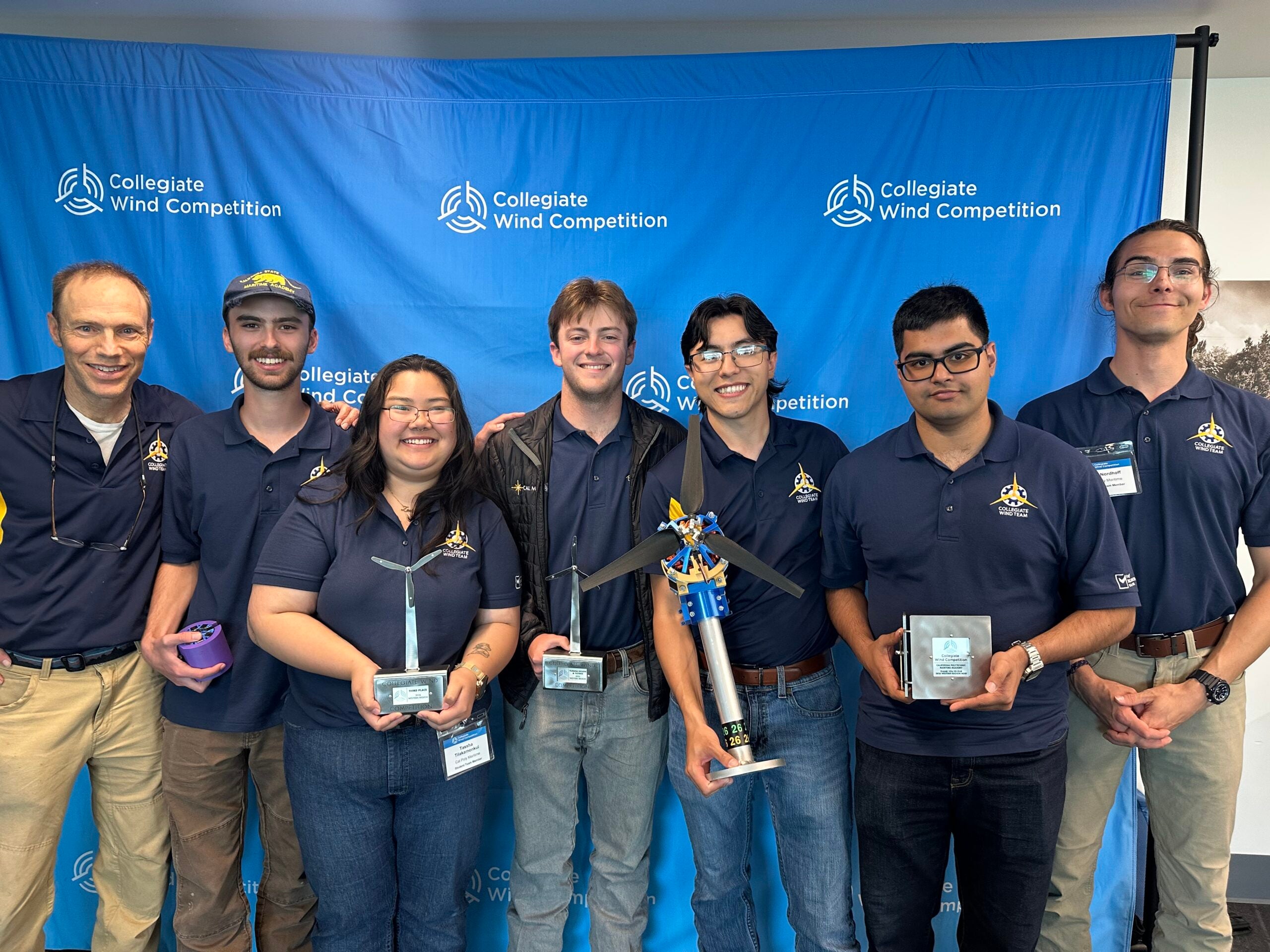
Johnson’s team showed how much strength Maritime brought to the turbine side of the competition. Cal Poly’s overall win came from consistency across both major categories, pairing a strong turbine with a project development proposal that asked students to think about wind energy at a larger scale.
That balance reflected the way the club had prepared all year. Students began in the fall by studying the scoring rubric and setting design requirements around where they could improve.
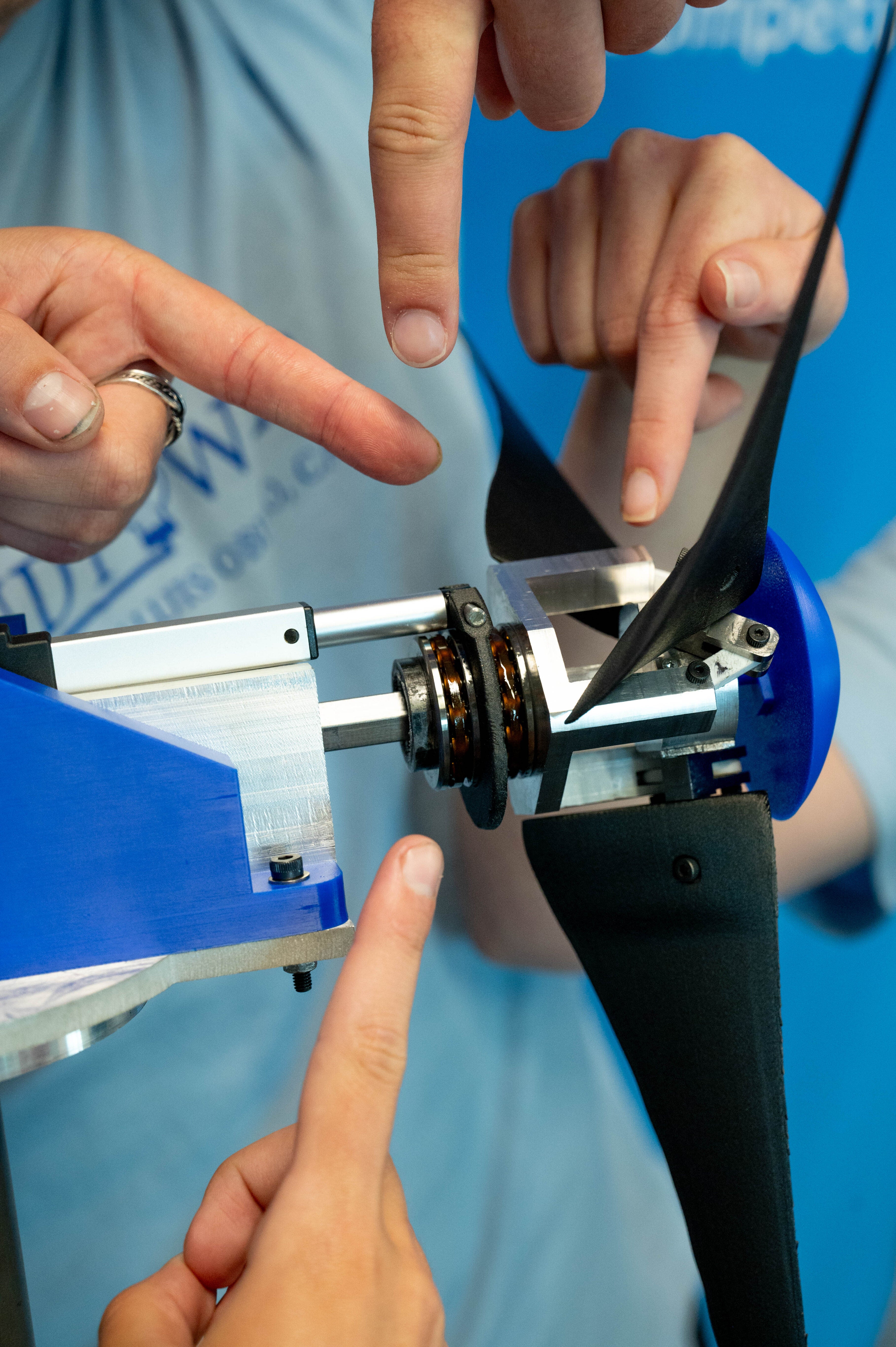
On the turbine side, that meant designing for power without losing sight of safety. Hoffsis said students paid close attention to curtailment, the process of reducing power when wind speeds climb beyond a certain point.
“We want a design that makes the most power, but there is also a safety element,” she said.
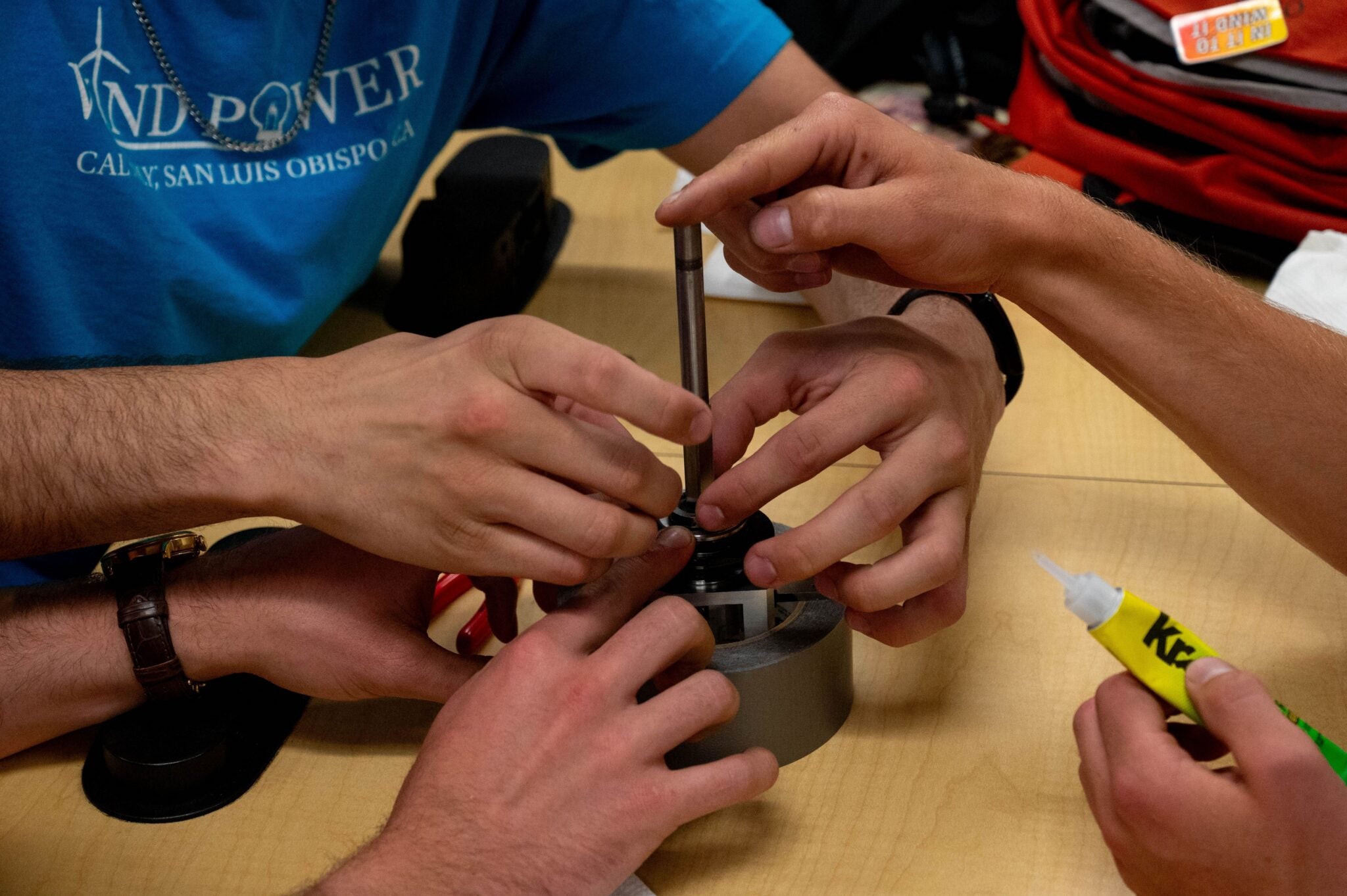
The work could be intense, but the club gave newer members room to learn. By using lower-cost components during early prototyping, students could make mistakes, learn from them and return with stronger designs.
“Cal Poly Wind Power is a teaching club,” Firman said.
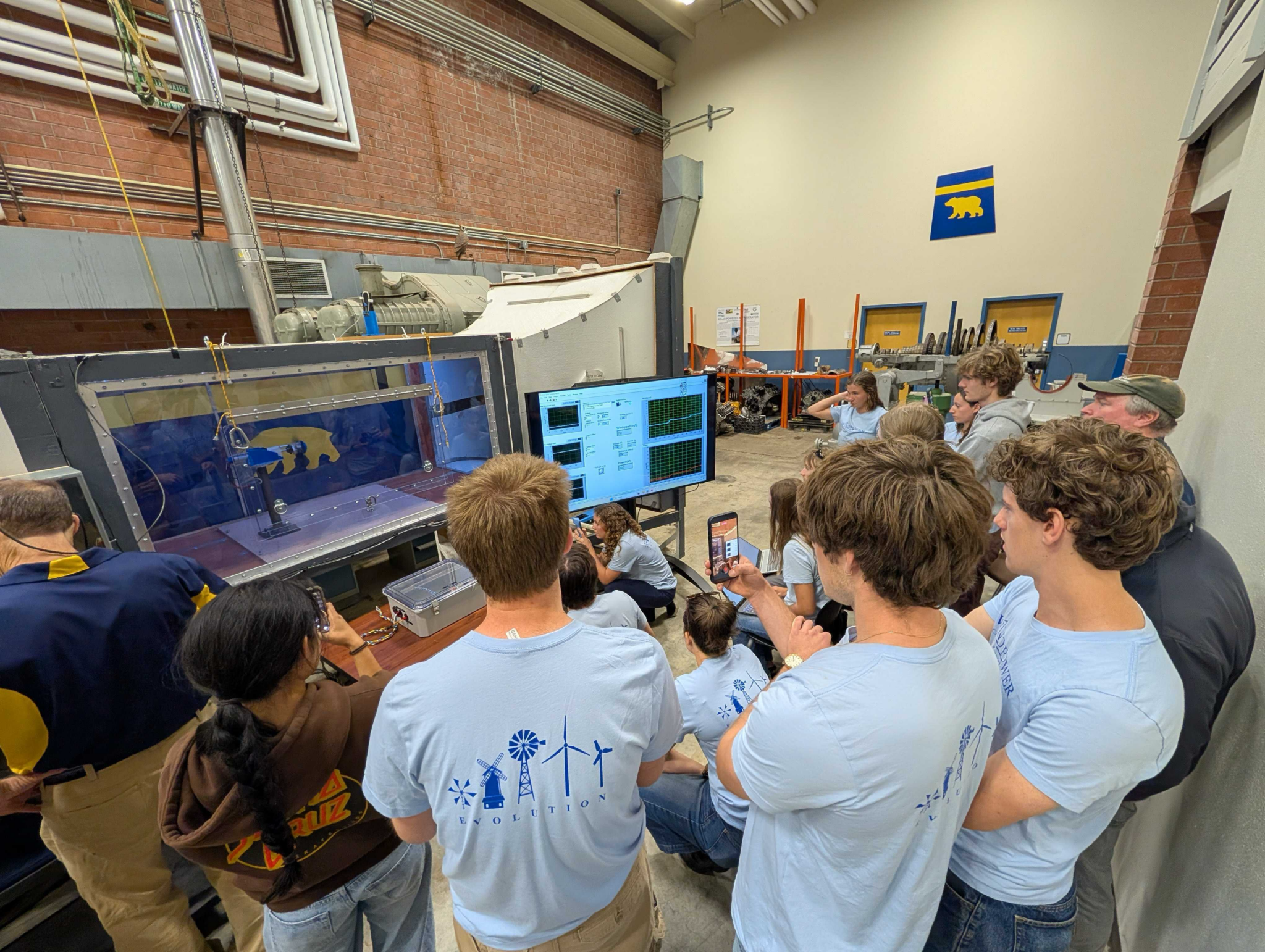
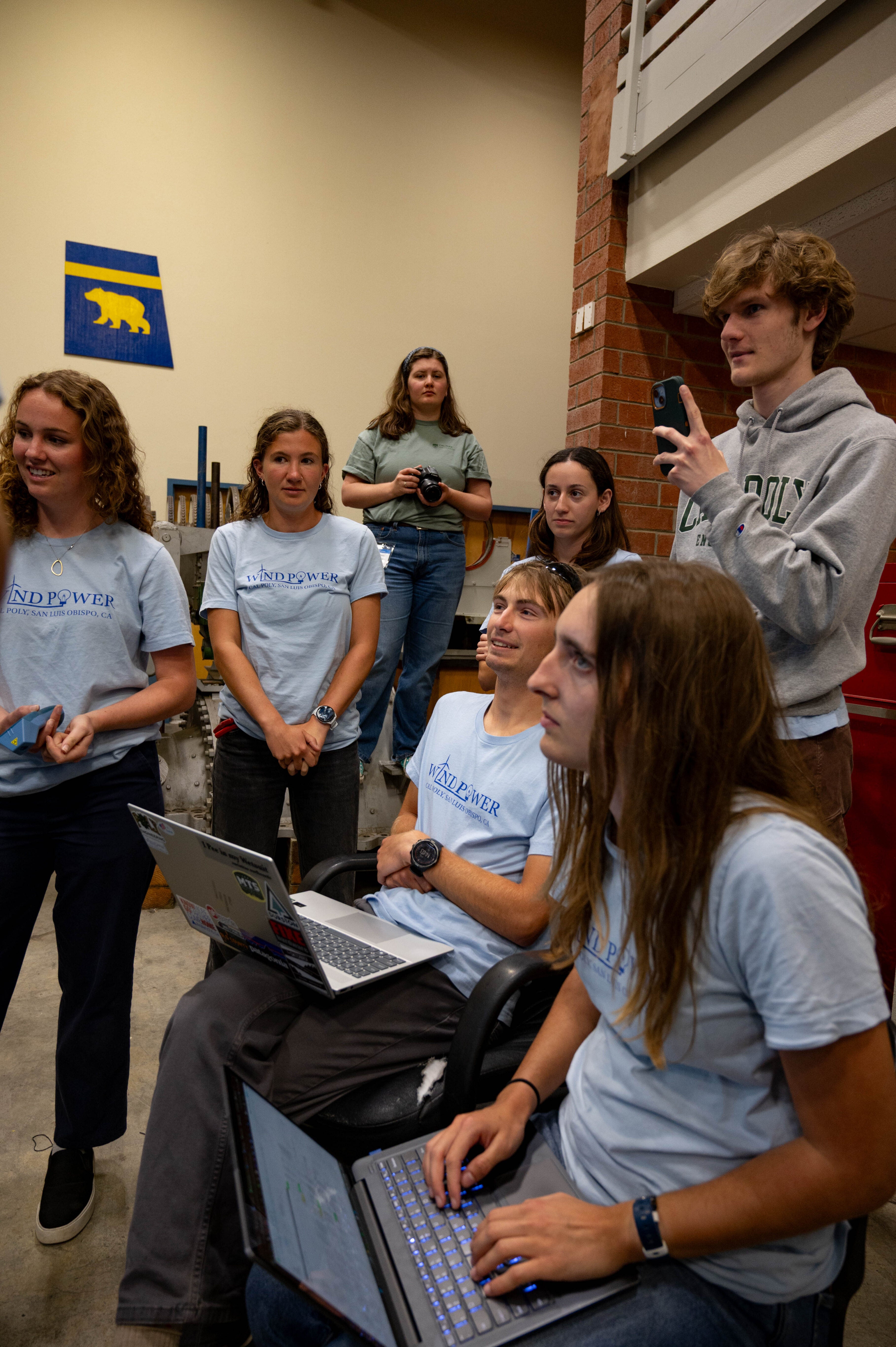
That approach has become one of the team’s strengths. Students learn hands-on skills from one another, including equipment they might not encounter until later in their coursework. Electrical engineering students also help others understand systems that many mechanical engineering students touch only briefly in class.
“You get a full view of everything that is going on,” she said.
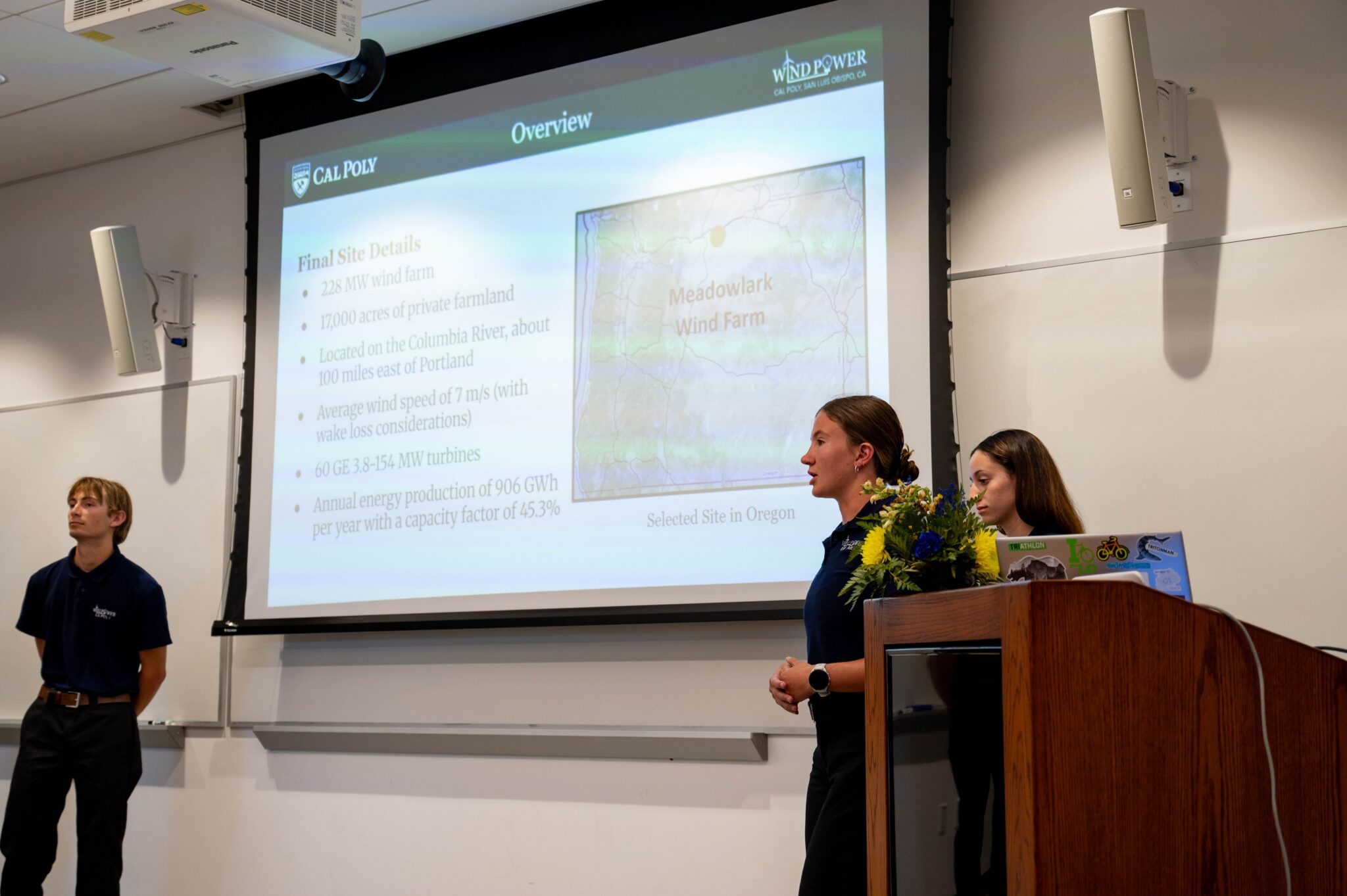
The project development team applied that same systems thinking to a different challenge. Students selected a hypothetical wind farm location in northern Oregon, where existing wind projects gave them a foundation for research. They weighed environmental concerns alongside financial feasibility, including how tax credits could support the project.
Northern Oregon also placed the proposal along the Pacific Flyway, a major route for migrating birds. That pushed students to think about how a wind farm could be developed responsibly while still accounting for the practical realities of construction and transportation.
Hoffsis said students often join because they want to learn about clean energy or build something tangible. They stay, she said, because the club feels welcoming.
“We have formed a community,” she said. “Nerdy, but in a good way.”
Their time with Cal Poly Wind Power also shaped what Hoffsis and Firman will carry forward. Hoffsis has accepted a position with PG&E at Diablo Canyon Power Plant as part of the company’s Early Career Engineering Program. Her interest in low-carbon, reliable energy drew her to engineering, and her time with Cal Poly Wind Power gave her a place to practice technical work and leadership at the same time.
Firman will continue at Cal Poly and step into Hoffsis’ former role next year. Leading the team has changed how he thinks about responsibility. When younger members come to him with questions, he said, he has learned to think several steps ahead so he can guide them toward an answer.
The club is already looking toward next year’s competition, with plans to keep refining its turbine and strengthening the systems behind it. Just as important is carrying forward the culture that helped Cal Poly Wind Power reach a new level, one where students learn from each other and build on what the last team left behind.