
Three Cal Poly Teams Advance to NASA Human Lander Challenge Finals
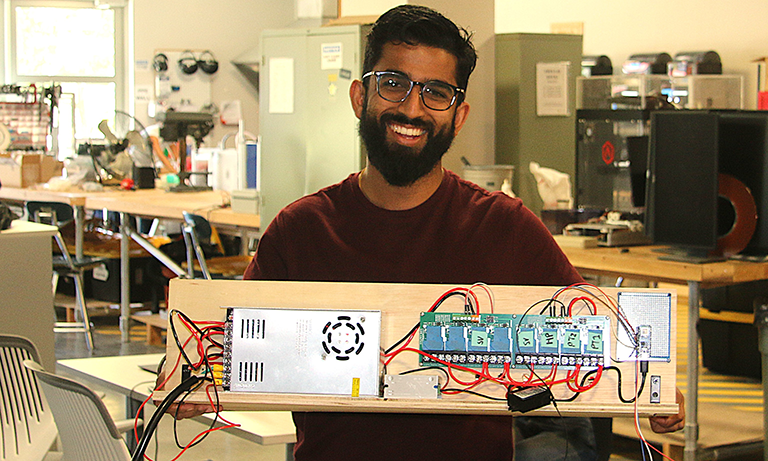
Mechanical engineering senior projects focused on cabin noise, fluid transfer and cold drinking water earned the university the strongest showing in the 12-team field
Spaceflight is easy to picture at liftoff, all fire and force. Harder to picture is the life that follows, when astronauts are trying to sleep in a noisy cabin and depend on equipment that must keep working far from any easy fix.
Those less visible realities sit at the center of NASA’s 2026 Human Lander Challenge, which asked college teams to rethink pieces of the life support astronauts will need as NASA pushes toward longer stays on the moon and, eventually, travel to Mars.
This spring, three Cal Poly senior project teams were named finalists in the challenge, the largest showing in a 12-team field that also included two teams each from Purdue and Embry-Riddle. To the students, the result felt like validation of the way Cal Poly prepares engineers to meet complex challenges with confidence.
Their proposals reflected that approach, translating NASA’s life-support challenge into the daily realities astronauts could face, from cabin noise inside a human lander to fluid transfer on the lunar surface and cold drinking water during extended missions. The teams will take those ideas to Huntsville, Alabama, June 23-25, where they will defend their designs before NASA and industry judges with top honors and a share of $18,000 on the line.
Three Answers to the Same Challenge
Behind that finalist showing were three teams translating the realities of long-duration spaceflight into designs astronauts could one day rely on. Mechanical engineering seniors Julia Megargle, Griffin Vernon and Tarsem Pal each offered a window into a different part of the effort.
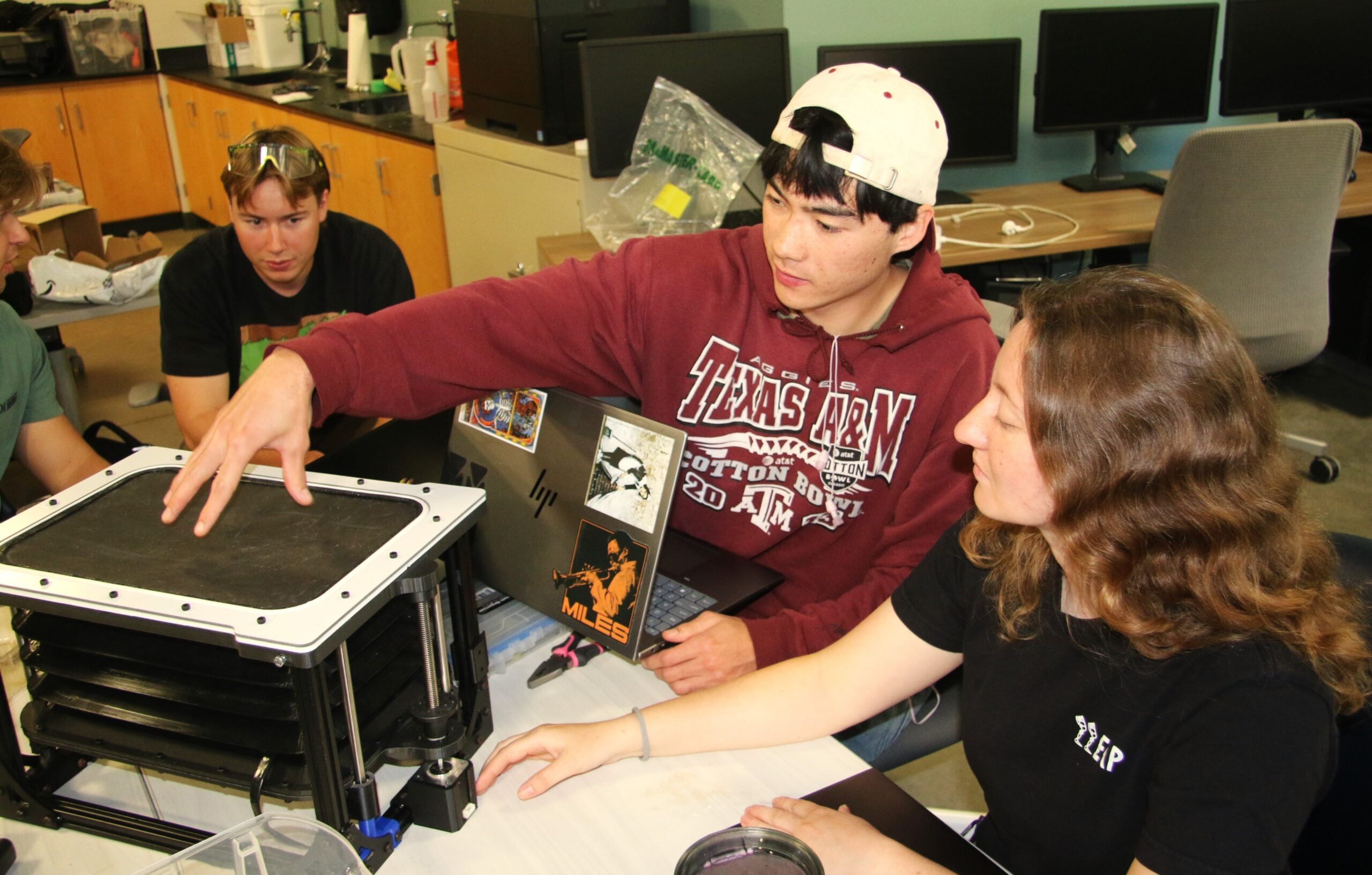
Megargle offered insight into MASS, short for Modular Acoustic Suppression System, a proposal that started with a sound astronauts might not be able to escape. Inside a human lander, the constant hum of life support hardware can wear on sleep, concentration and communication over time. The team’s answer was an adjustable sound-suppression system designed to respond to low-frequency noise and make the cabin more livable.
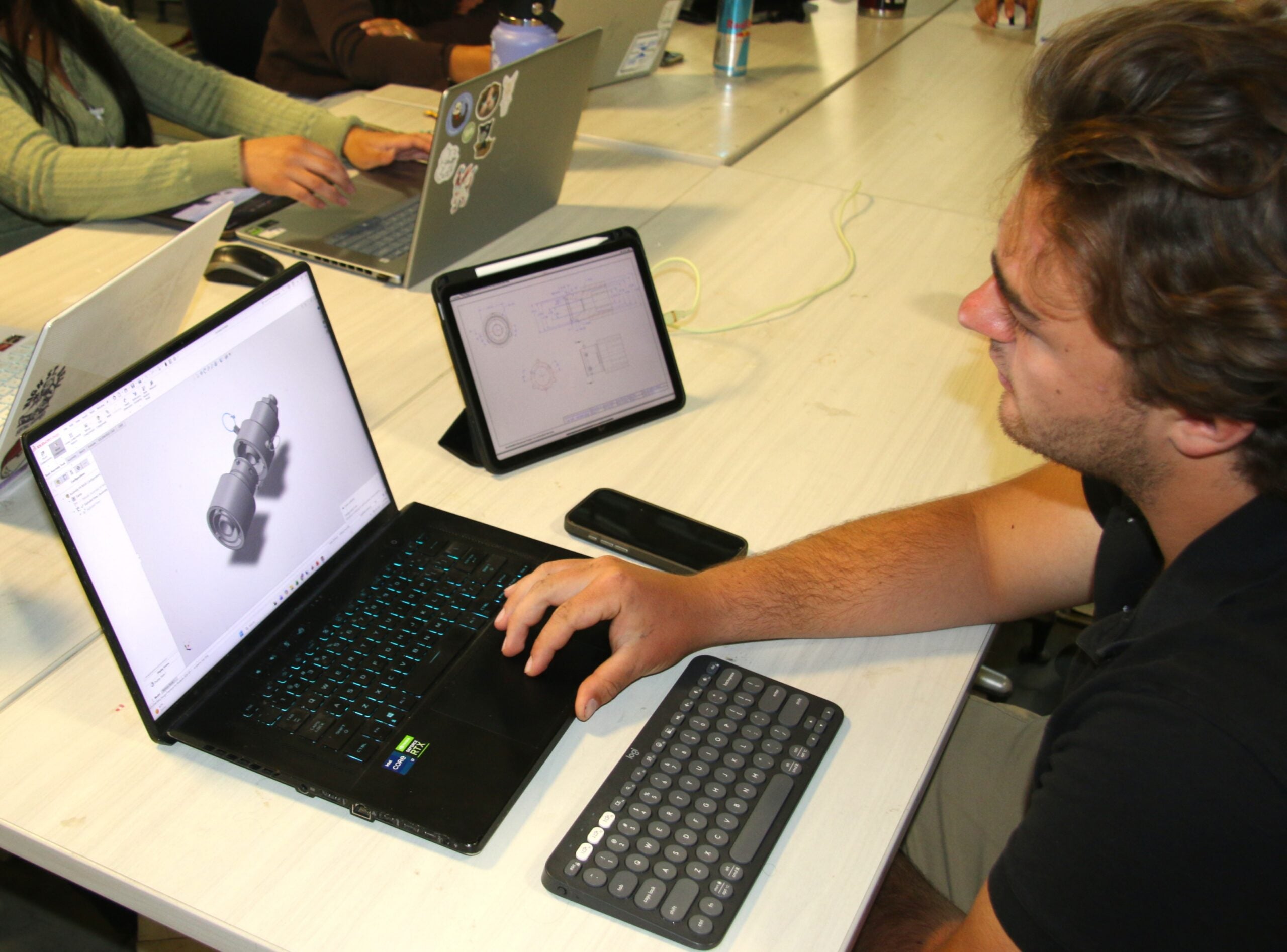
Where MASS stayed inside the lander, CQC shifted the focus outside it. The team Vernon described took on the problem of moving fluids safely between habitats and vehicles on the moon and Mars, including the water, oxygen, fuel and waste streams a future surface base would need. In that environment, a connection must withstand extreme temperatures and abrasive lunar dust without leaking or damaging its seals. Cryogenic Quick Connection centered on a self-aligning coupling designed to twist into place quickly and stay locked. Vernon compared it to “a complicated garden hose attachment.”
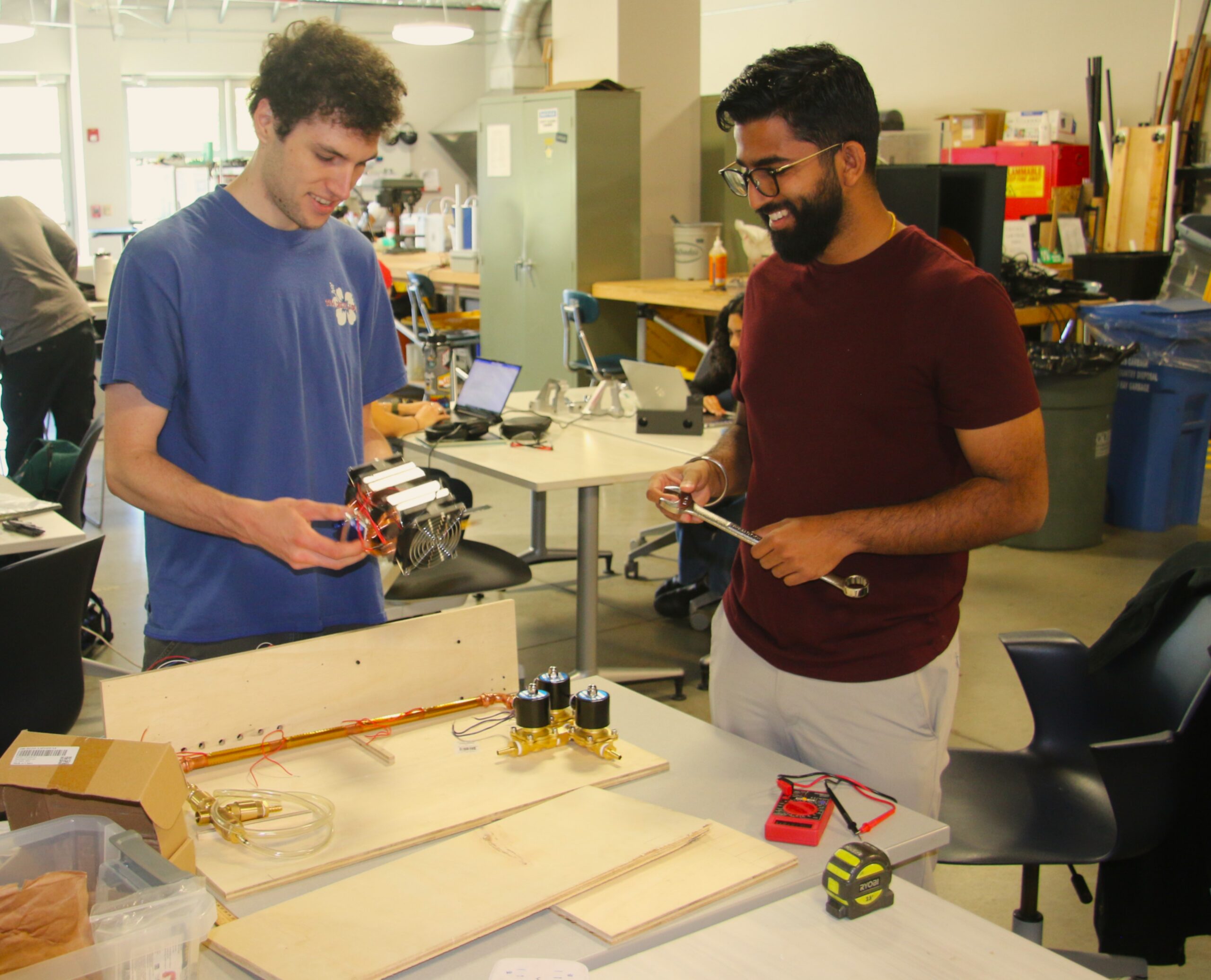
Pal’s team came at the challenge from a more familiar human need. PHAT, short for Peltier-based Hydration Accumulation Terminal, asked what it would take to give astronauts cold drinking water during long stays in space? “It’s a hydration station,” Pal said. On a human lander, he explained, astronauts would have hot and ambient water, but not cold. After speaking with an astronaut, the team began exploring system that could provide cold water while also addressing cleaning and microbial growth.
The students came to those projects from different directions. Megargle was drawn to a problem she had never tackled before. Vernon liked the idea of inventing for space, even in an area that had long challenged him. Pal wanted, in his words, “something crazy” for his senior project.
By the end, the challenge had sharpened Pal’s sense of the engineering hidden inside daily life off Earth. “It goes to show how much work it takes to put anything in space, just to attach a hose, suppress noise and get a cup of cold water,” he said.
From Cal Poly to Artemis
As the teams refined their proposals, another Cal Poly space story was unfolding in public. Engineering graduate Victor Glover was piloting NASA’s Artemis II mission around the moon, and the HuLC finalist news arrived during that same window.
The timing made the moment feel bigger than a senior project milestone. Megargle called it “a full circle moment,” connecting the news to the reason she found her way into engineering in the first place. “I had fallen in love with engineering and space specifically during my senior year in high school,” she said. “Now, as a college senior, I’m watching someone from Cal Poly pilot the rocket while we were being named finalists. Look how far I’ve come!”
Vernon remembered the excitement reaching beyond the project teams. “It was amazing,” he said. “All my friends were following the mission. We celebrated the launch and I may have skipped class to watch it,” he added with a laugh. “It was a proud moment for me personally and for Cal Poly.”
That overlap raised the stakes in front of them. Vernon had wondered whether Cal Poly’s applied approach would translate in a competition that seemed more theoretical. Pal saw a different kind of balancing act. “We had to design our projects like a space company would but had to scale it down to a Cal Poly budget,” he said.
Now the projects are entering another phase. The teams have submitted proposals, received feedback from judges and started revising for Huntsville. Megargle said they are preparing full technical reports along with 25-minute presentations, followed by 20 minutes of questions. Vernon said the move into the final round changed the tone of the project almost immediately. “It was like starting from ground zero after becoming a finalist,” he said. “We will get scored on how much we were able to improve our original design.”
A Final Test in Alabama
By the time the teams arrive in Huntsville, the competition will have moved beyond proposal writing. The next test will be explaining their ideas to people who know what it takes to keep astronauts alive in deep space.
Vernon is looking forward to that kind of feedback. He wants to hear where CQC is strongest and where the design still needs work. Megargle is eager to talk with acoustical engineers and learn how they would approach a similar problem outside the classroom.
Pal is thinking about the people, too. He wants to meet other teams, talk with engineers and make connections as he prepares to graduate. The moment carries extra weight for him. After four years at Santa Rosa Junior College and an earlier rejection from Cal Poly, Pal transferred in looking for a senior project that would stretch him.
Now, he is finishing the year as part of a team headed to NASA’s final round.
“I’m a NASA finalist,” Pal said with a grin.
See the Prototypes
Before they leave for Alabama, the teams will share their work at Cal Poly’s annual Engineering Project Expo, held from noon to 3 p.m. Friday, May 29, in Engineering Plaza and nearby engineering buildings. Their prototypes will be among more than 200 student projects on display during the College of Engineering and Noyce School of Applied Computing event.


